“It is the more obligation to honor the right of the citizen to live with dignity even in the retired life.” — Franklin D. Roosevelt, 1935
Ramesh was 62. He’d just received Rs 80 lakh in gratuity after 35 years at a PSU bank.
His relationship manager called the same week. “Sir, LIC Jeevan Akshay. Guaranteed income for life. Safest option for you.”
Ramesh invested Rs 60 lakh. All of it.
When he came to me six months later, there was nothing left to do. The decision was permanent. The money was gone. The income was fixed forever. No exit. No flexibility. No inflation adjustment beyond 3% — in a country where healthcare costs rise at 12 to 15% annually.
He hadn’t bought safety. He’d bought a trap with a guaranteed income label on it.
This post is for anyone who’s been told the same thing — or is about to be.
⚡ Quick Answer
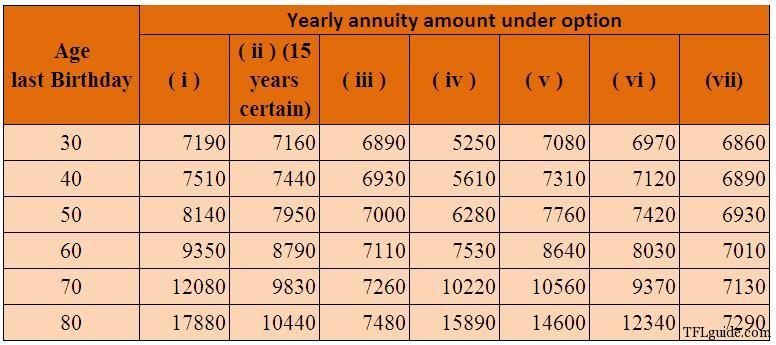
LIC Jeevan Akshay VII (Plan 857) is a single premium immediate annuity plan. You pay a lumpsum once, LIC pays you guaranteed income for life. For a 60-year-old investing Rs 10 lakh under Option A, the annual payout is approximately Rs 1,82,200 — but this includes a return of your own capital, not purely a yield. Annuity income is fully taxable. The plan offers 10 options. The two biggest problems: the decision is irreversible, and the income doesn’t beat inflation. Best used as one income layer in a retirement plan of Rs 3 crore or more — never as your only source.
What Is an Immediate Annuity — and Why Most People Buy It Wrong
An immediate annuity is simple on paper. You give a lumpsum to an insurance company. They pay you a fixed income every month for the rest of your life. That’s the entire product.
The income starts immediately — typically one month after purchase. The rate is locked at the time of buying and never changes. Not even if interest rates double. Not even if inflation doubles.
This is where most people make the mistake.
They hear “guaranteed income for life” and they think “safe.” But there’s a critical difference between guaranteed and adequate. Jeevan Akshay guarantees you’ll receive income. It doesn’t guarantee that income will keep up with your life.
The other thing people miss: with an FD or SCSS, your principal is still yours. With an immediate annuity, your lumpsum is gone permanently. You’re exchanging capital for income — forever.
🌾 Think of it like buying a cow that produces milk every day for life. You pay once. The cow never stops giving milk. But you can never sell the cow back. The milk amount is fixed — it never increases, unless you specifically bought the cow that gives 3% more milk each year. And that cow costs more upfront.
LIC Jeevan Akshay VII: What the Current Plan Actually Offers
LIC Jeevan Akshay VII (Plan 857, UIN 512N337V04) is the current version. The older Jeevan Akshay VI has been discontinued. If someone’s showing you Jeevan Akshay VI brochures, walk away — that plan no longer exists.
Plan 857 is non-participating and non-linked — meaning no market exposure, no bonuses, no upside. What you see at purchase is what you get for life.
- Minimum purchase: Rs 1 lakh (age 30+) or Rs 10 lakh (age 25–29)
- No maximum limit
- Available online and offline — online purchase gives a 2% higher annuity rate
- GST of 1.8% is payable on the purchase price at the time of investment
- Annuity can be paid monthly, quarterly, half-yearly, or annually
The 10 Annuity Options — and the One Decision You Cannot Undo
One significant upgrade in Plan 857 over the old Jeevan Akshay VI is the expansion from 7 to 10 annuity options. Choose carefully. Once you choose, it’s permanent.
| Option | What You Get | What Happens After Death | Best For |
|---|---|---|---|
| A | Life annuity — highest payout | Payments stop. Nothing to nominee. | Maximum income, no inheritance goals |
| B, C, D, E | Life + guaranteed period (5/10/15/20 years) | Nominee gets remaining payments if death within guaranteed period | Some death benefit protection |
| F | Life + return of purchase price on death | Full purchase price returned to nominee | Corpus preservation for heirs |
| G | Life + 3% annual increase | Payments stop on death | Inflation-conscious (partial protection only) |
| H, I | Joint life — 50% or 100% to surviving spouse | Reduced annuity continues to surviving spouse | Couples wanting spouse protection |
| J | Joint life + 100% to spouse + return of purchase price | Full purchase price to nominee after both pass | Couples wanting full corpus preservation |
Critical note: Loan facility and surrender are available only under Options F and J. For every other option — A, B, C, D, E, G, H, I — there’s no exit and no loan. Ever.
What Are the Actual Payouts? (And the Number That Misleads You)
Rates vary by age, option, and purchase price. Online purchase adds ~2%. Here are illustrative figures for a 60-year-old male:
| Purchase Price | Option A — Annual Payout | Approximate Monthly | Note |
|---|---|---|---|
| Rs 10 lakh | Rs 1,82,200/year | ~Rs 15,183/month | Includes your own capital being returned |
| Rs 50 lakh | ~Rs 9,11,000/year | ~Rs 75,917/month | Includes your own capital being returned |
| Rs 50 lakh (Joint, Option J) | Rs 3,34,500/year + corpus back | ~Rs 27,875/month | Real yield ~6 to 6.5% since corpus is returned |
Illustrative rates based on liccalculator.in (2026). Actual rates vary by age, gender, and policy date. Verify at licindia.in before purchase.
🚨 The number that misleads everyone: The Rs 1,82,200 payout on Rs 10 lakh isn’t an 18.2% interest rate. It’s a payout ratio that blends yield plus a gradual return of your own capital over your expected lifespan. Strip out the capital return, and the actual yield is approximately 5.5 to 6.5% per annum for a 60-year-old. After 30% tax, that drops to 3.8 to 4.5%. Against India’s 6 to 7% consumer inflation, you’re effectively earning negative real returns on money that’s permanently gone. Meanwhile, SCSS at 8.2% keeps your full principal intact and delivers 5.7% post-tax.
The Private Insurers Are Now Worth Comparing
When the original version of this post was written, LIC held over 95% of India’s annuity market. That’s changed. ICICI Prudential Life, HDFC Life, SBI Life, and Bajaj Allianz all offer immediate annuity products worth evaluating.
Rates differ meaningfully by age and option. Don’t default to LIC because of brand name. Run a comparison before committing.
That said, the two structural limitations of annuity products remain the same regardless of insurer. First, annuity income is fully taxable at your slab rate — no special treatment. Second, most high-payout options leave nothing for your heirs. The money goes to the insurer when you die.
The 3% annual increase option (Option G) offers some inflation cover. But India’s consumer inflation averages 6 to 7% and healthcare runs at 12 to 15%. 3% annual increase isn’t inflation protection. It’s inflation delay.
For a deeper look at structuring retirement income beyond annuities, read our post on NPS and the annuity problem in Indian retirement planning.
Annuity vs SCSS vs FD: The Honest Head-to-Head
| Factor | LIC Jeevan Akshay VII | SCSS | Bank FD (Senior Citizen) |
|---|---|---|---|
| Income guarantee | For life — never runs out | 5 years (extendable) | Fixed term |
| Your principal | Gone permanently (except F, J) | Fully intact | Fully intact |
| Taxation | Fully taxable | Fully taxable | Fully taxable |
| Inflation protection | 3% option only — not enough | None | Can reinvest at new rates |
| Longevity protection | Pays for life regardless | Stops after term | Stops after term |
| Can you get money back? | No (except F/J options) | Yes — good liquidity | Yes (with penalty) |
The annuity wins on exactly one thing: it can’t run out. If your family has longevity history and you genuinely fear outliving a Rs 3 to 4 crore corpus, that one feature is worth paying for. For everyone else, SCSS plus FD plus debt SWP gives you similar income, complete flexibility, and your principal intact.
The Real Disadvantages Nobody Tells You
The yield problem is first. For a 60-year-old on Option A, the payout includes both a yield component and your own capital being returned gradually. Strip out the capital return, and the real yield is approximately 5.5 to 6.5% — not the headline payout ratio. After 30% tax, you’re looking at 3.8 to 4.5%. Against 6 to 7% inflation, that’s effectively negative in real terms. And it never improves.
The permanence problem is second. Once signed, there’s no going back for most options. Health changes. Tax laws change. Your needs change. The annuity doesn’t. The same Rs 50 lakh kept in a mix of SCSS, FDs, and a debt mutual fund SWP gives you income, flexibility, and emergency access — all three. The annuity gives you income alone.
The inheritance problem is third. Options A, G, H, and I leave nothing to your heirs. The money goes to LIC when you die. Options F and J return the original purchase price to nominees — but not inflation-adjusted. Rs 50 lakh in 2026 becomes Rs 50 lakh for your heirs in 2046. In real terms, that’s roughly Rs 15 to 18 lakh today.
💡 How to think about this product correctly: An annuity isn’t an investment. It’s longevity insurance. You’re paying a premium to protect against the single risk of outliving your money. If that risk is real for you — and your corpus is large enough — a small annuity allocation makes sense. If your entire retirement plan sits in an annuity, you haven’t planned for retirement. You’ve paid for the illusion of planning.
For a complete picture of retirement income layering — bucket strategy, SWP, SCSS, and when annuity fits in — read our article on the best investment options for senior citizens in India.
Should You Buy LIC Jeevan Akshay VII? The Honest Verdict
This product makes sense for a specific, narrow profile. You’re 60 or above. You’ve already built a retirement corpus of Rs 3 crore or more through equity, PPF, and EPF. You have a spouse to protect. And you fear one or both of you will live into your 80s or 90s.
In that case, allocating 10 to 15% of your corpus — roughly Rs 30 to 45 lakh on a Rs 3 crore base — to a joint life annuity under Option J creates a guaranteed income floor that no market crash can touch. It’s not your entire retirement. It’s your floor.
What this isn’t suitable for: being your primary retirement income. Ramesh’s mistake was putting Rs 60 lakh into an annuity when that was most of what he had. A floor needs walls. An annuity needs the rest of your plan to be working alongside it.
Always buy online — the 2% rebate is real money over a lifetime. Always compare HDFC Life, ICICI Prudential Life, and SBI Life rates alongside LIC before committing. Don’t assume LIC is cheapest or best simply because of name recognition.
The RetireWise Verdict on LIC Jeevan Akshay VII
Use only if: retirement corpus is Rs 3 crore or more, longevity risk is real, and a guaranteed income floor is genuinely needed. Allocate Rs 30 to 60 lakh maximum — never your entire corpus. Choose Option J for couples who want corpus returned to heirs. Buy online. Compare competing insurers first. Don’t buy this because a bank RM called you. Buy it because it solves a specific problem in a plan that already works.
Frequently Asked Questions
Thinking about where annuity fits in your retirement plan?
At RetireWise, we build layered retirement income plans for senior executives — annuity, SWP, SCSS, and equity working together. Every client situation is different. Let us show you how yours fits together.
An annuity guarantees you’ll never run out of income. It doesn’t guarantee the income will be enough.
Use it as a floor. Never as a ceiling.
💬 Your Turn
Have you bought an annuity — or consciously decided against it? What made the difference? Share below, it helps other readers make a more informed decision.
Originally reviewed by Jitendra PS Solanki, CFP. Updated and significantly expanded by Hemant Beniwal, SEBI-registered RIA, to reflect LIC Jeevan Akshay VII (Plan 857) and 2026 market conditions.