
Home Blog Page 4

What is Financial Planning? The 6-Step Process That Actually Works (2026 Guide)

Most people think financial planning means buying a mutual fund or taking a term insurance policy. A few smart ones think it means making a spreadsheet with goals and numbers.

Both are wrong. Or at least, incomplete.

I have spent 25 years sitting across from senior executives, business owners, and professionals. And the most common pattern I see is this: people confuse financial products with financial planning. They buy things. They do not build a plan.

That difference costs them – sometimes quietly, sometimes catastrophically.

⚡ Quick Answer

Financial planning is a 6-step process: Know your current situation, define your life goals, analyse the gap, build a written plan, implement it with the right products, and review it regularly. The plan comes first. The products come last. Most Indians do it in reverse.

What is Financial Planning, Really?

Aamir Khan had a famous line in 3 Idiots. When asked to define a machine in simple language, he said: “A machine is anything that reduces human effort.” No jargon. No textbook definition. Just truth.

In the same spirit: financial planning is the process of connecting your money to your life.

It answers three questions. Where are you today? Where do you want to go? How will you get there?

Notice what is not in that definition – no mention of stocks, mutual funds, insurance, or tax. Those are instruments. Financial planning is the map. Instruments are the vehicle. You do not buy a car before deciding where you want to go.

“In 25 years of practice, I have never seen a client regret making a financial plan. I have seen hundreds regret not having one.”

– Hemant Beniwal, CFP, CTEP | Founder, RetireWise

The 6-Step Financial Planning Process

The CFP Board and FPSB India define financial planning as a six-step process. This is not a formality. Every step exists for a reason. Skip one and the plan breaks.

1

Understand Your Current Financial Situation

This means taking stock of everything – income, expenses, assets, liabilities, existing investments, insurance, and tax situation. Most people skip this step and jump straight to “where should I invest.” That is like a doctor prescribing medicine without examining the patient first.

2

Identify Your Life Goals

Not investment goals. Life goals. A daughter’s education in 2031. Retirement at 58 with a monthly income of Rs 2 lakh. A second home in the hills. Each goal has a cost, a timeline, and a priority. A plan without specific goals is just a savings account with ambition.

3

Analyse the Gap

Where you are versus where you want to be. This is the most honest – and often the most uncomfortable – step. Inflation eats into the value of money. A retirement corpus that feels adequate today may be completely inadequate in 15 years. This step forces you to confront the real numbers.

4

Build a Written Financial Plan

A real financial plan is a written document – not a mental note, not a rough idea, not a phone call with your agent. It covers asset allocation, investment strategy, insurance coverage, tax efficiency, and withdrawal planning. If it is not written down, it is not a plan. It is a wish.

5

Implement the Plan

Now – and only now – do products enter the picture. Mutual funds for wealth creation. Term insurance to protect income. NPS or PPF for retirement. Health insurance for medical emergencies. The product is chosen because it serves the plan. Not the other way around.

6

Review and Revise Regularly

Life changes. Income grows. Families expand. Priorities shift. Goals get funded or dropped. A plan that is never reviewed slowly becomes irrelevant. At minimum, review your financial plan once a year and immediately after any major life event – job change, marriage, birth of a child, inheritance.

Is your retirement plan just a collection of products?

At RetireWise, we build a written retirement plan built around your life – your corpus, your withdrawal strategy, and your family.

See How RetireWise Works

The 8 Areas of Financial Planning

A complete financial plan covers all eight areas of your financial life. Think of it like a house. You cannot build a strong house if three walls are solid and one is crumbling.

Investment Planning

Investments should be chosen based on your goals, timeline, and risk capacity – not based on what your colleague is doing or what an agent is recommending. Long horizon means higher equity allocation. Short horizon means lower equity. Simple principle. Rarely followed.

✅ Tip

Invest in objectives, not products. A mutual fund is a vehicle. Retirement is the destination. Decide the destination first.

Retirement Planning

This is the most underestimated area of financial planning in India. People think taking an EPFO account or a pension plan is “retirement planning.” It is not. Your working years and retirement years are now roughly equal in length – 25 to 30 years each. You need a corpus that survives inflation for three decades. That requires serious planning, not just a pension policy.

Retirement planning has two phases: accumulation (building the corpus) and distribution (drawing from it without running out). Most advisors only focus on the first. I focus on both.

Child Future Planning

Education costs in India are rising at 10-12% per year. A professional course that costs Rs 15 lakh today will cost Rs 40 lakh in 10 years. The earlier you start, the smaller the monthly investment needed. The later you start, the more painful the catch-up.

Tax Planning

A fine is a tax for doing something wrong. A tax is a fine for doing something right. Tax planning does not mean stuffing all your money into Section 80C at the end of March. It means structuring your investments, income, and withdrawals throughout the year so you retain more of what you earn – legally and efficiently.

Risk Management and Insurance

You have worked hard for 20 years to build your financial foundation. One hospitalisation, one accident, one untimely death can erase it in months. Adequate term insurance, health insurance, and critical illness cover are not optional items on the list. They are the foundation everything else rests on.

🚫 Common Mistake

Most senior executives are significantly underinsured. A term cover of 10-15 times your annual income is the starting point – not the ceiling. Run the numbers before assuming you are covered.

Budget and Cash Flow Planning

An analysis of your monthly cash flow often reveals funds you did not know existed. Most high earners are surprised to discover how much leaks through lifestyle expenses, EMIs, and subscriptions. Small leaks sink large ships.

Estate Planning

A will is not only for the wealthy or the elderly. If you have assets, dependents, or opinions about what should happen to your money after you are gone, you need a will. Proper estate planning also avoids unnecessary legal costs and family disputes.

Tax-Efficient Withdrawal Planning

This is the area most financial advisors ignore completely. How you withdraw your corpus in retirement is as important as how you built it. The wrong withdrawal strategy can cost you crores in unnecessary tax over 20 years. At RetireWise, this is our specialty.

Why Most Indians Get Financial Planning Wrong

There are two ways to deal with your finances:

Without a plan: You accumulate money over the years, and at some point you decide what to do with it. You react to events – a bonus, a tip from a friend, a sales call from an agent.

With a plan: You decide in advance what your life should look like at 60. Then you work backwards to figure out what decisions you need to make today.

The first approach produces a collection of financial products. The second produces a financial life.

The problem in India is that the financial services industry profits from selling products. There is no financial incentive for most “advisors” to sit down and think about your life before recommending a fund. SEBI-registered investment advisers (RIAs) operate differently – they charge a fee for advice, not a commission from products. That alignment of interest matters.

Financial planning is not a Numbers Game. It is a Mind Game. The numbers are easy. The discipline to stick to a plan when markets fall – that is the hard part.

Does Your Financial Planner Have the Right Credentials?

In India, anyone can print “Financial Planner” on a business card. There is no legal requirement to have any training or qualification to call yourself a financial planner.

The CERTIFIED FINANCIAL PLANNER (CFP) designation is the global standard. It is awarded by the Financial Planning Standards Board (FPSB) and regulated in India by FPSB India. A CFP has completed rigorous education, passed comprehensive exams, and committed to a code of ethics.

When selecting a financial advisor, look for SEBI registration as an Investment Adviser (RIA) combined with a CFP designation. The RIA registration means they are legally accountable. The CFP means they have the knowledge to back it up.

Before you hire a financial advisor, read: 5 Important Questions to Ask Your Financial Advisor

Ready to build a real financial plan?

The RetireWise Retirement Blueprint is a written plan built around your retirement goals, your corpus, and your withdrawal strategy. SEBI Registered. Fee-only.

See the RetireWise Service

No one plans to fail. But every year, I meet senior executives who did not plan – and are now paying the price quietly, in the gap between the retirement they imagined and the one they can afford.

The best time to build a financial plan was 10 years ago. The second best time is today.

💬 Your Turn

At what step of the 6-step process are you right now – and which step have you been skipping? Tell me in the comments below.


How Much Health Insurance Do I Need in India? (2026 Guide)

A client’s father — a retired IAS officer, 68 years old — was admitted to Medanta in Gurgaon last year. Chest pain, suspected cardiac event. Five days in the ICU. Angioplasty with two stents. Total bill: Rs 18.7 lakh.

His health insurance cover? Rs 5 lakh. The employer’s retired employees scheme. He thought it was enough.

His family paid Rs 13.7 lakh out of pocket. In one week, three years of retirement savings evaporated.

I have seen this story — with different numbers and different hospitals — at least 50 times in 25 years of practice. The common thread: people buy health insurance the way they buy a safety pin. The smallest one that seems to do the job. Until it does not.

⚡ Quick Answer

In 2026, a family of four in a metro city needs at least Rs 15-25 lakh base health cover PLUS a Rs 50 lakh to Rs 1 crore super top-up. At medical inflation of 12-15% per year, Rs 5 lakh covers barely 3-4 days in a top hospital. The rule of thumb: your total health cover (base + super top-up) should be 1-3x your annual household income. Use the income-based table below to find your number.

Why Most Indians Are Dangerously Under-Insured

Medical inflation in India runs at 12-15% per year — roughly three times general inflation. A procedure that cost Rs 5 lakh in 2018 costs Rs 12-15 lakh in 2026. But most people’s health insurance covers have not kept pace.

Consider what a major hospitalisation actually costs today in a top metro hospital: a cardiac bypass is Rs 4-8 lakh, a knee replacement is Rs 3-5 lakh, cancer treatment over 6 months is Rs 15-40 lakh, and a 10-day ICU stay is Rs 8-15 lakh. If you are carrying a Rs 5 lakh policy, you are essentially self-insured for anything serious.

And if you are relying solely on your employer’s group policy — that cover disappears the day you leave the company. Retire at 58, and you are uninsured at exactly the age when you need it most.

The Income-Based Coverage Guide (2026)

Annual Household Income Base Cover (Family Floater) Super Top-Up Total Effective Cover
Rs 10-15 lakh Rs 10 lakh Rs 25-50 lakh Rs 35-60 lakh
Rs 15-30 lakh Rs 15-20 lakh Rs 50 lakh Rs 65-70 lakh
Rs 30-50 lakh Rs 20-25 lakh Rs 50 lakh – Rs 1 crore Rs 75 lakh – Rs 1.25 crore
Rs 50 lakh+ Rs 25-50 lakh Rs 1 crore Rs 1.25-1.5 crore

The super top-up is the secret weapon. It kicks in only when your base policy is exhausted — so you pay a fraction of the premium for catastrophic coverage. A Rs 50 lakh super top-up with a Rs 10 lakh deductible might cost just Rs 3,000-5,000 per year. That is the best insurance value in India.

The Thumb Rules That Actually Work

Rule 1 — The Bypass Test: Your base cover should be enough to pay for a cardiac bypass in the hospital you would actually go to. In 2026, that means Rs 10-15 lakh minimum for a top metro hospital.

Rule 2 — The 1-3x Income Rule: Your total health cover (base + super top-up) should equal 1 to 3 times your annual household income. At Rs 30 lakh income, target Rs 30 lakh to Rs 90 lakh in total cover.

Rule 3 — The Super Top-Up Multiplier: Whatever your base cover is, add a super top-up that is 3-5x the base. If your base is Rs 15 lakh, get a super top-up of Rs 50-75 lakh.

Rule 4 — Never rely solely on employer cover. Employer group insurance ends when employment ends. Always have a personal policy that stays with you regardless of your job status.

Key Factors That Affect How Much You Need

City: A Rs 10 lakh cover might work in a Tier 2 city. In Mumbai, Delhi, or Bangalore, the same treatment could cost Rs 20-25 lakh. Buy according to where you would actually get treated, not where you currently live.

Age: If you are in your 30s, a Rs 10-15 lakh base with a Rs 50 lakh super top-up is a strong foundation. In your 50s, consider upgrading the base to Rs 25 lakh. The earlier you buy, the lower the premium — and no new medical exclusions apply.

Family history: Diabetes, heart disease, cancer in the family? Increase your cover. These are not hypothetical risks — they are statistical certainties spread over time.

Lifestyle: High-stress job, irregular eating, limited exercise, frequent travel? Your risk profile is higher than a government employee with fixed hours and a regular routine.

What Changed in 2025-26 (IRDAI Updates)

IRDAI has made several significant changes that affect health insurance buyers: the maximum entry age has been removed — insurers can no longer refuse coverage solely because of age. The pre-existing disease waiting period has been capped at 36 months (was 48 months in many policies). Insurers must now settle cashless claims within 3 hours for pre-authorised treatments. And portability between insurers has been simplified — you can switch insurers without losing your waiting period credits.

These changes make it easier than ever to get covered. There is no longer an excuse for being under-insured.

The 5-Step Health Insurance Action Plan

Step 1: Audit your current cover. Add up your employer group insurance + any personal policy. What is the total? Is it enough for a major hospitalisation at the hospital you would actually use?

Step 2: Buy a personal family floater. Even if your employer covers you, get your own policy. Rs 15-25 lakh base for a family of four in a metro city.

Step 3: Add a super top-up. Rs 50 lakh to Rs 1 crore with a deductible equal to your base cover. This is the most cost-effective health insurance product available.

Step 4: Consider a critical illness policy. This pays a lump sum on diagnosis of conditions like cancer, heart attack, or stroke. It covers the income loss and non-medical costs that regular health insurance does not.

Step 5: Buy separate policies for parents. Do not add parents above 60 to your family floater — it spikes the premium. Get them a dedicated senior citizen policy. Read: Health Insurance for Parents in India

Not sure if your health cover is adequate?

An insurance review is part of every comprehensive financial plan we build. No commissions — just honest assessment of what you need.

Get an Insurance Review

Health insurance is not about paying a premium. It is about buying the right to be treated without asking “Can we afford this hospital?” at the worst possible moment in your life.

The cost of being under-insured is not a premium — it is a life savings.

💬 Your Turn

What is your total health insurance cover right now (employer + personal)? And what is the biggest hospital bill you or your family has faced? Share your numbers — it helps other readers benchmark their own coverage.

7 Financial Planning Mistakes That Are Costing You Retirement Security

“Plans are useless. Planning is indispensable.” – Dwight D. Eisenhower

Over 25 years of advising clients, I have seen the same patterns repeat. Not unusual people making unusual mistakes. Ordinary, intelligent, high-earning professionals making the same predictable errors that quietly erode their retirement security year after year.

The mistakes are rarely dramatic. Nobody loses everything overnight. It happens gradually: a wrong insurance product here, a deferred retirement plan there, a lifestyle upgrade that was not quite affordable. By the time the consequences appear, years of compounding have been lost and the window for correction has narrowed.

These are the 7 mistakes I see most often – and what to do instead.

⚡ Quick Answer

The 7 most costly financial planning mistakes are: meeting every family financial demand without a plan, procrastinating on financial planning, mixing insurance with investment, investing without a plan, imitating others’ lifestyles, placing excessive blind trust in financial experts, and ignoring retirement until too late. Most of these mistakes compound silently for years before their consequences become visible.

Financial planning mistakes that cost retirement security - 7 common errors

Mistake 1: Meeting Every Financial Demand of the Family Without a Plan

As the primary income earner, saying no feels unkind. A child’s private school. A spouse’s international trip. Parents’ renovations. A friend’s business loan. Each individual request seems reasonable. The combined effect can be catastrophic for your retirement plan.

The problem is not generosity. The problem is generosity without a framework. When every family financial demand is met without reference to a plan, your actual financial goals – retirement security, education corpus, health contingency – get funded with whatever is left over. That is typically not enough.

The fix is a written financial plan with defined allocations. Once the plan shows that meeting a request would require reducing SIP contributions or depleting an emergency fund, the conversation changes. It becomes about tradeoffs, not about being generous or not. That is a much more productive conversation.

Mistake 2: Procrastinating on Financial Planning

I have not met a single person who planned to procrastinate on retirement planning. They meant to start next month, after the appraisal, after the kids’ exams, after the home loan is under control. Time passes.

The mathematics of compounding punishes delay disproportionately. A 30-year-old who invests Rs 10,000 per month for 30 years at 12% CAGR accumulates approximately Rs 3.5 crore. A 40-year-old doing the same accumulates approximately Rs 1 crore. Same monthly investment, same return, same dedication. The 10-year delay costs Rs 2.5 crore.

The fix is to write down a financial plan today – not a perfect plan, a working one. A plan that exists and gets refined is infinitely better than a perfect plan that remains in your head.

“The most expensive financial planning mistake is the one you are currently putting off. Procrastination is not neutral. Every month of delay has a calculable cost in compounding lost.”

– Hemant Beniwal, CFP, CTEP | Founder, RetireWise

Mistake 3: Mixing Insurance and Investment

This is perhaps the single most common and most expensive mistake I see. An endowment plan or ULIP that provides life insurance and “investment returns” in one product. It sounds efficient. It is not.

Insurance is risk management. Investment is wealth creation. A product that tries to do both does neither well. The mortality charges reduce the investable premium. The fund charges reduce investment returns. The surrender penalties restrict flexibility. The result is less insurance cover than a pure term plan at the same premium, and lower returns than a plain mutual fund with the remaining capital.

The principle is simple: buy the maximum term insurance cover you need at the lowest possible premium. Invest everything else in instruments matched to your goals and timeline. You will have more cover and more wealth. Always.

Are your investments and insurance structured correctly?

A RetireWise retirement plan reviews your full financial picture and identifies where restructuring would deliver better retirement outcomes.

Book a Free 30-Min Call

Mistake 4: Investing Without a Plan

Ad hoc investing is not investing – it is guessing. A mutual fund your colleague mentioned. An NFO with a promising name. A tip from a WhatsApp group. These are all bets, not investments.

The difference between an investment and a bet is not the instrument – it is whether the instrument is matched to a specific goal, timeline, and risk capacity. An equity mutual fund is the right instrument for a retirement corpus 20 years away. It is the wrong instrument for fees due in 14 months. Same fund, different outcome – because the planning context determines the result.

Structured investing means knowing why you own each instrument in your portfolio, what goal it serves, when the money will be needed, and what you will do when it falls 40% in value. If you cannot answer those questions about something in your portfolio, that is a sign the investment needs examination.

Mistake 5: Imitating the Lifestyles of Others

Your neighbour has a new car. Your colleague just posted vacation photos from Switzerland. Your school friend is renovating their flat. FOMO (Fear of Missing Out) is real and expensive.

The trap is invisible. You do not know if your neighbour bought that car on a 7-year loan at 11% interest. You do not know if your colleague took a personal loan for that vacation. The visible consumption and the invisible debt that funds it are two different things.

More importantly: their financial situation is not your financial situation. Their income, liabilities, family structure, and retirement timeline are different from yours. Matching their consumption does not serve your goals. It serves their appearance.

The question that cuts through lifestyle inflation: “Is this aligned with what I am actually trying to achieve?” Not what others are achieving. What you are.

Mistake 6: Placing Excessive Blind Trust in Financial Experts

Having a financial advisor is wise. Outsourcing your financial understanding entirely is not.

The best client I can work with is one who understands the broad logic of their plan – why the allocation is what it is, what the retirement target is, why specific instruments were chosen. This client can have meaningful conversations when markets fall or life circumstances change. They can identify when advice seems off.

You do not need to understand every technical detail of every financial instrument. You do need to understand your own plan well enough to know when something does not make sense. Even the most trustworthy advisor can miss something relevant about your life that changes the advice. You are the only one who can catch that.

Mistake 7: Ignoring Retirement Planning Until It Is Almost Too Late

Retirement feels abstract when you are 35. It feels urgent and under-resourced when you are 55 and run the numbers for the first time.

The typical rationalizations I hear: “I’ll invest more after the home loan is paid off.” “Once the kids are through college, I’ll focus on retirement.” “I still have 15-20 years.” Each of these is true and each of them is dangerous, because the years pass and the compounding window shrinks.

A 45-year-old who needs Rs 5 crore at 60 needs to invest approximately Rs 70,000-80,000 per month at 12% CAGR to get there. A 35-year-old who needs the same corpus at 60 needs approximately Rs 20,000-25,000 per month. Same target, 15 additional years of compounding – and the monthly requirement drops by 70%.

Start with what you can. Start now. Increase as income grows. The direction matters more than the amount at the beginning.

Read – Long Term vs Short Term Investments: The Only Framework You Need

Read – It’s Tomorrow That Matters: Why Difficult Markets Are the Retirement Investor’s Best Friend

Frequently Asked Questions

How much should I be saving for retirement?

A general benchmark: aim to save 15-20% of gross income toward retirement from age 30 onwards, scaling up to 25-30% by age 45-50. The exact amount depends on your retirement target, expected lifestyle, and existing corpus. A simple starting calculation: estimate your monthly retirement expense in today’s money, multiply by 300 (to account for a 25-year retirement with inflation), and that gives a rough retirement corpus target. Work backwards from that target to a monthly SIP requirement using a 12% assumed equity return. If the number feels impossible, start with half and increase annually – the trajectory matters more than the starting point.

Is it too late to start planning at 50?

No, but the approach shifts. At 50 with retirement at 60, you have 10 years. The compounding window is shorter, but 10 years is still meaningful. Key actions: audit existing investments and consolidate into a focused retirement portfolio, maximize NPS contributions (especially Tier 1 for the additional Rs 50,000 deduction under 80CCD(1B)), aggressively prepay any home loan to free up cash flow, and work with an advisor to model retirement scenarios with your current corpus and 10-year contribution. The plan at 50 is more specific and more urgent than the plan at 30 – but the need for a plan is greater, not less.

How do I balance current family needs with retirement savings?

This is the central tension in financial planning for most Indian families. A workable framework: treat retirement SIPs as non-negotiable fixed expenses (like EMI) rather than discretionary savings. Automate them on the day of salary credit before other spending begins. Then plan family expenses from what remains. This sounds harsh but the alternative – funding family wants and saving retirement with whatever is left – consistently produces under-funded retirement portfolios. Your future self is also a family member who deserves funding.

Financial planning mistakes are rarely about making wrong choices under pressure. They are usually about making no choice at all – deferring, assuming, copying others, and trusting the plan in your head that was never written down. The corrective is not complexity. It is clarity about what you are trying to achieve and a written plan to get there.

The best time to start was 10 years ago. The second best time is today.

Are you making any of these mistakes without realising it?

A RetireWise retirement plan reviews your current financial situation and identifies the gaps that need to be addressed before they compound further.

See Our Retirement Planning Service

💬 Your Turn

Which of these 7 mistakes resonates most with your own financial journey? Which one do you think is most underappreciated? Share in the comments.

How Healthy Is Your Mutual Fund Portfolio? The 6 Questions That Actually Matter (2026)

A client came to my office last year for his annual review. He had been investing for 11 years. When we pulled up his portfolio, he had 23 mutual funds. He was proud of the number – it felt diversified.

When we ran an overlap analysis, 17 of those 23 funds held many of the same top stocks. His actual diversification across unique securities was barely better than a single well-chosen diversified fund. He had been paying management fees on 23 funds for effective diversification of 6 or 7.

This is the most common mutual fund portfolio problem I see. Not wrong funds. Not bad timing. Just accumulation without review.

Quick Answer: Is Your Mutual Fund Portfolio Healthy?

A healthy mutual fund portfolio has four characteristics: it matches your risk profile, every fund is linked to a specific goal with a matching time horizon, it is genuinely diversified (not just a collection of overlapping funds), and it is reviewed at least half-yearly. Most Indian investors fail on at least two of these. The most common problem: too many funds with significant overlap, especially in large-cap and flexi-cap categories. The right number of funds for most portfolios is 4 to 8, not 15 to 25.

The right way to assess your portfolio’s health

Like a medical check-up, a portfolio review asks specific diagnostic questions. Not “is my portfolio up this year?” but questions that reveal whether the portfolio is structurally sound for the goals it is supposed to serve.

Does your portfolio match your risk profile?

Risk profile is not static – it changes with age, income, liabilities, and your emotional capacity to hold through volatility. A 35-year-old with no dependents and a stable job can hold 80% equity. The same person at 55, two years from retirement, probably cannot.

A common mismatch: investors accumulate equity funds over 15 years and then, as retirement approaches, still hold the same heavy equity allocation without realising the risk profile has changed. The portfolio that served them well in the accumulation phase becomes a liability in the distribution phase.

As a starting point: for goals within 2 to 3 years, the money should be in high-quality short-duration debt or liquid funds. For goals 5 to 10 years away, a balanced allocation. For goals 10-plus years away, heavy equity is appropriate – and short-term volatility is genuinely just noise.

Is every fund linked to a specific goal?

This is the most underused portfolio organising principle. When a fund is labelled “Rs.15,000 SIP – daughter’s college 2032,” a 30% market crash does not trigger panic. You know the goal is 7 years away. You know the fund will recover. You stay invested.

When a fund is labelled “Rs.15,000 SIP,” a 30% crash creates anxiety with no anchor. Should you exit? Should you add? The absence of goal context makes every market event feel like a decision point.

Map every fund in your portfolio to a specific goal and timeline. If a fund does not map to any goal, ask why it exists in the portfolio.

Is your portfolio genuinely diversified?

Having 20 funds does not mean you are diversified. In practice, most large-cap and flexi-cap funds hold highly overlapping portfolios. Under SEBI’s categorisation rules, large-cap funds must invest 80% of AUM in the top 100 stocks, and flexi-cap funds tend to be similarly concentrated in Nifty heavyweights. If you hold 5 large-cap or flexi-cap funds, you are essentially paying 5x fees for similar exposure.

Real diversification means different asset classes (equity, debt, gold), different market cap segments (large, mid, small) in appropriate proportions, and different fund styles (growth vs value, active vs passive). The number of funds required to achieve this is far fewer than most investors think.

For most investors, a portfolio of 4 to 8 well-chosen funds is more genuinely diversified than a collection of 20 overlapping ones.

When did you last do a proper portfolio review?

Most investors check their portfolio value frequently but review its structure rarely. A proper review asks: does this portfolio match my goals, my timeline, and my risk capacity? We do this with clients at RetireWise every 6 months.

Book a Portfolio Review

Is your asset mix aligned with where you are in life?

The portfolio that made sense at 35 is not the right portfolio at 50. Life changes the allocation that makes sense: income stability changes, liabilities change, time horizons shorten, and the emotional capacity to handle a large paper loss often decreases as the absolute rupee amount grows.

A balanced asset mix for a senior executive approaching retirement typically includes: equity mutual funds for the long-term portion (10-plus years of retirement spending), debt funds and FDs for medium-term needs (years 3 to 10 of retirement), and liquid instruments for near-term needs (years 1 to 3). Gold at 5 to 10% as a hedge. The allocation needs to evolve as you move through each decade.

Is the portfolio churning excessively?

Churning – switching funds frequently, exiting and re-entering based on short-term performance – destroys returns through transaction costs, exit loads, and tax events. A fund that underperformed its benchmark for 2 years is not automatically a candidate for exit. The question is: has the fund manager’s process changed? Has the fund’s mandate or portfolio strategy changed? If not, short-term underperformance in a well-run fund is often noise.

The right reason to exit a fund: the fund’s strategy has changed, the fund manager has left and performance has deteriorated, or the fund no longer fits your asset allocation. The wrong reason: last year’s performance ranking.

Is the portfolio protected against systemic risks?

The Franklin Templeton 2020 episode taught a hard lesson: debt funds are not all equally safe. Six Franklin schemes were wound up because they held illiquid lower-rated bonds. Investors waited years to recover their money. Similarly, the IL&FS and DHFL defaults destroyed significant value in debt funds that held their paper.

In equity, concentration in a single sector creates asymmetric risk. If 40% of your portfolio is in IT funds or PSU/defence funds, you are making an implicit sector call that can significantly underperform during sector rotation.

A healthy portfolio has no single fund or sector representing more than 15 to 20% of total allocation, uses debt funds from large, well-managed AMCs with transparent portfolios, and is stress-tested for worst-case scenarios – what happens if equity falls 40%, or if a debt fund NAV drops 5% due to a credit event?

Also read: Risks in Mutual Funds: What Every Investor Must Understand

The half-yearly review – what it should cover

Most investors either review too frequently (checking NAVs daily, making reactive changes) or not at all. The right frequency is half-yearly. In each review, cover: has your goal timeline or financial situation changed materially? Has your asset allocation drifted significantly from target (equity up or down by more than 5 percentage points)? Are any funds showing persistent underperformance for 3-plus years versus both benchmark and category average?

If asset allocation has drifted, rebalance – not by switching funds, but by directing new investments to the underweight categories. If a fund shows persistent underperformance with no structural explanation, consider a replacement. If nothing material has changed, do nothing. Most half-yearly reviews should end with no action required.

Frequently asked questions

How many mutual funds should I have in my portfolio?

For most investors, 4 to 8 well-chosen funds provide genuine diversification without unnecessary overlap. A simple structure might be: 1 large-cap or index fund, 1 flexi-cap or multi-cap fund, 1 mid-cap fund, 1 small-cap fund, 1 short-duration debt fund, and 1 liquid fund. More than 10 funds almost never adds meaningful diversification – it usually adds overlap and management complexity. If you have 15 or more funds, run an overlap analysis; you will likely find significant duplication.

When should I exit a mutual fund?

Exit a fund when: the fund manager has changed and performance has deteriorated, the fund’s investment mandate has changed significantly, the fund shows persistent underperformance versus its benchmark and category average for 3 or more years with no structural explanation, or the fund no longer fits your asset allocation because your goals or timeline have changed. Do not exit because: the fund had a bad quarter or year, the fund ranked lower in last year’s category performance list, or the market fell and the fund fell with it. Short-term underperformance in a well-run fund is rarely a good reason to exit.

How often should I review my mutual fund portfolio?

Half-yearly reviews are appropriate for most investors – once around April (after the financial year closes) and once around October. Each review should check: whether your asset allocation has drifted from target and needs rebalancing, whether any funds show persistent underperformance worth investigating, and whether any life changes (income, goals, timeline, family situation) require adjustments to the portfolio. Daily or weekly NAV-checking is not a portfolio review – it is noise consumption that typically leads to reactive, emotion-driven decisions.

How many mutual funds do you currently hold – and when did you last check whether they are still all serving a purpose? Share in the comments.

DIY Investing: 10 Questions That Will Make You Rethink Managing Your Own Money

“The biggest risk in investing is not the market. It’s the investor.” – Howard Marks

Are you managing your own investments? Good. Now answer this honestly: how’s that working out for you?

I know this post will upset people. The personal finance internet is full of voices telling you that do-it-yourself investing is the smartest, cheapest, most empowering way to handle your money. And I’m going to tell you the opposite.

After 25 years of advising Indian families, I’ve come to a conclusion that goes against the grain of everything the “DIY finance” community preaches:

“DIY is not for managing finances and investments. Simply, it doesn’t work for most people.”

If you disagree, that’s fine. But before you dismiss this, answer the 10 questions below. Honestly. Not the answers you want to give. The real ones.

⚡ Quick Answer

DIY investing sounds empowering but fails for most people because of behavioural biases, lack of time, emotional decision-making, and the gap between knowing what to do and actually doing it under pressure. These 10 questions will help you honestly assess whether you’re truly equipped to manage your own money, or whether you’re just saving advisory fees while losing far more in bad decisions.

10 Questions if you are on the Path of Do It Yourself Investing

10 Questions Every DIY Investor Must Answer

1. Do you have a written financial plan?

Not a mental model. Not a spreadsheet you last updated in 2022. A written, comprehensive financial plan that maps your income, expenses, goals, insurance, tax strategy, and investment allocation? If the answer is no, you’re not a DIY investor. You’re a DIY guesser.

2. When was the last time you reviewed your portfolio?

Not checked your app to see if the number went up. Actually reviewed: asset allocation, goal alignment, rebalancing needs, tax harvesting opportunities. Most DIY investors open their portfolio daily but review it never.

3. Can you calculate your actual returns?

Not the return on your best stock. Your overall portfolio XIRR across all investments for the last 5 years. Including the ones you don’t talk about at parties. If you don’t know this number, you’re managing money blindfolded.

Must Read – 10 Investment Mistakes That Cost Indian Investors Lakhs Every Year

4. How did you behave during the March 2020 crash?

This is the real test. When Nifty fell 38% in 33 days, did you:

(a) Continue your SIPs without blinking

(b) Add more money because you saw it as an opportunity

(c) Panic and sell some or all holdings

(d) Stop your SIPs “temporarily”

If your honest answer is (c) or (d), your behaviour during stress is costing you more than any advisory fee ever would.

5. Do you know the tax implications of every investment decision you make?

STCG, LTCG, indexation (or lack of it post-2023 for debt funds), Section 54EC, grandfathering clauses, new tax regime vs old, NPS deductions. Tax planning isn’t a March activity. It’s a year-round strategy. How many of these are you actively optimising?

6. Is your insurance adequate?

Do you have term insurance worth 15-20 times your annual income? Health insurance of at least Rs 25 lakh for your family? Personal accident cover? A super top-up? Most DIY investors focus on investments and completely ignore the protection layer. One medical emergency can wipe out 5 years of investment returns.

Do It Yourself Investing Questions

7. Have you planned for retirement withdrawal, not just accumulation?

Building a corpus is half the job. How you withdraw from that corpus across 25-30 years of retirement, adjusting for inflation, healthcare costs, and sequence of returns risk, is the other half. Most DIY investors have an accumulation plan. Almost none have a withdrawal strategy. That’s like training for a marathon and not knowing where the finish line is.

8. Do you have an estate plan?

A written will? Nominations updated across all accounts? Does your spouse know where every investment is? If something happens to you tomorrow, can your family access and manage your finances without you? This is the most neglected area in DIY investing.

Must Read – Behavioural Finance: How Your Mind Sabotages Your Money Decisions

9. Are you spending more time managing money than earning it?

Here’s a calculation nobody does. If you earn Rs 50 lakh per year and spend 10 hours a week on investment research, portfolio tracking, and tax planning, your time cost is roughly Rs 2.5 lakh per year. That’s often more than what a financial advisor would charge. And the advisor probably does a better job because it’s their full-time profession.

10. Would you perform surgery on yourself?

You wouldn’t. Even if you read 100 medical books. Because knowing something and doing it under pressure are two completely different skills. The same applies to money. You can understand asset allocation, SWP, rebalancing. But when your portfolio is down 30% and your spouse is asking “should we sell everything?”, knowledge alone won’t save you. You need someone objective in that moment.

Scored less than 7 out of 10? That’s not a failure. That’s self-awareness.

A good financial advisor doesn’t replace your thinking. They protect you from your own blind spots.

Book a Free 30-Min Call

What Nobody Tells You About DIY Investing

Here’s the uncomfortable truth the DIY community doesn’t discuss.

The gap between what DIY investors earn and what their investments earn is the widest of any investor category. This is called the “behaviour gap.” Your mutual fund might return 14% over 10 years. But because you bought high, sold during crashes, switched funds chasing performance, and stopped SIPs during corrections, your actual return might be 8-9%.

That 5-6% annual gap, compounded over 20-25 years, is enormous. On a Rs 50 lakh portfolio, the behaviour gap can cost you Rs 80 lakh to Rs 1 crore in lost wealth over two decades. No advisory fee in the world costs that much.

The irony? The people who are most confident about DIY investing are often the ones with the widest behaviour gap, because overconfidence prevents them from seeing their own mistakes.

Read – Direct Investing in Stocks: Why Most Indian Retail Investors Lose Money

When DIY Investing Actually Works

I’m not saying DIY never works. It does, but only for a very specific type of person:

DIY might work for you if:

You have a written financial plan. You didn’t panic in March 2020. You know your XIRR. You review and rebalance annually. You have adequate insurance. Your spouse knows your full financial picture. You have a written will. And you enjoy spending 5-10 hours a week on this. If ALL of these are true, DIY can work. But honestly? That’s maybe 5% of investors.

For the other 95%, the advisory fee isn’t a cost. It’s insurance against the behaviour gap. It’s the price of having someone who stops you from making a Rs 50 lakh mistake during a market crash.

The best investment you can make isn’t a stock or a fund

It’s having the right guidance at the right moment. That’s what a financial advisor actually delivers.

See Our Retirement Planning Service

Frequently Asked Questions

Is DIY investing good for beginners?

No. Beginners lack the experience to handle market volatility, tax planning, and insurance decisions. Starting with a financial advisor helps build the right habits and framework. You can always transition to DIY later once you understand how financial planning actually works in practice, not just in theory.

Can I save money by managing my own investments?

You save the advisory fee but often lose much more through the behaviour gap: panic selling, chasing past performers, wrong asset allocation, and missed tax optimisation. Studies show the average DIY investor underperforms their own investments by 3-5% annually due to behavioural errors.

What is the behaviour gap in investing?

The behaviour gap is the difference between what an investment returns and what the investor actually earns. It’s caused by emotional decisions: buying when markets are high (greed), selling when markets crash (fear), switching funds based on last year’s performance, and stopping SIPs during corrections. Over 20 years, this gap can cost lakhs.

When should I consider hiring a financial advisor?

If your annual income exceeds Rs 15-20 lakh, you have multiple financial goals, you own property, you have dependents, or you’re within 10 years of retirement, a financial advisor adds significant value. The complexity of tax planning, insurance, estate planning, and withdrawal strategy alone justifies the cost.

The question isn’t whether you can manage your own money. It’s whether you should. And the honest answer, for most people, is no.

DIY = Destroy It Yourself.

💬 Your Turn

How many of the 10 questions above could you answer with a confident “yes”? Be brutally honest in the comments. No judgement.

8 Tips to Reduce Home Loan Interest: Save Lakhs Without Earning More

For most Indian families, a home loan is the single largest financial commitment of their lives. The EMI that runs for 20 years. The interest that, over the full tenure, often exceeds the principal borrowed.

A Rs 60 lakh home loan at 9% over 20 years costs approximately Rs 65 lakh in interest alone. You effectively buy your house twice.

Most borrowers accept this as a fact of life. They should not. Several practical strategies can significantly reduce the total interest you pay – without requiring you to earn more or take on financial risk.

Quick Answer

The most effective ways to reduce home loan interest: make regular part-prepayments especially in the first 5 years, reduce tenure rather than EMI when rates fall, switch to a lower-rate lender if the spread justifies it, use an SBI MaxGain or overdraft structure to park surplus, and increase EMI by 5% each year. Even Rs 5,000 extra per month in the first 5 years can save Rs 8-12 lakh in total interest.

Tip 1: Make Part-Prepayments – Especially in the First 5 Years

Home loan EMIs are structured so that the early years are almost entirely interest. In year 1, for a standard 20-year loan, roughly 85-90% of your EMI goes toward interest and only 10-15% reduces the principal. This is why the first 5-7 years are the most expensive.

A part-prepayment made in year 2 directly reduces the principal – which reduces every subsequent month’s interest calculation. The compounding effect of early prepayment is dramatic.

Example: A Rs 60 lakh loan at 9% over 20 years. A one-time prepayment of Rs 3 lakh in year 2 saves approximately Rs 7-8 lakh in total interest and reduces tenure by over 2 years.

Use annual bonuses, increments, or matured FDs specifically for home loan prepayment in the early years. No investment guaranteed to return 9% post-tax exists – so prepaying is effectively a guaranteed 9% return.

Tip 2: Reduce Tenure, Not EMI, When You Prepay

When you make a prepayment, your lender typically offers two options: reduce the EMI and keep the tenure, or keep the EMI and reduce the tenure.

Always choose to reduce tenure. Here is why.

If you reduce the EMI, your monthly outflow drops but the loan runs for almost the same period – you save relatively little in total interest. If you reduce the tenure, the loan ends years earlier, and the interest saving is massive.

Most people choose the EMI reduction because it feels like immediate relief. The mathematically correct choice is tenure reduction almost every time.

Tip 3: Negotiate Your Rate – Or Switch Lenders

Banks routinely offer lower rates to new borrowers while leaving existing borrowers on higher rates. If your home loan was taken at 9.5% and your bank is now offering 8.75% to new customers, you are subsidising someone else’s lower rate.

Step 1: Call your existing lender and request a rate reset. Many banks will reduce your rate to retain you – sometimes just by asking, sometimes with a nominal fee of Rs 2,000-5,000.

Step 2: If they refuse or the offered rate is not competitive, compare other lenders. A balance transfer at 0.50% lower rate on a Rs 50 lakh outstanding loan saves approximately Rs 3-4 lakh over the remaining tenure. The processing fee of Rs 10,000-20,000 is recovered within months. Understanding how banks set home loan rates helps you negotiate from knowledge, not guesswork.

Is your home loan structured efficiently – or costing you more than it should?

A fee-only advisor reviews your loan structure, prepayment strategy, and whether to invest vs prepay – with no bank referral fees.

Talk to a RetireWise Advisor

Tip 4: Use an Overdraft or MaxGain Structure

SBI MaxGain and similar overdraft-linked home loan products from other banks allow you to park surplus money in a linked account. Any balance in that account reduces your effective loan principal for interest calculation – without actually prepaying or losing liquidity.

If your loan outstanding is Rs 50 lakh and you park Rs 5 lakh in the MaxGain account, interest is calculated on Rs 45 lakh. But you can withdraw that Rs 5 lakh anytime.

This is an excellent structure for borrowers with variable income (business owners, people who receive annual bonuses) or those who want flexibility. A complete guide to SBI MaxGain and how to use it optimally.

Tip 5: Switch from Fixed to Floating at the Right Time

Fixed rate home loans typically carry a premium of 1-2% over floating rates. In a falling interest rate environment – which India entered in 2024-25 with RBI cutting rates – floating rate borrowers benefit automatically while fixed rate borrowers do not.

If you took a fixed rate loan 3-5 years ago when rates were high, and current floating rates are significantly lower, the conversion cost (typically 1-2% of outstanding principal) may be worth paying.

Conversely, if you are on a floating rate and rates are rising, converting to fixed provides certainty. Timing this decision requires watching RBI policy cycles and your own loan economics.

Tip 6: Claim All Available Tax Benefits

Under the old tax regime, home loan borrowers can claim deduction of up to Rs 2 lakh per year on interest paid under Section 24(b), and Rs 1.5 lakh on principal repayment under Section 80C.

For a borrower in the 30% tax bracket paying Rs 5 lakh in interest annually, the effective after-tax interest cost is Rs 3.5 lakh – an effective rate reduction from 9% to 6.3%. This does not reduce your gross interest payment, but it reduces your effective cost.

Note: under the new tax regime, these deductions are not available except for let-out property. Always run the old vs new regime comparison with your CA before switching.

Tip 7: Increase EMI by 5% Every Year

Most people set their EMI once and never review it. Your income typically grows 8-12% annually – your EMI can grow too.

Increasing your EMI by just 5% per year (roughly in line with modest salary growth) reduces your 20-year loan tenure to approximately 13-14 years. The interest saving is several lakhs.

Set a calendar reminder every April to increase your EMI by a fixed percentage. Treat it as non-negotiable as your SIP increase. The decision to prepay vs invest depends on your loan rate, tax situation, and investment horizon.

The Calculation Most Borrowers Never Do

Here is what I ask every client with a home loan: have you calculated what your loan actually costs in total interest – not the EMI, the total outflow over the full tenure?

Most people know their EMI. Almost nobody knows their total interest cost.

A Rs 50 lakh loan at 8.75% over 20 years has an EMI of approximately Rs 44,000. The total interest paid over 20 years: approximately Rs 55-56 lakh. The total you pay back to the bank: Rs 1.06 crore on a Rs 50 lakh loan.

Now recalculate with a Rs 5,000 EMI increase from year 1 (Rs 49,000 per month instead of Rs 44,000). The tenure reduces to approximately 17 years. Total interest saved: approximately Rs 8-10 lakh. And Rs 5,000 per month is what most people spend without noticing at a restaurant upgrade or a streaming service.

The math of home loans rewards the borrower who pays even slightly more than the minimum required. Most borrowers never bother to discover this.

Frequently Asked Questions

Is it better to prepay a home loan or invest in mutual funds?

For most professionals under 45 on a home loan at 8-10%, doing both simultaneously is better than choosing one. The effective cost after Section 24 deduction (old regime) is approximately 5.6-7% – meaningfully below the historical 12%+ CAGR of diversified equity funds over 15+ years. Split the surplus: 40-50% to equity SIPs, 30-40% to loan prepayment, remainder to emergency or short-term goals. For those above 50 with under 10 years to retirement, shift more toward prepayment to enter retirement debt-free.

Does making a lump sum prepayment help more than increasing monthly EMI?

Both help, but a lump sum prepayment in the early years (years 1-5) has a disproportionately large impact because it eliminates interest that would otherwise compound over the longest remaining tenure. A Rs 3 lakh lump sum prepayment in year 2 typically saves Rs 7-8 lakh in total interest. A monthly EMI increase of Rs 3,000 sustained over 20 years saves a comparable amount but requires more discipline. If you have a bonus or a matured FD, a one-time prepayment in the early years is the highest-impact option.

How do I negotiate a lower interest rate with my existing bank?

Call your bank’s home loan department directly, state that you are considering a balance transfer to a competitor offering a lower rate, and request a rate reset. Most banks will offer a reset for a fee of Rs 2,000-5,000 rather than lose the account. If your current rate is more than 0.50% above what new borrowers are being offered at your bank or at competitors, a balance transfer to a new lender is worth evaluating. The RBI-mandated external benchmark (repo rate linkage) means floating rate loans must reset regularly – if your rate has not moved with repo rate cuts, ask specifically why.

What is the SBI MaxGain home loan and who should use it?

SBI MaxGain is an overdraft-linked home loan where your loan account functions like an overdraft. You can deposit surplus funds into this account and withdraw them anytime – while they are parked there, your effective loan principal (and therefore interest) is reduced. It works best for borrowers with irregular cash flows: business owners who receive large payments periodically, salaried professionals who get annual bonuses, or anyone who wants the option to use their surplus elsewhere without losing the interest benefit. The interest rate is typically 0.05-0.10% higher than a standard home loan – a small premium for significant flexibility.

A home loan is not just a product you take and forget. It is the largest liability most families will ever carry – and it deserves annual attention. The borrower who manages it actively pays lakhs less than the one who just sends the EMI and hopes for the best.

Your loan is negotiable. Your tenure is flexible. Your interest cost is not fixed. Most borrowers just never bother to find out.

Your Turn

Have you ever calculated your total interest cost over the full tenure – not just your EMI? And have you negotiated your rate recently? Share what worked below.

Sovereign Gold Bonds (SGB): The Complete Guide for Indian Investors

“Gold is money. Everything else is credit.” – J.P. Morgan

For nearly a decade after their launch in 2015, Sovereign Gold Bonds were arguably the best way to own gold in India. You got the full price appreciation of gold, a guaranteed 2.5% annual interest on top, zero storage risk, and tax-free returns if held to maturity.

In February 2024, the government stopped issuing new SGBs without announcement or explanation. No new tranches have been issued since. This changes the calculus significantly for anyone researching SGBs today.

⚡ Quick Answer

Sovereign Gold Bonds (SGBs) were launched by the Government of India in November 2015, issued through RBI. They offered gold price appreciation plus 2.5% p.a. interest, with complete tax exemption on maturity gains. New issuances were discontinued from February 2024. Existing SGBs can still be bought in the secondary market (NSE/BSE) – often at a discount to the current gold price. For new investors wanting gold exposure, gold ETFs or gold mutual funds are now the primary alternatives. Gold should form 8-10% of a long-term portfolio at most.

Sovereign Gold Bonds India - complete guide 2026

What Were Sovereign Gold Bonds?

The Government of India launched SGBs in November 2015 with a specific purpose: to reduce India’s voracious appetite for physical gold imports, which were creating a significant current account deficit. The idea was to channel Indian households’ gold savings into a financial instrument that tracked gold prices but did not require physical import and storage.

The structure was elegant. You deposited money equal to the current gold price (denominated in grams). You earned 2.5% annual interest on that investment, paid semi-annually. At maturity (8 years), you received back the current gold price in cash – and critically, the capital gains on this maturity redemption were completely exempt from tax.

For investors who held to maturity, SGBs delivered gold returns + 2.5% interest + zero capital gains tax. For long-term gold investors, this was significantly better than physical gold (no storage cost, no making charges) and better than gold ETFs (which have expense ratios and attract capital gains tax on gains).

The Discontinuation in 2024

In February 2024, the government quietly stopped announcing new SGB tranches. No formal announcement was made. The most widely discussed reason is fiscal: at current gold prices (which have roughly doubled since many early tranches were issued), the government faces very large redemption obligations at maturity. The scheme that made sense at Rs 2,500-3,000/gram becomes expensive at Rs 9,000+/gram.

As of April 2026, no new tranches have been announced and there is no official indication of when or whether new issuances will resume.

Gold is not a return-seeking asset. It is a portfolio insurance asset.

RetireWise builds portfolio allocations where gold plays its correct role – a 8-10% hedge against equity downturns and currency risk, not a primary wealth-building position.

See How RetireWise Builds Your Portfolio

Buying SGBs in the Secondary Market

Existing SGB series (Series I through Series XIV and beyond) are listed on NSE and BSE and can be bought like any other bond. This is still a viable option for investors who want SGB exposure – and sometimes these trade at a discount to the current gold price, which means you can effectively buy gold cheaper than spot price.

The mechanics are the same: you still receive 2.5% annual interest, and if you hold to the original maturity date, the capital gains tax exemption still applies. The key difference is liquidity – secondary market trading volumes are thin, so buying and selling large quantities can affect price.

For investors considering secondary market SGBs, check the remaining maturity period. An SGB with 1-2 years to maturity is a short-term gold instrument. One with 5+ years remaining behaves more like the original long-term investment.

The Tax Update: Budget 2024 Changed the Rules

Budget 2024 made a significant change to capital gains taxation that affects SGBs sold before maturity in the secondary market. The indexation benefit on LTCG (previously available if held more than 36 months) was removed. Now all capital gains from secondary market SGB sales are taxed at a flat 12.5% without indexation if held more than 24 months.

The tax exemption on gains at maturity (holding to the full 8-year tenure) remains unchanged – that benefit is still intact.

Alternatives to SGBs for New Gold Investment

Since new SGB issuances are not available, investors wanting gold exposure have two main options.

Gold ETFs (Nifty Gold ETF, SBI Gold ETF, HDFC Gold ETF, etc.) track gold prices directly and are traded on the exchange like stocks. Expense ratios are low (0.4-0.8% p.a.). They do not earn the 2.5% interest that SGBs provided. Capital gains are taxed – STCG at slab rate if held under 24 months, LTCG at 12.5% without indexation if held longer (post Budget 2024).

Gold Mutual Funds (Fund of Funds that invest in gold ETFs) are convenient for SIP-based investors since they can be bought in fractional amounts without a Demat account. Slightly higher expense ratio than direct ETFs. Same tax treatment as gold ETFs.

Physical gold – coins and bars from reliable sources – remains an option but comes with making charges (on jewellery), storage costs, safety risk, and capital gains tax on sale.

How Much Gold Should You Own?

Gold is a portfolio diversifier, not a return engine. Over long periods, gold has delivered roughly inflation-adjusted returns in India – reasonable, but significantly below equity over any 15+ year horizon.

Where gold earns its place is in crisis periods. During the March 2020 COVID crash, gold prices rose while equity fell. During the 2008 global financial crisis, gold was one of the few assets that held value. This negative correlation with equity in crisis makes a 8-10% gold allocation valuable as portfolio insurance.

Beyond 10%, gold starts to drag portfolio returns over long periods without proportionate risk reduction. For retirement portfolios with a 20-25 year horizon, the equity component needs to dominate for the corpus to keep pace with inflation and lifestyle costs.

Read: Gold Monetization Scheme: Another Way to Earn From Idle Gold

SGBs were excellent while they lasted – and existing holders should absolutely hold to maturity for the tax-free gains. For new gold investment, gold ETFs are the practical alternative. Keep gold at 8-10% of your portfolio. Not more.

Gold protects wealth. Equity builds it.

What percentage of your portfolio is currently in gold – and is it the right amount?

RetireWise reviews your complete asset allocation including gold, equity, debt, and real estate – and tells you whether each component is sized correctly for your goals.

Book a Free 30-Min Call

Your Turn

Do you hold SGBs from an earlier tranche – and are you planning to hold to maturity or sell in the secondary market? What is your current gold allocation as a percentage of your total portfolio? Share in the comments.

Direct Investing in Stocks: Why Most Indian Retail Investors Lose Money

“The desire to perform all the time is usually a barrier to performing over time.” – Robert Olstein

Your cousin made ₹2 lakh in a week trading stocks. Your colleague quit his job to become a “full-time trader.” Your Telegram group is celebrating 40% returns on a small-cap tip. So why aren’t you making money?

Because the stories you hear are from the survivors. The stories you don’t hear are from the 91% who lost.

Let me share some numbers that should stop every aspiring stock trader in their tracks. In FY 2024-25, individual traders in India’s F&O segment lost a combined ₹1,05,603 crore. That’s not a typo. Over one lakh crore rupees, gone. The average per-person loss was ₹1.1 lakh. And SEBI now requires every broker to show this warning at login: “9 out of 10 individual traders incur losses in the F&O segment.”

Still want to “try your hand” at direct stock investing?

⚡ Quick Answer

Direct stock investing and F&O trading carry significant risks for retail investors. SEBI data confirms 91% of individual traders lost money in FY24-25, with cumulative losses of ₹1.06 lakh crore. The main culprits: timing attempts, behavioural biases, information asymmetry, and the illusion that past short-term gains equal skill. For most Indians, mutual funds and SIPs are a far better path to wealth creation.

Direct Investing In Stocks Is Risky

Why Direct Stock Investing Is Riskier Than You Think

The Timing Trap

Traders try to buy low and sell high. It sounds simple. It is almost impossible to do consistently. There are too many variables no individual can control: global interest rates, geopolitical events, algorithmic trades by institutions, and the collective mood of millions of investors. Even professional fund managers with dedicated research teams and Bloomberg terminals can’t time the market reliably. What makes you think your Zerodha app and a YouTube tutorial will do better?

The Gambling Problem

Let’s call it what it is. Short-term stock trading for most retail investors is speculation, not investing. The COVID lockdown of 2020-21 accelerated this: more time at home, surplus money, easy digital onboarding, and platforms gamifying the experience. India went from 4 crore Demat accounts in 2020 to over 21 crore by 2025.

But more accounts don’t mean more wealth. Most new traders entered during a bull run, made some money in the first few months, assumed it was skill, and then watched the market take it all back (and more) during the next correction.

Must Check – How and Why Stock Prices Change

The Information Asymmetry

Retail investors depend on market news, TV channels, and social media for information. By the time any “tip” reaches your WhatsApp, the smart money has already acted. SEBI’s own data shows that 97% of FPI profits and 96% of proprietary trader profits in F&O come from algorithmic trading. You’re competing with machines that execute trades in microseconds, using data models you’ll never have access to.

🚫 The Numbers Don’t Lie

Individual F&O traders lost ₹1,05,603 crore in FY24-25 (up 41% from FY23-24). Meanwhile, algorithmic proprietary traders booked ₹33,000 crore in profits. The money didn’t disappear. It transferred from retail to institutional.

Behavioural Biases at Play

People get emotional about money. They hold losing stocks hoping for a recovery because selling makes the loss feel real. They buy on FOMO when a stock is rising and panic-sell when it falls. They read only the news that confirms their existing view and ignore everything else.

These biases don’t go away with experience. In fact, a few early wins make them worse because you start believing your luck is skill.

Also Check – Behavioural Finance: How Your Mind Sabotages Your Money Decisions

Direct Investing In Stocks Is Risky

Costs and Taxation You Forget About

Every trade costs money: brokerage, STT, GST, exchange charges, SEBI turnover fees, and stamp duty. If you’re an active trader doing 5-10 trades a week, these costs add up to lakhs per year. Then there’s tax: short-term capital gains at 20%, intraday profits taxed as business income at your slab rate. After all costs and taxes, your “profits” often shrink to nothing or worse.

Your Portfolio vs. The Index

Here’s the honest test. Check your XIRR (actual annualised return) over 5 years. Then compare it to Nifty 50’s return over the same period. If you can’t beat the index after adjusting for your time, effort, and transaction costs, you’d be better off in an index fund that charges 0.1% per year and requires zero effort.

Tired of trading for zero returns?

A structured investment plan with SIPs beats active trading for 90%+ of investors. The data is clear.

Get a Financial Plan

What Nobody Tells You About Stock Trading

Here’s something the trading platforms, YouTube gurus, and Telegram groups will never say.

The house always wins. In F&O, retail losses are almost exactly matched by institutional profits. Proprietary traders made ₹33,000 crore in FY24. FPIs made ₹28,000 crore. Where did that money come from? From the accounts of 1.13 crore individual traders who lost ₹1.06 lakh crore in the same year.

This isn’t a market. It’s a transfer mechanism. And you’re on the losing side of it unless you have the algorithms, the data, and the capital that institutions have. Platforms make money whether you win or lose because they earn on every transaction. The incentive of the platform is to increase your trading volume, not your returns.

SEBI knows this. That’s why they’ve mandated loss disclosures at login, increased F&O lot sizes, curbed weekly options, and are considering investor suitability tests before allowing derivatives trading.

If You Still Want to Invest in Stocks

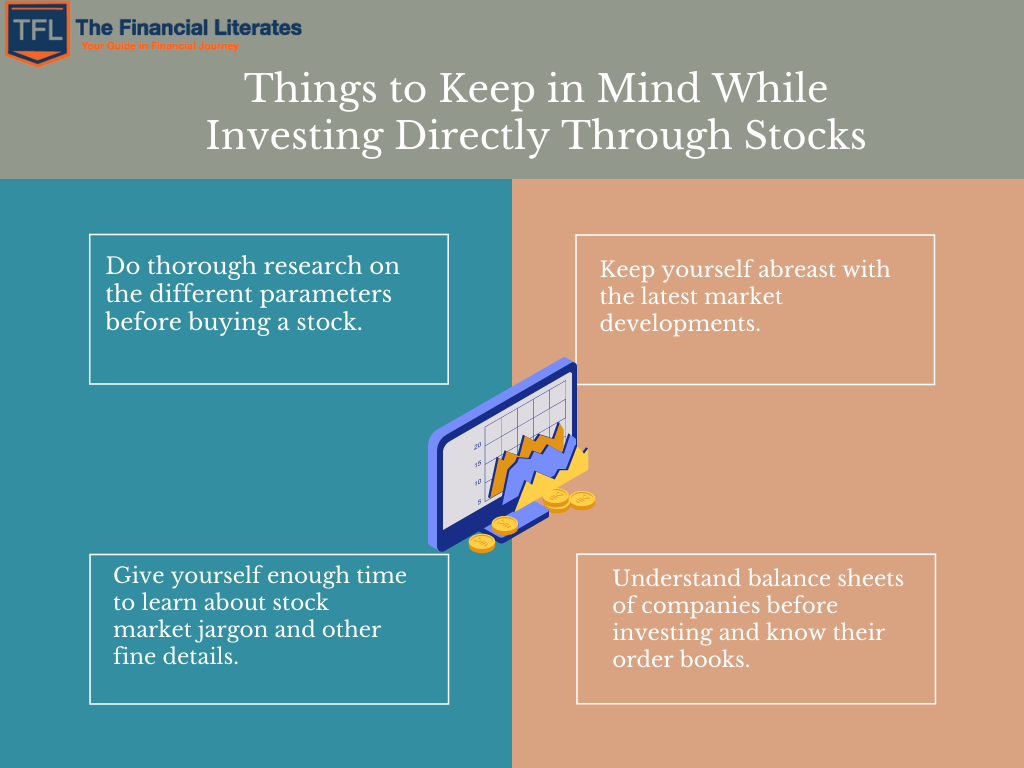
Go slow. Don’t start with trading. Start with understanding businesses. Read annual reports, not stock tips.

Keep it small. If you must scratch the trading itch, limit it to 5-10% of your total equity allocation. Never use your emergency fund, insurance money, or retirement savings for stock picking.

Build a balanced portfolio first. Mutual funds, SIPs, debt instruments, and then if there’s surplus, you can experiment with direct equity. The core of your wealth should be in boring, diversified, low-cost products.

Track your actual returns. Not on a random Tuesday when your portfolio is green. Track your XIRR over 3-5 years. Compare to the Nifty 50. That’s the only honest comparison.

Read – 7 Types of Indian Investors: Which One Are You?

You can participate in equity markets without picking individual stocks

ETFs and mutual funds give you equity exposure with professional management and diversification built in.

Start Your Financial Plan

Frequently Asked Questions

Is direct stock investing good for beginners?

No. Beginners should start with mutual fund SIPs to learn market behaviour without the risk of stock-specific losses. Direct stock investing requires deep understanding of businesses, financial statements, and emotional discipline that most beginners don’t have. SEBI data shows even experienced traders lose money in the majority.

How much money do retail traders lose in India?

In FY 2024-25, individual traders in the F&O segment lost a combined ₹1,05,603 crore, up 41% from ₹74,812 crore in FY23-24. The average per-person loss was ₹1.1 lakh. Over 91% of individual traders lost money. This data comes directly from SEBI.

Should I invest in stocks or mutual funds?

For most Indian investors, mutual funds are the better choice. They offer diversification, professional management, lower transaction costs, and the discipline of SIPs. Direct stock investing requires significant time, knowledge, and emotional control that most people underestimate. If you can’t beat the Nifty 50 over 5 years after all costs, stick to index funds.

What has SEBI done to protect retail traders?

SEBI has implemented multiple reforms since 2024: mandatory loss disclosures at broker login (9 out of 10 traders lose money), increased F&O lot sizes, curbed weekly expiry options, tighter position limits, upfront option premium collection, and is considering investor suitability tests before allowing derivatives trading access.

The stock market rewards patience and punishes impatience. If you’re investing for 20 years, you’ll almost certainly make money. If you’re trading for 20 days, you’ll almost certainly lose it.

DIY = Destroy It Yourself.

💬 Your Turn

Have you tried direct stock trading? What was your honest XIRR over 3+ years compared to a simple Nifty index fund? Share the truth in the comments.