Home Blog Page 12

6 Mutual Fund Myths That Cost Indian Investors Money (And How to Think Instead)

“In investing, what is comfortable is rarely profitable.” – Robert Arnott

When I started this blog in 2009, the most common questions I received were “what is a mutual fund?” and “how does an SIP work?” Basic awareness was the problem then.

That problem has largely been solved. India now has over 10 crore SIP accounts, monthly SIP inflows above Rs 25,000 crore, and a generation of first-time investors who have heard of Nifty index funds and expense ratios.

But awareness and understanding are different things. The most expensive mistakes I see in client portfolios today are not caused by ignorance of what mutual funds are – they are caused by deeply held myths about how they work. These myths persist despite access to information, because they feel intuitively correct.

⚡ Quick Answer

The six most damaging mutual fund myths are: past performance predicts future returns, mutual funds are only for long-term goals, higher-rated funds are better investments, lower NAV means better value, you should chase the sector or theme that is currently performing, and SIPs are always better than lump sum. Each of these produces measurable damage to returns over time. Knowing why they are wrong is more valuable than knowing the right answer.

Mutual fund myths India - 6 common misconceptions

Myth 1: Good Past Performance Means Good Future Performance

This is the most dangerous myth because it is half-true. Past performance is information – just not the information most investors think it is. It tells you something about a fund manager’s skill in a specific market environment. It tells you almost nothing about what will happen next.

The data is consistent: the correlation between a fund’s performance in one five-year period and its performance in the next five-year period is very low across most equity categories. The top-quartile large-cap fund of 2015-2020 was not systematically the top-quartile fund of 2020-2025. Category rotation, market cap cycle shifts, and manager changes mean that yesterday’s winner is often tomorrow’s laggard.

A more useful way to use past performance: look at consistency across cycles, not peak returns in a single period. How did the fund perform during the March 2020 drawdown? During the 2018 mid-cap correction? Consistent downside protection over multiple cycles is a better indicator of process quality than a single high-return number.

Myth 2: Mutual Funds Are Only for Long-Term Investment

This myth locks many investors out of genuinely useful short- to medium-term applications of mutual funds. Mutual funds span a return and risk spectrum from overnight funds (safer than a savings account for short parking) to small-cap equity (high risk, requires 7+ year horizon). They are not a monolithic category.

For money you need in 3-6 months: liquid funds or ultra-short duration funds are appropriate. They offer better post-tax returns than savings accounts for investors in the 30% tax bracket, with reasonable liquidity.

For goals 3-5 years away: hybrid funds or debt-heavy allocations can provide better risk-adjusted returns than FDs, especially for investors who plan their capital gains harvesting.

The rule is simple: match the fund category to the investment horizon. Equity funds for goals 7+ years away. Hybrid for 3-7 years. Debt and liquid for shorter horizons.

The right fund for you depends on your goal timeline, not a category preference.

RetireWise builds goal-linked portfolios where each investment is matched to a specific goal with the right asset class, timeline, and tax treatment.

See How RetireWise Builds Goal-Linked Portfolios

Myth 3: Higher-Rated Funds Are Better Investments

Fund ratings from Moneycontrol, Valueresearch, Morningstar, and CRISIL are useful inputs – but they are not crystal balls. They are backward-looking assessments of risk-adjusted returns over a specific period, using specific metrics.

The research is unambiguous: there is weak to no relationship between a fund’s current star rating and its future returns. A fund that earns five stars after a strong bull run phase may have simply been heavily exposed to the outperforming sectors of that cycle. When the cycle rotates, the same positioning becomes a liability.

The more useful framework: look at the fund’s investment process, the consistency of the fund manager’s application of that process across different market environments, and whether the fund fits your specific allocation need. A three-star fund with a consistent process may outperform a five-star fund with style drift over your investment horizon.

Myth 4: Lower NAV Means Better Value

This is perhaps the most straightforwardly incorrect myth – and it persists because it borrows logic from stock markets, where a lower price does sometimes imply better value relative to earnings. In mutual funds, NAV does not work this way.

NAV simply reflects the current market value of the fund’s holdings per unit. A fund with a NAV of Rs 15 and a fund with a NAV of Rs 150 – if both hold the same portfolio – will produce identical returns on the same invested amount. The number of units you receive is different; the return on your investment is identical.

What matters is not the NAV level but the change in NAV over time. A fund whose NAV grows from Rs 15 to Rs 30 (100% growth) has outperformed a fund whose NAV grows from Rs 150 to Rs 200 (33% growth). The starting NAV is irrelevant to this comparison.

Myth 5: Chase the Performing Theme or Sector

Every year or two, a sector becomes fashionable. Infrastructure in 2007. Pharma in 2014. IT in 2020-21. Defence in 2023-24. Each time, new fund launches follow the trend, and investors pour in near the peak.

The problem is structural: by the time a sector theme is visible enough to attract a new fund NFO and significant retail interest, it has usually already had its major run. Sector valuations at peak popularity are not cheap. And sector funds carry concentration risk that diversified equity funds do not.

The better approach: a well-diversified equity fund will naturally have exposure to performing sectors through its stock selection process – without requiring you to predict which sector will perform next. Theme-chasing substitutes pattern-recognition for genuine diversification and consistently disappoints in the long run.

Myth 6: SIPs Are Always Superior to Lump Sum

SIPs are an excellent mechanism for most retail investors – primarily because they automate the investment decision, remove the need for market timing, and build discipline. These are real and significant benefits.

But SIPs are not mathematically superior to lump sum investment in all market environments. In a rising market, a lump sum invested at the start outperforms a SIP spread over the same period – because every rupee is compounding for the full duration rather than staggered entry points averaging down into gains.

SIPs provide the better risk-adjusted outcome in volatile or sideways markets, which is most of the time. But the choice between SIP and lump sum should be informed by three factors: the current market valuation environment, your ability to tolerate near-term unrealised losses, and whether you have a cash surplus that is genuinely idle or is already serving another purpose.

For a lump sum windfall – a bonus, property proceeds, RSU vesting – a Systematic Transfer Plan (STP) from a liquid fund into equity over 6-12 months is often a sensible middle path: it preserves some lump sum efficiency while reducing concentration risk at a single entry point.

Read: How Healthy Is Your Mutual Fund Portfolio?

Mutual funds are excellent investment vehicles. But they work well only when investors hold correct mental models about them. Every myth on this list has a portfolio cost – and it compounds.

It is not a numbers game. It is a mind game.

Which of these six myths has your portfolio been operating on?

A RetireWise portfolio review identifies which myths are embedded in your current holdings – and what it would take to correct course.

Book a Free 30-Min Call

Your Turn

Which of these six myths has cost you the most in your investing journey – and what changed your mind? Share in the comments.


Why Indian Investors Still Underallocate to Equity (And What the Data Actually Shows)

“The stock market is a device for transferring money from the impatient to the patient.” – Warren Buffett

India now has over 10 crore mutual fund SIP accounts. Monthly SIP inflows regularly cross Rs 25,000 crore. The “Mutual Fund Sahi Hai” campaign has been running for nearly a decade. AMFI’s data shows Demat account openings running at 30-40 lakh per month during bull markets.

By any measure, Indian retail participation in equity has grown dramatically from the 1-2% of the population that was invested a decade ago. Yet a paradox remains: equity still accounts for a small fraction of Indian household financial savings. The bulk of household wealth continues to sit in gold, real estate, fixed deposits, and insurance-linked products.

Why? And what does it mean for you?

⚡ Quick Answer

Indian retail participation in equity has grown significantly but still accounts for a small share of household savings. The barriers are real: genuine fear of loss, behavioural patterns inherited from fixed-income generations, information asymmetry, and past experiences with mis-sold equity products. But long-term equity has been the most effective wealth-building asset in India over every 15+ year period. The solution is not exhortation – it is structure: automated SIPs, goal-linked investing, and an understanding of why volatility during accumulation is actually beneficial.

Equity participation India - why Indians underinvest in stocks and mutual funds

The Current State of Equity Participation

India’s mutual fund industry manages approximately Rs 65-70 lakh crore in assets (2025 data). Roughly 50-55% of that is in equity-oriented schemes. Total Demat accounts have crossed 18 crore. Monthly SIP inflows now regularly exceed Rs 25,000 crore.

This represents a transformation from a decade ago. But put it in context: India has 1.4 billion people. A significant portion of the working-age population with investable surplus has no meaningful equity exposure. The majority of Indian household financial savings still flows into low-return, capital-guaranteed instruments.

This is not irrational. It is the product of specific, understandable fears and behavioural patterns. Understanding those patterns is more useful than dismissing them.

Why Indian Investors Avoid Equity

Fear of capital loss is the most commonly cited reason – and it is legitimate. Unlike an FD or a PPF, equity investments can and do lose value over short periods. For a first-generation saver whose parents never invested in markets, the possibility of seeing Rs 5 lakh become Rs 3.5 lakh within a year is genuinely frightening, regardless of what happens over 15 years.

The second barrier is information asymmetry. Financial media creates an impression that equity investing requires constant monitoring, specialised knowledge of stock selection, and the ability to time markets. This is false for SIP-based mutual fund investors, but the impression persists and creates artificial barriers to entry.

The third barrier is historical mis-selling. An entire generation of investors has equity exposure through ULIPs sold in the 2005-2010 period – products that mixed insurance and investment inefficiently, had high charges, and underperformed at precisely the moments (2008, 2011) when the investor most needed them to hold value. These experiences created lasting distrust that is not easily overcome with rational arguments.

The question is not whether equity is appropriate. The question is how much equity, for which goals, and structured how.

RetireWise builds equity allocation for each client based on their specific goals, timeline, and actual risk capacity – not a generic “stay invested” recommendation.

See How RetireWise Structures Equity Allocation

The Behavioural Patterns That Destroy Equity Returns

Indian retail investors who do participate in equity consistently underperform the indices they invest in. This is not because the funds are bad – it is because investors buy near market peaks (when media coverage is most positive) and sell near market bottoms (when fear is highest). The behaviour gap between what the Nifty returns and what the average SIP investor actually receives has been documented at 1.5-3% annually across various studies.

Three specific behaviours account for most of this gap. Following tips from social media, colleagues, and TV analysts. Switching funds based on short-term underperformance. Stopping SIPs during market corrections – precisely when more units should be accumulating.

Each of these behaviours has a logical feel at the time. Following a stock tip feels like acting on information. Switching a fund that has underperformed feels like prudent management. Stopping a SIP when “markets are too risky” feels like capital protection. Each of them, executed consistently, produces substantially worse outcomes than systematic inaction.

What Actually Works: Structure Over Motivation

The investors I have seen build genuine long-term wealth through equity have not done so because they were more disciplined, more knowledgeable, or less emotional than others. They have done so because they built structures that removed discretionary decision-making from the investment process.

Automated SIPs on salary date. No provision to pause the SIP without calling the advisor first. A written investment policy that specifies what to do in specific market conditions. Annual review rather than daily monitoring. Goal-linked SIP names that create psychological accountability.

These structural elements replace willpower with process. They do not require the investor to be braver or more patient than they naturally are. They make the default action (do nothing, keep investing) the path of least resistance.

The Indian Equity Long-Term Record

Over every 15-year rolling period in Nifty history, equity has delivered positive real returns – returns above inflation. The same cannot be said of FDs (which have periodically delivered negative real returns when inflation was high), gold (which has significant multi-year flat periods), or real estate (which has high transaction costs and illiquidity).

This does not mean equity is always better than these alternatives. For short time horizons, it demonstrably is not. For goals within 3-5 years, equity’s volatility creates real risk of shortfall. But for goals 10-20 years away – retirement, children’s higher education, building generational wealth – the historical record for systematic equity investing is compelling.

The question for most Indian savers is not whether to include equity in their financial plan. It is how much equity, structured how, for which specific goals.

Read: What Is Equity? Understanding Its Real Meaning

India’s equity participation story is still in its early chapters. The investors who build structure now – automatic SIPs, goal-linked allocation, annual review – will be the ones who look back in 2045 and say they got it right.

Bear markets are long-term investors’ best friend. Structure is what lets you survive to see why.

What percentage of your financial savings is in equity right now – and is it right for your goals?

RetireWise reviews your complete asset allocation and tells you whether your equity exposure is too low, too high, or correctly positioned for your specific financial goals and timeline.

Book a Free 30-Min Call

Your Turn

What was the moment that made you confident enough to invest in equity – or if you are still hesitant, what is the specific fear holding you back? Share in the comments.

Black Swan Events and Your Portfolio: What Nassim Taleb Actually Said

“The inability to predict outliers implies the inability to predict the course of history.” – Nassim Nicholas Taleb

In March 2020, I got a call from a long-standing client. Markets had fallen 35% in three weeks. He wanted to exit everything. His reasoning was simple: nobody had seen this coming, so nobody could say when it would stop.

We pulled up his stress test numbers. We had run them the previous year. His retirement was 7 years away. His portfolio could survive a 40% drawdown and still recover in time. He stayed invested. The market bottomed on March 23, 2020 and recovered its losses by November the same year.

That client’s experience is the correct real-world application of the black swan framework – not prediction, not timing, but building a portfolio that can survive what you cannot predict.

⚡ Quick Answer

A black swan event is rare, unpredictable, has catastrophic consequences, and is explainable in hindsight – as defined by Nassim Nicholas Taleb. They cannot be predicted or timed. For investors, the correct response is not to predict or avoid them, but to build antifragile portfolios that can absorb them: adequate emergency fund, no leverage, diversification across assets, and sufficient liquidity so you never have to sell equity at the worst moment. The greatest danger from black swans is not the event itself – it is the investor behaviour the event triggers.

Black swan events investing India - Taleb framework for investors

What Is a Black Swan Event?

Nassim Nicholas Taleb – the former Wall Street trader and author of “The Black Swan” – defined three criteria for an event to qualify. It must be extremely rare and genuinely unpredictable. It must have catastrophic consequences. And in hindsight, people will feel it should have been predictable – they will construct narratives explaining why it was inevitable.

That third criterion is what makes black swans particularly dangerous. After every major market crash, there are analysts and commentators who explain precisely why it was obvious. This creates the illusion that such events are predictable, which leads investors to believe that the next one can be avoided with sufficient cleverness. It cannot.

The 2008 Financial Crisis Versus the Dot-Com Bubble

These two events are often discussed together, but Taleb distinguishes them usefully. The 2008 crisis was a genuine black swan – specifically, that large numbers of mortgage-backed securities comprised of supposedly investment-grade loans could default simultaneously was not widely modelled. The housing bubble was visible to some; the systemic contagion from its collapse was not.

The dot-com collapse was less of a black swan. The valuations of technology companies with no revenues or profits at price-to-earnings multiples of 500 were obviously unsustainable to anyone who thought about it. That a bubble will eventually burst is not unpredictable – only the timing is. The 2000 collapse was closer to a bubble correction than a genuine black swan.

The distinction matters for investors because it shapes the response. For predictable bubbles, there is some merit in recognising overvaluation and reducing exposure. For genuine black swans – events that affect global systems in ways nobody modelled – the appropriate response is portfolio structure, not prediction.

You cannot time a black swan. You can build a portfolio that survives one.

RetireWise stress-tests every retirement plan against a range of shock scenarios – including 30-40% market drawdowns – to ensure the plan survives what cannot be predicted.

See How RetireWise Stress-Tests Your Plan

Why Hindsight Bias Makes Black Swans More Dangerous

After a black swan, the narrative machine runs at full speed. News articles, social media, and financial experts explain in detail why the event was foreseeable. This hindsight reconstruction is deeply misleading – because it suggests that the next black swan can also be foreseen if you are paying sufficient attention.

This is the hindsight bias working against investors. A client who exits equity after a black swan, convinced that they should have seen it coming and will watch for the next one, is not applying a lesson – they are applying a fiction. Black swans are definitionally unpredictable from within the system they affect.

The investor who sold in March 2020 and waited for “clarity” before reinvesting missed one of the fastest market recoveries in Indian market history. Waiting for clarity after a black swan is not prudence; it is paralysis dressed up as caution.

Taleb’s Framework for Investors

Taleb does not suggest that investors can avoid black swans. His framework is about building systems that are not just resilient to shocks, but antifragile – meaning they actually benefit from certain kinds of volatility.

For most Indian retail investors, the practical application is simpler than Taleb’s technical prescriptions. It comes down to three principles.

Never be forced to sell equity at the bottom. The only way a black swan permanently damages a long-term investor’s portfolio is if they are forced to sell during the decline – to fund living expenses, to repay a loan, or because the psychological pain becomes unbearable. The first two can be controlled by structure: an adequate emergency fund (6-12 months of expenses in liquid instruments), no leverage in the investment portfolio, and a bucket strategy for retirees that keeps 1-2 years of withdrawals in cash equivalents.

Diversify across genuinely uncorrelated assets. A portfolio that is 100% Indian equity is exposed to the full downside of any event that affects the Indian market. Adding international equity, gold, and fixed income creates some diversification – not enough to eliminate black swan impact, but enough to reduce the maximum drawdown and the recovery timeline.

Maintain the ability to invest more during the black swan. Black swan events create extraordinary buying opportunities for investors who have liquidity. This is the asymmetric benefit Taleb describes: the long-term investor who has an emergency fund, no margin loans, and a running SIP is in a position to benefit from the crash rather than be destroyed by it. Every SIP instalment during the crash buys units at prices that will look extraordinarily attractive in 5 years.

The Behavioural Problem Is Bigger Than the Event

Every major market crisis in India – 1992 (Harshad Mehta), 2000 (dot-com), 2008 (global financial crisis), 2013 (rupee crisis), 2020 (COVID), 2022 (rate hike cycle) – has been followed by a full recovery and new all-time highs. The Indian economy has grown consistently through each of these events. The companies in Sensex and Nifty continued to sell products, generate revenues, and pay employees throughout.

The investors who were permanently damaged were those who sold during the panic and never reinvested. Not because the market did not recover – it did. But because the psychological cost of re-entering after a painful crash is high enough that many people never do. They wait for certainty that never comes.

The lesson is not that you should not worry about black swans. It is that the behaviour they trigger is more dangerous than the events themselves. The portfolio structure that keeps you from being forced to sell, and the written investment policy that tells you what to do in advance, are more valuable than any prediction about what the next crisis will be.

Read: Hindsight Bias – Did You Know It Already?

You will not predict the next black swan. Neither will I. But if your emergency fund is in place, your SIP is running, and you are not leveraged, you are positioned to survive it and possibly benefit from it. That is Taleb’s real lesson.

Build for what you cannot predict. That is the only prediction that matters.

Is your portfolio structured to survive a 35-40% drawdown without forced selling?

RetireWise runs stress tests on every retirement plan to verify it can survive a range of shock scenarios with the retirement date intact. The stress test reveals the gaps before a crisis does.

Book a Free 30-Min Call

Your Turn

Which market crisis were you invested through – and did you stay invested or exit? The decision you made then, and how it turned out, is the most useful data point about how you will respond to the next one. Share in the comments.

Why It’s Simpler to Succeed With Financial Planning Than You Might Think

In March 2020, with the COVID crash underway, the market had fallen 30% in three weeks. My phone was ringing constantly. Clients who had been calm investors for 5 years were suddenly asking if they should sell everything.

I kept repeating the same thing to each of them: “Your financial plan is intact. Your goals have not changed. The market has not changed your retirement date. Stay the course.”

All of them who stayed the course were back to their pre-COVID portfolio value by August 2020. Most went on to significant gains by 2021.

The ones who sold in March 2020 locked in their losses permanently.

Financial planning sounds complicated. But what it actually does is simple: it gives you a framework clear enough to hold during the moments when everything feels uncertain.

Quick Answer

Financial planning is simpler than most people think – not easy, but simple. The core principles are three: spend less than you earn, take on only purposeful debt, and invest consistently for the long term. The complexity comes from life – income changes, goals shift, markets move. A financial plan handles these systematically rather than reactively. You do not need to understand complex financial products to succeed. You need clarity, discipline, and a review process.

The misconception that keeps people stuck

The most common reason people delay financial planning is this: “I will start when I have figured it out a bit more.”

They are waiting for the moment when they understand enough to begin. But that moment never comes, because financial planning is not a knowledge problem. It is an action problem. The people who succeed are rarely the most financially sophisticated. They are the most consistent.

A client who invests Rs.15,000 a month in a simple equity mutual fund from age 30 to 60 – without ever trying to time the market, without ever switching to the “best fund” – will almost certainly build a larger corpus than a client who reads every financial newsletter, switches funds every year, and pauses SIPs during market corrections.

The complexity of financial planning is mostly in the implementation over time. The principles themselves are not complex.

The three principles that actually matter

1. Spend less than you earn

This sounds obvious. But the average Indian household saves 20 to 25% of income – which sounds reasonable until you look at where the rest goes. Lifestyle inflation quietly absorbs every salary hike. The executive earning Rs.2 lakh a month is often just as cash-constrained as the one earning Rs.80,000, because spending has expanded to fill the available income.

The first step in any financial plan is creating a gap – a meaningful difference between income and spending. This gap is what funds goals. Without a real gap, there is nothing to plan with.

A budgeting app (INDMoney, Monefy, or even a simple spreadsheet) used honestly for one month reveals where the gap can be created. Most people discover Rs.10,000 to Rs.20,000 of redirectable monthly spending they did not consciously choose.

2. Take on purposeful debt only

Not all debt is bad. A home loan at 9% on a property you will live in for 20 years is very different from a personal loan at 18% for a vacation, or a credit card balance at 36% annualised for lifestyle purchases.

The question before any debt is: what is this debt funding, and will the benefit justify the cost? A home loan funds an asset you use and can sell. An education loan funds your child’s earning capacity. A vehicle loan for a basic commute car may be justified. An EMI on a phone upgrade you didn’t need is a tax on impatience.

The EMI-to-income ratio should ideally stay below 35 to 40% of monthly take-home. Above that, you have limited flexibility – any income disruption creates a crisis.

3. Invest consistently for the long term

Consistent investing through a SIP – the same amount every month, regardless of market level – takes the timing decision out of the equation. You buy more units when markets are cheap, fewer when they are expensive. The average cost over time tends to be lower than any attempt to time the market.

The long term matters because of compounding. Rs.10,000 invested monthly from age 30 grows to approximately Rs.3.5 crore by age 60 at 12% CAGR. Wait 10 years to start, and the same Rs.10,000 monthly at the same return grows to only Rs.1 crore by 60. The cost of delay is not 10 years of investments – it is 70% of your final corpus.

What financial planning is actually about

These three principles are the engine. Financial planning is the system that keeps the engine running despite what life throws at it – a job change, a medical emergency, a market crash, a business opportunity, a change in family situation.

A financial plan has five components that work together:

Goals with timelines and costs: Not “save for retirement” but “build Rs.8 crore by 2042 to support Rs.1.2 lakh monthly lifestyle.” Specific enough to measure, concrete enough to act on.

Insurance: Term life cover of at least 10 to 15 times annual income to protect your family if you are the primary earner. Health insurance adequate for hospitalisation without depleting savings. These protect the plan from catastrophic disruption.

Emergency fund: 4 to 6 months of expenses in a liquid instrument. This is not investment money. It is protection against the inevitable – job disruption, medical bill, urgent home repair. Without it, every emergency becomes a debt event.

Investments aligned to goals: Short-term goals (under 3 years) in debt. Medium-term goals in balanced allocation. Long-term goals (10-plus years) in equity. The asset allocation should match the timeline, not the investor’s comfort level with complexity.

Half-yearly review: Once every 6 months, review whether income, expenses, goals, or family situation has changed materially. Rebalance if asset allocation has drifted significantly. No other review is needed unless something changes fundamentally.

The plan is not complicated. The discipline to follow it is.

Most financial planning failures are not failures of knowledge – they are failures of consistency. Having someone review your plan and hold you to the process makes a measurable difference over 20 years. That is what we do with clients at RetireWise.

Book a Clarity Call

The fear of facing the real picture

One thing that keeps people from starting is that they are afraid of what the numbers will show. If I look honestly at what I earn, what I spend, and what I have saved – the gap between where I am and where I need to be might be uncomfortable.

This is a legitimate fear. And it is the most expensive one in financial planning.

The person who looks at the gap at 35 has 25 years to close it. The person who avoids looking until 50 has 10 years – and the compounding mathematics become much harder.

Knowledge of a problem is always better than avoidance of it. A financial plan does not make bad news disappear, but it gives you a structured path through it. And often, the picture is not as bad as feared – but it cannot be improved without first being seen.

Also read: What is Financial Planning? The 6-Step Process That Actually Works

Frequently asked questions

How do I start financial planning if I don’t know where to begin?

Start with three things in this order: first, understand your actual cash flows (track income and spending for one month using any budgeting app or spreadsheet). Second, ensure basic insurance is in place – term life cover of 10 to 15 times annual income and adequate health insurance. Third, set up one SIP in a diversified equity mutual fund for long-term savings, even if the amount is small. These three steps alone put you ahead of most people. Everything else – asset allocation, tax optimisation, goal-based planning – can be layered on top as you learn more.

What is the most common financial planning mistake Indians make?

The most common mistake is mixing insurance and investment. Most people have one or more endowment or ULIP policies that provide inadequate life cover and poor investment returns – typically 4 to 5% IRR. They pay large premiums for this combination that serves neither goal well. The solution is to separate: buy a pure term insurance plan for life cover (at a fraction of the endowment premium) and invest the premium difference in equity mutual funds for long-term growth. This one change, compounded over 20 years, can make a substantial difference to the retirement corpus.

What is the one financial planning step you have been putting off – and what is making it difficult to take? Share in the comments. Sometimes naming the obstacle is the first step.

5 Best Mobile Apps for Budgeting in India

12

One of my clients – a senior executive at a Jaipur manufacturing company – showed me his phone last year. He had 23 apps installed. Not one was a budgeting app.

“I know what I spend,” he said. “Roughly.”

He was surprised to discover he was spending Rs.18,000 a month on food delivery alone. He thought it was Rs.8,000. That Rs.10,000 monthly gap – compounded over 15 years at 12% – becomes Rs.50 lakh of retirement corpus. “Roughly” is expensive.

Quick Answer

The best budgeting app for India in 2026 is the one you will actually use consistently. For automatic tracking: INDMoney or Fi Money. For simple manual entry: Monefy. For comprehensive multi-bank view: Perfios. For couples: Spendee. Walnut (popular in 2019) was acquired by PayTM and subsequently shut down – do not install it.

Why budgeting comes before investing

I tell every new client the same thing: “We cannot build a financial plan until we know your actual cash flows – not what you think they are, but what they actually are.”

Most people overestimate how much they save and underestimate how much they spend. The gap is usually in subscriptions forgotten, food delivery that feels small per order, and lifestyle expenses that grew gradually with income. A budgeting app closes this gap with data.

The other benefit is psychological. Seeing a category hit its limit mid-month changes behaviour without any lecturing – just data. Most people are genuinely surprised by their own spending patterns when they see it in a chart.

What changed since 2019

The big change is UPI. With UPI now handling over 10 billion transactions monthly in India, most apps can auto-capture UPI payments from SMS or bank statements. You no longer need to remember to log each transaction manually.

The second change is the Account Aggregator (AA) framework – an RBI-regulated system that allows apps to access your bank transaction data with read-only permission you grant and can revoke. This is far safer than the old method of sharing net banking credentials.

The third change is that investment aggregator apps (INDMoney, Fi Money, Groww) now include budgeting – so spending, investments, and net worth are visible in one place.

Best budgeting apps in India – 2026

1. INDMoney – best for complete financial overview

INDMoney started as an investment aggregator and added budgeting as a feature. It connects to bank accounts, credit cards, and investment accounts via the AA framework to give a complete financial picture.

Best for: Investors who want to track spending alongside mutual funds, stocks, and EPF in one place.

Key features: Automatic transaction categorisation, net worth tracker, mutual fund and EPF tracking, credit score monitoring, subscription detection.

Cost: Free for basic features. Premium for advanced analytics.

Limitation: Budgeting is a secondary feature – investment tracking is the primary focus. Not as granular as dedicated budgeting apps.

2. Fi Money – best for automatic UPI and bank tracking

Fi began as a neobank but now works with any bank through the AA framework. Its spending analysis auto-categorises transactions and identifies recurring subscriptions without manual entry.

Best for: People who want automatic tracking with minimal effort.

Key features: Automatic transaction import, smart categorisation, subscription tracking, savings goal setting, spending insights and trends.

Cost: Free with Fi account; limited multi-bank features without Fi.

Limitation: Works best for Fi banking customers. Multi-bank aggregation is available but less seamless than with a dedicated Fi account.

3. Perfios – best for multi-bank comprehensive tracking

Perfios is one of India’s oldest personal finance platforms. It pulls data from multiple banks via bank statement upload or net banking connection, and categorises transactions including EMIs, investments, and expenses.

Best for: People with multiple bank accounts and credit cards who want everything consolidated. Also good preparation before a financial planning review.

Key features: Multi-bank aggregation, comprehensive expense categorisation, income vs expense tracking, tax-related reporting.

Cost: Free basic, paid premium.

Limitation: Interface feels less modern. Primarily desktop-first, though mobile app is available.

4. Monefy – best for mindful manual tracking

Monefy is the minimalist option. You log each expense manually in a few taps – category, amount, done. The visual pie interface makes spending patterns immediately obvious. No bank linking, no automatic import.

Best for: People who prefer conscious, manual tracking where logging each expense itself creates awareness. Good for those who prefer not to link bank accounts to apps.

Key features: Very quick manual entry, visual spending distribution, Google Drive or Dropbox sync, Face ID and Touch ID security.

Cost: Free basic; one-time purchase for cloud sync and multiple currency features.

Limitation: Fully manual – no automatic import. Requires consistent discipline to update after every transaction.

5. Spendee – best for couples tracking together

Spendee supports shared wallets – useful for couples tracking household expenses together. It also connects to bank accounts for automatic import.

Best for: Couples or families who want a shared view of household spending.

Key features: Shared wallets, bank connection, budget limits by category, visual reports, multi-currency support.

Cost: Free basic; subscription for shared wallets and bank connection features.

Limitation: Free version is quite limited – most useful features require the subscription.

What happened to Walnut?

Walnut was the most recommended Indian budgeting app until 2020. It was acquired by PayTM in 2021 and subsequently shut down. The standalone app is no longer available. If you still have it installed, you should switch to an alternative – INDMoney or Monefy are the closest replacements depending on whether you prefer automatic or manual tracking.

Three questions before you choose

How much effort will you actually put in? Disciplined manual tracking with Monefy builds better financial awareness than automatic import you never look at. But if you are consistently busy, automatic import you check weekly is better than a perfect app you abandon in two weeks.

Are you comfortable linking your bank? AA-framework apps (read-only access, revocable at any time) are safer than older apps requiring full net banking credentials. This is a legitimate concern – manual apps like Monefy are a completely valid alternative.

Standalone or integrated? If you just want expense tracking, Monefy is simpler. If you want budgeting with investments and net worth, INDMoney or Perfios make more sense.

Also read: Budgeting: The First Step to Financial Success

Knowing your cash flows is the foundation of financial planning

Before building any investment strategy, we need actual income and expense data. A month of tracking often reveals Rs.15,000 to Rs.25,000 of redirectable monthly savings that clients didn’t realise they had.

Explore RetireWise

Frequently asked questions

Which is the best budgeting app for India in 2026?

For automatic bank tracking with investment overview: INDMoney or Fi Money. For simple manual tracking: Monefy. For multi-bank comprehensive view: Perfios. For couples tracking together: Spendee. The best app is the one you will use consistently – a simple app used daily beats a feature-rich one opened once a month. Walnut (previously popular) was shut down after PayTM’s acquisition in 2021.

Is it safe to link my bank account to a budgeting app?

Apps using the Account Aggregator (AA) framework regulated by RBI are the safest for bank linking. AA provides read-only access to transaction data – the app cannot initiate transfers or access full net banking. You can revoke access at any time from the AA portal. Avoid apps that require full net banking credentials. If you are uncomfortable linking accounts, manual-entry apps like Monefy are a valid alternative that many people find equally effective.

What happened to Walnut budgeting app?

Walnut was acquired by PayTM in 2021. After the acquisition, PayTM integrated some Walnut features into its own platform and shut down the standalone Walnut app. It is no longer available as an independent budgeting app. Previous Walnut users should switch to INDMoney or Fi Money for automatic tracking, or Monefy for manual tracking.

Which budgeting app are you using, and what works or doesn’t work for you? If you track expenses in a spreadsheet instead, share that – some of the most disciplined budgeters I know use Google Sheets.

Why Your Mutual Fund is Underperforming, And Why That Might Be Good News

A client called me recently. Frustrated. His large-cap fund had lagged its peer average for nearly two years. He had done his research, screenshots of return tables, star ratings, everything.

“Hemant, I want to move this to a top-performing fund. Tell me which one.”

My answer: “I’m actually happy your fund is underperforming right now. Don’t move.”

He went quiet. Then: “Are you serious?”

I was. And by the end of that conversation, so was he.

⚡ Quick Answer

Short-term underperformance in a well-managed fund with a sound investment philosophy is not a reason to exit. The most expensive mistake Indian mutual fund investors make is exiting disciplined funds during their lean phases, right before the cycle turns. This post explains why, and what to watch instead of return rankings.

Why You Chose an Active Fund in the First Place

When you invested in an actively managed fund, you made a decision: “I want a professional to beat the market over time.” Not over three months. Not over one year. Over a full market cycle, typically 7 to 10 years.

If your performance horizon is six months, you chose the wrong product. Index funds exist for a reason.

But if your goal is genuine long-term wealth creation, retirement corpus, children’s education, financial independence, then you need to think like the fund manager you hired, not like a trader watching daily NAVs.

The 2007-2008-2009 Lesson That Nobody Talks About

Let me tell you a story that shaped how I think about fund underperformance.

At the end of 2007, some of India’s best-known large-cap funds were lagging their peers significantly. Investors were angry. Distributors were fielding calls. The funds saw heavy redemption pressure, investors exiting to chase the “better” funds of that moment.

Then came 2008. Markets fell nearly 55% from peak to trough. The conservative, value-oriented funds that had lagged during the bull phase fell far less than their aggressive peers. They preserved capital when it mattered most.

Then came 2009. Markets recovered sharply. The funds that had protected the downside now participated fully in the recovery, while the “top-performing” funds of 2007 that investors had fled into were still rebuilding from deeper losses.

The Full Market Cycle, A Simplified Illustration

Why Downside Protection Wins Long Term

2007 Bull Phase

Conservative Fund Lags

Investors frustrated. Redemptions rise.

2008 Crash

Conservative Fund Falls Less

Capital protected. Corpus intact.

2009 Recovery

Conservative Fund Outperforms

Investors who exited missed this entirely.

Illustrative of general market behaviour. Not specific fund data.

The investors who exited the conservative funds in 2007 did not benefit from the 2009 recovery. They bought high in the “hot” funds, sold low in the crash, and missed the bounce. Every step of that sequence was driven by emotion, not logic.

This is not an isolated historical curiosity. The same pattern has repeated in 2013, in 2020, and again in 2022-23. The cycle does not change. Only the fund names do.

The Bubble in “Quality”, A Warning That Ages Well

There are periods in every market cycle when certain categories of stocks become popular to the point of being expensive. Fund managers who chase these stocks look brilliant during the momentum phase. Fund managers who avoid them look like they are missing the bus.

Value-oriented fund managers who avoid expensive popular stocks will lag their benchmarks during momentum phases. This is not a failure of process. It is the process working as designed. When the expensive stocks correct, the value manager’s portfolio holds up better.

The question to ask is not “why is this fund underperforming right now?” The question is: “Is the fund manager sticking to the investment philosophy I hired them for?”

If yes, patience is the right response. If the investment philosophy itself has shifted, that is a different conversation.

The Most Expensive Gap in Investing: Returns Vs Investor Returns

Here is a fact that should make every mutual fund investor stop and think.

Peter Lynch managed the Magellan Fund at Fidelity from 1977 to 1990 and generated over 29% annual returns, a record that outpaces Warren Buffett’s publicly reported equity returns over the same period. One of the greatest fund management track records ever assembled.

The average investor in that fund? Made less than 15%.

⚠️ The Behaviour Gap

Investors entered the Magellan Fund after strong performance periods and exited after weak ones. They consistently bought high and sold low, not because they were foolish, but because they acted on emotion. The fund returned 29%. They captured 15%. The difference is pure investor behaviour.

This gap, between what a fund earns and what its investors actually capture, is the central problem in personal finance. It is not solved by finding better funds. It is solved by better investor behaviour.

This is the core argument of my book Modifying Investor Behaviour, that the biggest threat to your wealth is not market volatility or poor fund selection. It is the sequence of decisions you make when your portfolio is uncomfortable.

What You Should Actually Do When Your Fund Underperforms

Not exit automatically. Not chase the current top performer. Instead, ask three questions:

1. Has the investment philosophy changed? A value fund that suddenly starts buying momentum stocks has changed. A fund manager who quietly shifted the portfolio away from the stated mandate has changed. If the philosophy is intact, the underperformance may be a feature, not a bug.

2. What is the quality of the portfolio today? A fund holding undervalued businesses with strong fundamentals that are temporarily out of favour is different from a fund holding structurally weak businesses. Look at what the fund holds, not just what it has returned.

3. Is the underperformance consistent with the fund’s style in this market environment? A value fund will lag in a momentum market. A quality fund will lag in a recovery rally driven by beaten-down cyclicals. Style-consistent underperformance is not a red flag. Style-inconsistent underperformance is.

💡 The Right Diversification

Exposure to 4-6 fund houses with different investment styles is a more robust approach than concentrating in one AMC. When your value manager is lagging, your growth manager may be leading, and vice versa. Diversification of fund manager style is as important as diversification of asset class.

One Honest Disclaimer

I am not claiming any specific fund will outperform in the future. I have no idea which investment strategy will do better in the next 3 years. Neither does anyone else, regardless of how confident they sound on television.

What I do know, from 25 years of sitting across from investors during market cycles, is that the exit decision made during peak frustration is almost always the wrong decision.

The investor who exited the conservative fund in December 2007 locked in their underperformance, missed the downside protection in 2008, and missed the recovery in 2009. All three bad outcomes came from one impatient decision.

Is your portfolio built for patience, or just for recent performance?

A structured review helps separate signal from noise. Which funds are worth staying in, which need watching, and which genuinely need to go.

Talk to a RetireWise Advisor

Frequently Asked Questions

How long should I wait before exiting an underperforming mutual fund?

A minimum of 3-5 years of underperformance relative to peers, not just benchmark, warrants a serious review. One or two bad years in an otherwise consistent fund with an intact investment philosophy is not a signal to exit. The key question: is the manager’s process still sound?

Why do mutual fund investors get lower returns than the fund itself?

This is the behaviour gap. Investors buy after strong performance and exit after weak performance, systematically buying high and selling low. Peter Lynch’s Magellan Fund returned 29% annually for 13 years. The average investor in that fund made less than 15% because of poorly timed entries and exits.

What is downside protection in mutual funds?

A fund’s ability to fall less than peers or benchmark during market corrections. A fund that falls 30% when peers fall 50%, and then rises proportionally in recovery, will outperform aggressive funds over a full market cycle even if it lagged during the bull phase.

Is it okay if my fund underperforms for 1-2 years?

Yes, if the investment philosophy is intact. Value funds and contra funds typically underperform during momentum-driven markets and outperform during corrections and recovery phases. Style-consistent underperformance is a reason to stay, not exit.

How many fund houses should I have in my portfolio?

Exposure to 4-6 fund houses with different investment styles is a reasonable approach. Having all equity in one AMC concentrates both performance and operational risk. Different managers will lead at different points in the cycle.

The investors who made the most money from India’s equity markets over the last 25 years were not the ones who found the best funds. They were the ones who stayed in decent funds long enough for compounding to do its work.

Do the Right Thing and Sit Tight.

💬 Your Turn

Have you ever exited a fund during underperformance and later regretted it? Or stayed in one when everything said exit, and been rewarded for patience? Tell us below.

Personal Accident Insurance in India: A Complete Guide (2026)

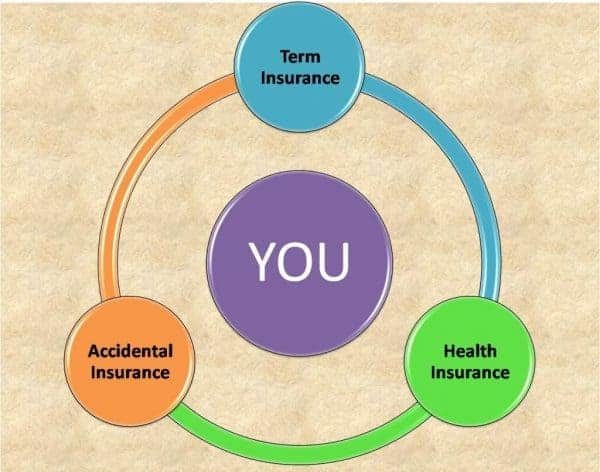
Accidental insurance is one of the most ignored insurance categories in India.

Most people buy insurance either for tax saving or investment returns — and personal accident insurance offers neither. But that is exactly why it deserves more attention, not less. The value of insurance is not in the tax deduction. It is in what happens to your family when you can’t earn.

⚡ Quick Answer

Personal accident insurance pays your family — or you — when an accident results in death, permanent disability, partial disability, or temporary inability to work. It fills the gap that term insurance and health insurance leave. Term insurance pays on death. Health insurance pays hospitalisation bills. Accident insurance pays for permanent loss of earning capacity. For most salaried executives, a Rs. 50 lakh to Rs. 1 crore accidental cover at Rs. 2,000-5,000 per year is a no-brainer.

Why Accidents Are Not “Other People’s Problems”

Accidents can happen anywhere — riding a bike, taking a shower, cooking, driving to work. India has one of the highest road accident rates in the world. According to Ministry of Road Transport data, India records over 4 lakh road accidents per year with approximately 1.5 lakh deaths.

But the more financially damaging scenario is not death. It is permanent disability — losing both legs in an accident, losing sight, losing a limb. In this scenario, term insurance does not pay (no death). Health insurance covers the hospital bill but not the permanent loss of your earning capacity. Only personal accident insurance fills this gap.

What Personal Accident Insurance Covers

Accidental Death: If you die as a result of an accident, your nominee receives 100% of the sum insured. Note: suicide, self-injury, war, and armed force operations are excluded. This is purely accidental death — sudden, unexpected, caused by external means.

Permanent Total Disablement: Loss of both hands or both feet, loss of one hand and one foot, loss of a limb and an eye, complete irrecoverable loss of sight in both eyes, complete loss of speech and hearing — 100% of sum insured is paid. You are alive but permanently unable to earn. This is the scenario most people never plan for.

Permanent Partial Disablement: Loss of one hand, one leg, one eye, or even specific fingers and toes. Each insurer has a defined table — loss of one index finger might be 10% of sum insured; loss of one foot might be 50%. The specific schedule is in the policy document.

Temporary Total Disablement: A serious accident where there is no permanent loss, but the doctor orders complete bed rest for 4-6 weeks — you can’t work, you lose income. Temporary total disablement typically pays 1% of sum insured per week, for a maximum of 100 weeks. This is the “income replacement” benefit for shorter recovery periods.

💡 Why This Is Different from Term Insurance

Term insurance pays only on death. If you are permanently disabled and alive — unable to work, with ongoing medical expenses, with a family depending on your income — term insurance does nothing. Personal accident insurance addresses the disability scenario that term insurance ignores. Insurance is complete only when both are in place.

How Much Accident Insurance Do You Need?

The standard benchmark: 100 times your monthly income. If you earn Rs. 1 lakh per month, your accident cover should be Rs. 1 crore.

The logic: permanent total disability means zero earning capacity for the rest of your working life. 100x monthly income gives your family approximately 8 years of income replacement at current spending levels — more if invested prudently. Additionally, factor in outstanding loans (home loan balance, car loan) that still need to be repaid even if you can’t work.

Three factors to consider when deciding your sum assured:

Coverage scope: Does the policy cover all four events (accidental death, permanent total, permanent partial, temporary)? What are the specific definitions and exclusions?

Occupation category: Your profession determines the risk level. Office workers, bankers, doctors, and IT professionals typically fall under Level 1 (normal risk) and get the lowest premiums.

Dependents and liabilities: The more financial dependents you have and the larger your outstanding loans, the higher your required cover.

How Premiums Are Calculated

Unlike health or life insurance, personal accident insurance premiums do not depend on your age — they depend on your occupation risk category:

Level 1 (Normal Risk): Office-based professionals — executives, bankers, accountants, doctors, IT professionals. Lowest premiums. A Rs. 1 crore cover for a Level 1 professional typically costs Rs. 2,000-3,500 per year (excluding GST).

Level 2 (Medium Risk): Field-based workers, supervisors in construction, sales professionals who travel extensively. Higher premiums.

Level 3 (High Risk): Mining, circus, certain manufacturing roles, defense personnel. Highest premiums.

Family discounts of 5-10% are often available when multiple family members are covered under the same policy. Note: dependent coverage (non-earning spouse, children) is limited to 25-50% of the proposer’s sum insured.

⚠️ Don’t Count Credit Card or MF-Linked Accident Cover

Many bank credit cards and mutual funds offer “complimentary” personal accident cover. Do not count this as your accident insurance. This cover ends the moment you cancel the card or redeem the fund. At exactly the time you need stability in coverage, these add-on benefits disappear. A standalone personal accident policy under your own name is the only reliable cover.

Accident Insurance as a Rider vs Standalone Policy

Many agents recommend adding accidental insurance as a rider to a life insurance policy. My strong preference: keep them separate.

When accidental cover is bundled as a rider, it lapses if the base policy lapses. The base policy premium and the rider premium are bundled, making it harder to price-compare. And if you ever want to change or upgrade the accident cover, you’re constrained by the base policy terms.

A standalone personal accident policy, from a reputable general insurance company, gives you maximum flexibility, portability, and clarity on exactly what you’re paying for.

Current reputable insurers offering standalone personal accident policies in India include Tata AIG, Bajaj Allianz, Star Health, HDFC Ergo, Niva Bupa, and ICICI Lombard. Compare coverage, claim settlement ratios, and premium for your specific occupation category before choosing.

Not sure what accident cover is right for your situation?

An insurance review takes 30 minutes and ensures your accident, health, and term covers are coordinated correctly — with no gaps and no unnecessary overlap.

Talk to a RetireWise Advisor

Frequently Asked Questions

What does personal accident insurance cover?

Four things: accidental death (100% of sum insured to nominee), permanent total disablement (loss of both limbs, both eyes — 100%), permanent partial disablement (loss of one limb, finger — a defined percentage), and temporary total disablement (weekly income replacement during recovery, typically 1% of sum insured per week up to 100 weeks).

How much personal accident cover do I need?

The standard benchmark is 100 times your monthly income. For a senior executive earning Rs. 1-3 lakh per month, that means Rs. 1-3 crore of accident cover. Factor in outstanding loans and number of dependents to refine this number. The premium for a Rs. 1 crore cover for a Level 1 (office-based) professional is typically Rs. 2,000-3,500 per year.

Does personal accident insurance depend on age?

No — premiums are determined by your occupation risk level, not your age. Office workers pay the same rate whether they are 28 or 52. This makes personal accident insurance particularly attractive as you get older — unlike health insurance where premiums rise significantly with age.

Insurance is the foundation of financial planning. Term insurance protects against death. Health insurance protects against hospitalisation. Personal accident insurance protects against the scenario nobody talks about — living with permanent disability, unable to earn, with a family depending on you.

Cover the risk. All of it. Not just the comfortable parts.

💬 Your Turn

Do you have a personal accident policy? Do you know your current accident cover amount? Share below. Most people discover they have no standalone cover at all — only a credit card add-on they had forgotten about.

Debt Snowball Strategy: How to Pay Off Multiple Loans and Free Up Retirement Savings

“The man who moves a mountain begins by carrying away small stones.” – Confucius

A client called me a few years ago in genuine distress. He was 44, earning well, but carrying five loans simultaneously: two personal loans, a car loan, a credit card outstanding, and a home loan. He was paying EMIs on all five every month and felt like he was drowning. The total outstanding was manageable relative to his income – but the psychological weight of five simultaneous debts was affecting his sleep, his work, and his marriage.

We mapped out all five loans and built a systematic payoff plan. The first loan we eliminated was the smallest – the credit card outstanding of Rs 35,000. He paid it off in 3 months. Then we rolled that freed-up payment amount onto the next smallest loan. Eighteen months later, he had gone from five loans to two. The relief was disproportionate to the financial progress – because debt has a psychological weight that pure math does not capture.

That approach is the Debt Snowball Strategy.

⚡ Quick Answer

The Debt Snowball Strategy: list all debts smallest to largest. Pay minimum EMIs on all debts except the smallest. Throw every available extra rupee at the smallest debt until it is gone. Then roll the freed-up payment onto the next smallest. The mathematical alternative (Debt Avalanche) targets highest interest rate first and saves more in interest. The Snowball wins psychologically – the quick wins keep you motivated. For most people, the method you actually stick to beats the theoretically optimal method you abandon.

Debt snowball strategy for paying off personal loan credit card and home loan

How the Debt Snowball Works

The mechanics are simple. List every debt you have – credit card, personal loan, car loan, home loan – in order from the smallest outstanding balance to the largest. Ignore interest rates for now.

Set minimum payments for every loan on the list except the smallest. The smallest loan gets every extra rupee you can find above the minimums on the others. Once the smallest loan is paid off, take the amount you were paying toward it – the minimum plus the extra – and redirect the entire amount onto the now-smallest remaining loan.

As each loan disappears, the amount available for the next one grows. Like a snowball rolling downhill, momentum builds with each eliminated debt.

“Personal finance is more about behaviour than mathematics. The client who pays off a smaller loan first and stays motivated will ultimately do better than the client who chooses the mathematically optimal order but loses momentum and stops. The right strategy is the one you execute completely.”

– Hemant Beniwal, CFP, CTEP | Founder, RetireWise

A Worked Example

Three debts, Rs 16,000 per month available:

Credit card outstanding: Rs 35,000 (minimum Rs 1,000/month)
Personal loan outstanding: Rs 2,50,000 (minimum Rs 4,500/month)
Car loan outstanding: Rs 6,00,000 (minimum Rs 8,000/month)

Minimums total Rs 13,500. Extra available: Rs 2,500. Snowball: put Rs 3,500 per month toward the credit card (minimum + extra). Credit card eliminated in approximately 10 months.

Now Rs 3,500 freed up. Add to the personal loan: Rs 8,000 per month instead of Rs 4,500. It accelerates significantly. When the personal loan is gone, the full Rs 8,000 rolls onto the car loan, combined with its Rs 8,000 minimum – Rs 16,000 per month. What would have taken years finishes in a fraction of the original time.

Is debt management slowing down your retirement savings?

A RetireWise retirement plan balances debt payoff with retirement savings – so you build the corpus you need without carrying unnecessary interest costs.

Book a Free 30-Min Call

Snowball vs Avalanche: Which Is Better?

The Debt Avalanche targets the highest interest rate first, regardless of balance size. Mathematically, this minimises total interest paid over the life of all debts. In a spreadsheet, the Avalanche wins.

The Debt Snowball targets the smallest balance first, regardless of interest rate. Psychologically, it wins – because you get debt-free faster on some accounts, see visible progress earlier, and stay motivated longer.

Which is right for you depends on your psychology. If you are highly analytical and can maintain motivation without visible wins, the Avalanche saves more money. If you need momentum and encouragement – and most people do – the Snowball is more likely to result in actually becoming debt-free, because you will not abandon the plan when it gets difficult.

A practical hybrid: use the Avalanche for credit card debt at 36-42% annually – punishing rates deserve urgent attention regardless of balance size. Use the Snowball logic for everything else.

The Retirement Connection

Debt and retirement savings compete for the same rupees. Every EMI you pay is a rupee not going into your retirement corpus. A 50-year-old who eliminates all personal loans and car loans by 53 recovers approximately Rs 25,000-40,000 per month in investable surplus – money that now has 7-10 years to compound before retirement. That is a meaningful difference to the final corpus.

Systematic debt payoff is not just about interest savings. It is about recovering savings capacity for the final, highest-impact decade of accumulation.

Read – Budgeting: The First Step to Financial Success

Read – 7 Financial Planning Mistakes That Are Costing You Retirement Security

Frequently Asked Questions

Should I pay off all debt before starting retirement investments?

Not necessarily – doing both simultaneously is usually right. Credit card debt at 36%+ should be eliminated before any discretionary investment. Personal loans at 12-18% – pay down aggressively while continuing mandatory savings. Home loan at 8-9% – invest simultaneously, since equity returns historically exceed this rate over long periods. Never pause EPF contributions regardless of debt levels – that is the one exception to any debt-first approach.

What if I cannot afford extra payments above the minimums?

First, review your budget carefully. Most households can find Rs 2,000-5,000 per month in discretionary spending that can be temporarily redirected to debt payoff without genuine hardship. Second, look for one-time amounts: annual bonus, tax refund, or partial FD redemption to eliminate the smallest loan specifically. Third, consider whether any low-rate FDs are earning less than what you are paying in loan interest – premature redemption to pay expensive debt is often rational. The snowball works even with small extras. Rs 2,000 per month above minimum on a Rs 30,000 credit card outstanding eliminates it in about 15 months.

Is debt consolidation worth considering?

Consolidation makes sense if you can genuinely get a meaningfully lower rate – say a personal loan at 14% replacing multiple debts averaging 20%+. However: it only helps if you do not accumulate new debt on the freed-up credit lines. Many people consolidate, feel relief, and then run up balances again. The snowball or avalanche discipline must accompany any consolidation for it to actually improve your position rather than just rearrange it.

Becoming debt-free is not primarily a mathematical problem. It is a behavioural one. The Debt Snowball works because it aligns repayment with how humans actually stay motivated. Small wins create momentum. Momentum creates discipline. Discipline creates freedom. The optimal strategy is the one you execute completely.

Start small. Build momentum. Become debt-free.

Want a debt and retirement savings plan that works together?

RetireWise builds retirement plans that account for your current debt position – with a payoff sequence that frees up savings capacity for the years that matter most.

See Our Retirement Planning Service

💬 Your Turn

Are you currently carrying multiple loans? Have you tried the snowball or avalanche approach? Share what worked – or what did not – in the comments.