
Home Blog Page 10

6 Investment Movies Every Indian Investor Should Watch (And Why)

“The stock market is a device for transferring money from the impatient to the patient.”
– Warren Buffett

My son once asked me why I assign homework from movies. I told him: some financial lessons take 90 minutes to understand. A textbook can explain leverage. But Margin Call shows you what leverage feels like at 3 AM when a firm is about to collapse.

The best investment films are not really about money. They are about the psychology underneath money – greed, fear, denial, hubris, and the rationalizations smart people use to justify terrible decisions. Every film on this list has taught me something I use in client conversations.

Watch them not for investment tips but for mirrors.

⚡ Quick Answer

These six films – Inside Job, Wall Street, The Big Short, Margin Call, Scam 1992, and Dumb Money – are the best financial education you can get in a comfortable seat. Each shows a different face of how human psychology intersects with markets. Watch them with a notebook. The lessons are not subtle.

Best investment movies and financial lessons from films

1. Inside Job (2010) – Who Was Watching the Watchers?

Charles Ferguson’s Oscar-winning documentary on the 2008 financial crisis is the most important film on this list. Not because it is the most dramatic – it is a documentary – but because it shows how systemic failure actually works. Not through one villain. Through a network of incentives, conflicts of interest, and wilful blindness that spanned government regulators, academic economists, credit rating agencies, and investment banks.

The film is structured in five acts: How We Got Here, The Bubble, The Crisis, Accountability, and Where We Are Now. That last act is the most sobering. Almost nobody was held accountable. Most of the people who designed and sold the instruments that destroyed trillions in wealth went on to senior positions in government and academia.

What I take from Inside Job for my clients: the people selling complex financial products are not necessarily smarter than you. They are often operating on different incentives. Understanding whose interests are served by a recommendation is as important as understanding the recommendation itself.

Raghuram Rajan warned about the exact risks in 2005. He was called a luddite. Markets were fine until they weren’t. The lesson is not that experts are always wrong. It is that experts with no skin in the game are not reliable guides.

2. Wall Street (1987) – Greed is Good. Until It Isn’t.

Oliver Stone’s classic gave us Gordon Gekko and the phrase “greed is good” – which became a genuine cultural touchstone in the financial world of the late 1980s and 1990s. Young traders actually quoted it approvingly. That is either very funny or very disturbing, depending on how you look at it.

The film shows what happens when ambition loses its moral compass. The protagonist, Bud Fox, is talented, hardworking, and desperate for success. He knows what he is doing is wrong. He does it anyway because the rewards are immediate and the consequences seem distant.

The investing lesson is less about insider trading and more about the psychology of rationalisation. I have seen this same pattern in retail investors who know a company’s valuation doesn’t justify the price, know the promoter has questionable history, know they are momentum-chasing – and invest anyway because “everyone is making money.” The willingness to override our own judgement when markets are moving is one of the most expensive human tendencies in investing.

3. The Big Short (2015) – Being Right Is Not Enough

The story of the investors who shorted the US housing market before the 2008 crash is one of the most compelling in modern financial history. Adam McKay’s film, based on Michael Lewis’s book, dramatises it with dark comedy and surprisingly clear explanations of instruments like CDOs and synthetic CDOs.

But the lesson most people miss is this: being right about the underlying thesis was agonising. Michael Burry was correct about the housing bubble. He was also mocked, sued by his investors, and forced to watch his positions lose money for months before being vindicated. Most people would have capitulated long before the thesis played out.

This is what separates investment conviction from stubbornness. Burry had done the fundamental analysis. He had stress-tested the numbers. He held because the analysis was sound – not because he was arrogant. The film also shows the moral complexity: they made money from millions of people losing their homes. There was no clean win.

For Indian investors, the parallel lesson is: if you take a contrarian position, be sure it is based on analysis, not just contrarianism. And be prepared for the market to make you look wrong for a very long time before being right.

4. Margin Call (2011) – The 24 Hours Before Everything Falls Apart

This is the most underrated film on this list. J.C. Chandor’s drama follows a fictional investment bank over a single 24-hour period as the risk models show the firm is holding positions that could destroy it.

What makes Margin Call extraordinary is its moral realism. The senior executives know that selling their toxic positions will crash the market and harm their clients. They decide to do it anyway – because the alternative is the firm’s collapse. The film presents this not as cartoonish villainy but as a series of rationalised choices made by intelligent, well-paid people under extreme pressure.

The leverage mechanics shown in the film – how a position can wipe out a firm’s entire value when markets move a few percentage points – are directly applicable to retail investors using margin trading or options in India today. The risk is not theoretical. It is the same risk, scaled down.

My advice: never invest money you cannot afford to lose completely. Margin and leverage are tools that turn ordinary volatility into existential risk.

5. Scam 1992 (Web Series)

Hansal Mehta’s masterpiece on Harshad Mehta is mandatory viewing for every Indian investor, not because it is dramatic – though it is – but because the mechanisms Harshad exploited still exist in different forms today.

The scam worked because of information asymmetry, regulatory gaps, and the willingness of institutions to look the other way while returns were good. It worked because people who should have been asking questions were too busy counting profits. And it worked because the regulators did not have the frameworks – or perhaps the will – to challenge what was happening.

The journalists Sucheta Dalal and Debashish Basu are the real protagonists of this series. They did what no institution had the courage to do: follow the evidence wherever it led. That is also what good financial analysis looks like. The uncomfortable question asked repeatedly until the numbers make sense.

The scam created SEBI. Its consequences shaped Indian capital markets for a generation. Knowing this history is not just interesting – it explains why certain regulations exist and why the instinct to “just trust the returns” is dangerous.

6. Dumb Money (2023) – The Crowd Has Its Day (Sometimes)

The most recent addition to this list – and the one that reflects the world retail investors are navigating today. Based on the GameStop short squeeze of 2021, Dumb Money follows the Reddit-driven movement that briefly cornered some of Wall Street’s most sophisticated short sellers.

The film raises questions that don’t have clean answers: Is a coordinated retail trading campaign market manipulation or democratisation of finance? When a meme drives a stock 1,700% in three weeks, is that price discovery or collective delusion? What does it mean when individual investors can temporarily overwhelm institutional capital?

The Indian parallel is unmistakable. The surge in retail participation on platforms like Zerodha, the F&O speculation volumes, the pump-and-dump groups on Telegram – these are the Indian versions of the dynamics Dumb Money portrays. The film does not moralize. It shows the human cost: the people who got rich, the people who didn’t get out in time, and the strange energy of a moment when the rules seemed to have changed.

The lesson for long-term investors: volatility created by short-term speculative flows is real and can be disorienting. The right response is not to join the speculation. It is to understand that these events are noise relative to the long-term compounding that actually builds wealth.

The Pattern Every Film Shares

Across all six films, the same dynamic appears: a period of easy money attracts more participants, complexity increases, warning signs are rationalised away, the underlying instability becomes irreversible, and then something breaks. The people who suffer most are those who were last to join and had the least cushion.

The people who do best are those who understood what they owned, sized positions they could hold through turbulence, and did not confuse rising prices with good investments.

What These Films Cannot Teach You

None of these films will tell you which fund to buy. None will give you a formula for timing markets. None will replace 25 years of sitting across from real clients whose real money was at risk in real market crashes.

What they do is make the human psychology of financial markets visceral and memorable. They show that the mistakes investors make are not a result of stupidity. They are a result of being human: susceptible to greed, fear, social proof, and the desire to believe that this time really is different.

Watching Inside Job won’t protect you from the next crisis. But it might make you a little more willing to ask uncomfortable questions when everyone around you is happy with the returns.

The best financial education is not in a classroom. It is in understanding how humans behave with money under pressure.

These films are a shortcut to that education. Your retirement plan needs a manager who has absorbed these lessons.

See How RetireWise Works

Markets crash. Companies fail. Regulators sleep. And yet, over long periods, patient investors who own good assets have always come out ahead.

The biggest risk in investing is not the market. It is yourself.

A retirement plan built around who you actually are – not who you think you are in a bull market – is the most valuable thing you can build.

That is what we do at RetireWise.

Book a Free 30-Min Call

Your Turn

Which of these have you watched, and which scene or moment has stayed with you the most? Or is there a financial film I’ve missed that you think belongs on this list?

7 Personal Finance Lessons From the Olympics (Tokyo to Paris)

“Champions keep playing until they get it right.” – Billie Jean King

Every four years, the world watches extraordinary athletes compete at the highest level under maximum pressure. I watch too. But I also notice something else: Olympic champions consistently do the things that successful long-term investors do, and fail for the same reasons that losing investors fail.

Neeraj Chopra did not win gold at Tokyo 2020 because of talent alone. He won because the Indian government spent over Rs 5 crore on his coaching, he trained for years under the best coaches available, and he competed with a clear goal and a structured process. The financial equivalent is not complicated to describe. It is simply hard to execute over 20-25 years.

⚡ Quick Answer

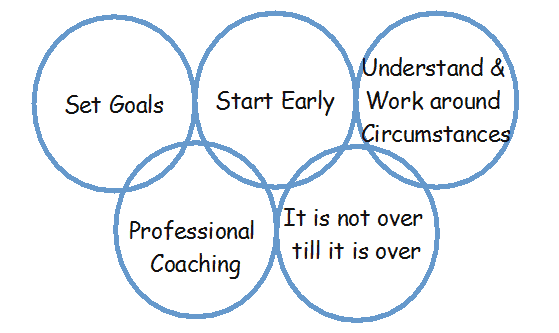
Seven financial planning lessons from Olympic athletes: set concrete goals with timelines, start earlier than you think necessary, adapt your plan as circumstances change, get professional help, stay invested through setbacks, measure progress against your own goal rather than others, and take responsibility for your own financial outcomes. The Olympics runs every four years. Your financial plan runs for 30-40 years. The same principles apply.

Personal finance lessons from the Olympics - Tokyo Paris 2024

Lesson 1: Set Goals With Specific Timelines

An Olympic sprinter does not train to “run fast.” She trains to run 100 metres in under 10.9 seconds by the qualifying deadline in a specific year. The goal is not abstract. It has a number, a timeline, and a measurable outcome.

The equivalent in personal finance is not “save for retirement.” It is “build a corpus of Rs 4 crore by age 60 to generate Rs 1.5 lakh per month in retirement income.” The specific number changes how you plan, how much you save, and what asset allocation you need. Without the number, you cannot know whether you are on track.

Most Indian investors have vague financial goals. They want to “be comfortable in retirement” or “give their children a good education.” Vague goals produce vague plans that produce disappointing outcomes. Replace every vague goal with a number, a date, and a monthly savings requirement.

Lesson 2: The Earlier You Start, the More You Have to Work With

Michael Phelps began swimming seriously at age 7. Neeraj Chopra began throwing the javelin at 13. P.V. Sindhu was playing badminton at 8. At Paris 2024, the youngest Indian Olympic medalists had already accumulated years of deliberate practice before most of their peers had decided on a sport.

In investing, compounding works the same way. A 25-year-old who starts a Rs 10,000 monthly SIP and continues for 35 years at 12% CAGR accumulates approximately Rs 6.4 crore. A 35-year-old doing the same accumulates approximately Rs 1.9 crore. The difference is not in the monthly amount. It is entirely in the starting age.

But the Olympics also demonstrates that a late start is not fatal. Hoang Xuan Vinh of Vietnam won his country’s first Olympic gold at 41. If you are 42 and have not yet built a serious retirement corpus, you still have 18 years. That is not comfortable, but it is not hopeless. Start now and invest more aggressively than someone who started at 25.

Your retirement corpus is being built right now – or it isn’t.

Every month you delay has a compounding cost you cannot recover. RetireWise builds retirement plans that show you exactly where you stand and what it takes to reach your specific goal.

See How RetireWise Plans for Your Retirement

Lesson 3: Adapt Your Plan as Circumstances Change

No Olympic athlete arrives at the Games with a static plan. They adjust based on conditions, injuries, opponents, and new information. The javelin thrower adjusts for wind. The swimmer adjusts for lane draw. The sprinter adjusts starting block positioning based on track conditions.

A financial plan made at 30 needs updating at 40. Your income will have changed. Your family situation will have changed. Tax rules will have changed. Investment products will have changed. The plan that was appropriate when you had no children, a Rs 60,000 monthly salary, and no home loan may be completely wrong for a 40-year-old with two children in school, a home loan, and Rs 2.5 lakh monthly income.

At minimum, review your financial plan annually. Review it immediately after any major life change: job change, salary increase, marriage, children, inheritance, or health event.

Lesson 4: Get Professional Coaching

The Indian government did not send Neeraj Chopra to the Olympics and tell him to figure it out. They invested in world-class coaching, sports science support, equipment, and competition exposure. The coaching was not a luxury. It was infrastructure.

In personal finance, professional advice works the same way. A SEBI-registered investment adviser brings knowledge, accountability, and the emotional detachment to tell you when you are wrong. The investor who manages their own portfolio without professional input is competing against institutions with research teams, data systems, and decades of experience – with nothing but a brokerage app and a YouTube channel for support.

The question to ask is not “can I do this myself?” Most people technically can. The question is “what does DIY actually cost me in suboptimal decisions, missed opportunities, and behavioural errors over 25 years?” The answer, for most investors, is far more than any advisory fee.

Lesson 5: It Is Not Over Until the Event Ends

At Paris 2024, India’s Manu Bhaker won two bronze medals in shooting – a remarkable comeback for an athlete who had experienced equipment failure at Tokyo that ended her campaign. At the same Games, the Indian women’s hockey team pushed against much stronger opponents despite being significant underdogs going in.

Financial setbacks are inevitable. Job loss, market crashes, medical emergencies, business failures – these happen. The Sensex fell 38% in March 2020. Investors who stayed invested recovered fully by December 2020 and went on to significant gains. Investors who exited locked in their losses permanently and missed the entire recovery.

Staying invested through a downturn is not passive acceptance of losses. It is the active, disciplined recognition that temporary falls are the normal cost of long-term equity returns – and that leaving the market permanently is the only way to guarantee you miss the recovery.

Lesson 6: Compete Against Your Goal, Not Against Others

Olympic athletes are relentlessly focused on their own performance. The sprinter who runs the 100 metres in 9.87 seconds does not lose sleep because someone else ran it in 9.84. Their goal was a personal best, not necessarily a medal. The measurement is against the goal, not against the competition.

Investor benchmarking works the same way. Your relevant benchmark is not your colleague’s portfolio, not the top-performing fund of last year, and not the Nifty return on any given day. It is whether you are on track to reach your specific financial goals at your specific timeline. An investor who needs 10% CAGR to meet their retirement target and is generating 11% has no reason to take more risk trying to match someone else’s 14%.

Chasing performance relative to others is how investors add risk they do not need, chase recent returns, and make the timing errors that destroy long-term compounding.

Lesson 7: Take Full Responsibility for Your Own Outcomes

No Olympic gold medalist blames the track, the weather, or the officiating for not winning. Winners take ownership of their preparation, their performance, and their results. That ownership is exactly what makes further improvement possible.

In financial planning, the investor who blames the market, their advisor, the government, or their employer for their financial position is the investor who will be in the same position in ten years. Taking responsibility does not mean the market is predictable or that bad luck never happens. It means the decisions about savings rate, asset allocation, insurance adequacy, and financial behaviour are yours – and that taking ownership of those decisions is the only way to improve them.

Read: A Dynamic Life Cannot Have a Static Financial Plan

In the Olympics, only the top three get medals. In financial planning, everyone who reaches their goal wins. You are not competing against anyone else. You are competing against your own plan.

Train for your goal. Not for the scoreboard.

Is your financial plan trained for your specific goal – or just pointed in a general direction?

RetireWise builds plans with specific corpus targets, monthly savings requirements, and a stress test to show whether the plan holds when conditions change.

Book a Free 30-Min Call

Your Turn

Which Olympic athlete or moment has given you a financial planning insight? And which of the seven lessons is the hardest for you to apply consistently? Share in the comments.

Market Bubbles: What They Are, How They Form, and How to Protect Yourself

Every bull market produces the same type of investor. Confident. Convinced. Certain this time is different.

And every market bubble produces the same ending.

⚡ Quick Answer

A market bubble forms when asset prices rise far above their fundamental value, driven by speculation, easy money, and herd psychology. Bubbles always burst. The damage depends on how leveraged the participants were. The best protection is not to predict the bubble — it is to never be overexposed to any single asset class.

Market Bubbles And The Damage They Cause

We Have Seen This Before — Many Times

In 1637, tulip bulbs in Holland were selling for more than a skilled craftsman earned in ten years. In 2000, loss-making companies with “.com” in their names were valued higher than century-old manufacturers. In 2021, a single tweet from Elon Musk moved the price of a cryptocurrency by 30%.

India has had its own share. The Harshad Mehta bull run of 1992. The technology euphoria of 1999-2000. The real estate frenzy of 2005-08. The small-cap mania of 2017-18, where mid and small-cap mutual funds attracted billions only to lose 40-60% in the following correction.

Each time, investors who rode the wave up said they knew what they were doing. Each time, the same investors were shocked when it ended.

What Exactly Is a Market Bubble?

An economic bubble is simple to define: asset prices rise far above what the underlying fundamentals can justify. A stock worth Rs 100 based on its earnings and growth potential trades at Rs 1,000. Real estate in a tier-3 city sells at Mumbai prices. Crypto tokens with no underlying value are worth more than established businesses.

The tricky part is not the definition. It is the psychology. While you are inside a bubble, it does not look like a bubble. It looks like an opportunity. Everyone around you is making money. The financial media calls it a new paradigm. Your neighbour tells you he turned Rs 2 lakh into Rs 20 lakh in six months.

That feeling – that you are missing out on something real – is exactly what a bubble feeds on.

Economic Bubble

The Anatomy of a Bubble: Seven Stages

Nobel Laureate Robert Shiller identified the common pattern. Every bubble moves through the same stages, even when the underlying asset is completely different.

Stage 1 – The Spark: A new technology, a policy change, or genuine economic improvement creates real enthusiasm. Early investors make real gains. The story is legitimate.

Stage 2 – The Narrative Spreads: Success stories circulate. Word of mouth, WhatsApp forwards, financial TV channels amplify the gains. More people enter.

Stage 3 – Prices Accelerate: Demand exceeds rational buying. Prices rise faster than fundamentals can justify. But the narrative explains it away: “This time is different.” “Old valuation methods don’t apply.”

Stage 4 – General Public Enters: This is the most dangerous stage. People who have never invested before open Demat accounts. Retirees move fixed deposits into equity. Family WhatsApp groups discuss stock tips. This is pure euphoria.

Stage 5 – Smart Money Exits: The people who created the bubble start quietly selling. They call it profit-booking. Prices wobble but recover. The narrative remains intact.

Stage 6 – The Trigger: Something – often a minor event – punctures confidence. A regulatory action. An earnings miss. A rate hike. Suddenly the same investors who were buyers become sellers.

Stage 7 – The Crash: Panic selling overwhelms the market. Leveraged positions unwind. Margin calls force more selling. The crash feeds itself. Prices overshoot on the way down just as they overshot on the way up.

Is your portfolio overexposed to any single theme or asset?

A structured annual review can identify concentration risks before a bubble finds them for you.

Talk to a RetireWise Advisor

The Damage Bubbles Leave Behind

When bubbles burst, the damage is never uniform. It depends on three factors.

How leveraged were the participants? The 2008 global financial crisis was so catastrophic because mortgage-backed securities created an invisible web of leverage. When US housing prices fell, the losses multiplied across the global financial system. The US economy alone suffered an estimated USD 12.8 trillion in losses over the following decade.

In contrast, the dot-com bust of 2000 was painful but contained. Most investors lost their equity – not borrowed money.

How broadly did retail investors participate? The Harshad Mehta crash of 1992 wiped out many retail investors who had taken loans to buy stocks at peak valuations. The same pattern repeated in 2018, when the small and mid-cap correction destroyed portfolios of investors who had SIPed at the top based on recent-return chasing.

How connected was the bubble to the real economy? Japan’s equity and real estate bubble of 1989-92, when burst by the Bank of Japan through interest rate hikes, triggered a deflationary spiral that lasted over a decade. The country is still managing its aftermath.

Bubble - market cycles

Can You Spot a Bubble Before It Bursts?

The uncomfortable truth: most people cannot — at least not reliably enough to trade around it. Even professional fund managers get caught. Even economists who correctly identify a bubble can be wrong about the timing by years.

What you can do is watch for the warning signs: Price-to-earnings ratios at multi-decade highs. Widespread retail participation by first-time investors. Extraordinary returns in short periods generating FOMO. A common narrative that “old valuation rules don’t apply.” Borrowed money flowing into speculative assets.

When you see these signs, the right response is not necessarily to exit. It is to rebalance — reduce exposure to the overvalued asset, diversify, and make sure you have no leverage. The goal is not to predict the top. The goal is to be positioned so that a crash does not destroy you.

What History Actually Teaches Investors

Every bubble looks obvious in retrospect. Nobody sees it clearly from the inside. The best protection is not superior prediction — it is superior structure.

Diversification is not exciting. Asset allocation is not exciting. Annual rebalancing is not exciting. But they are the only tools that reliably protect investors from the concentrated damage that bubbles cause.

I have worked with investors who rode the 2017-18 small-cap mania all the way up and all the way down. The ones who were diversified lost less and recovered faster. The ones who concentrated in small-caps on the advice of recent performance stories took years to recover — if they recovered at all.

Like Icarus ignoring his father’s warning about flying too close to the sun, we tend to dismiss caution when the wind is at our back. The lesson is the same every time. The execution, however, requires discipline before the bubble — not during.

Frequently Asked Questions on Market Bubbles

How do I know if a market is in a bubble right now?

There is no single indicator, but warning signs include price-to-earnings ratios far above historical averages, widespread retail participation by first-time investors, assets rising 50-100% in less than 12 months with no fundamental change, and a dominant narrative that “this time is different.” When all four signs appear together, caution and rebalancing are warranted — not necessarily exit.

What is the difference between a market correction and a bubble burst?

A market correction is a normal 10-20% pullback from recent highs, usually driven by profit-taking or short-term uncertainty. A bubble burst is a collapse of 40-80%+ driven by the unwinding of leverage, panic selling, and a fundamental reassessment of asset values. Corrections are healthy and frequent. Bubble bursts are rarer but far more damaging — especially for investors who bought near the peak on borrowed money.

Should I exit the market if I think a bubble is forming?

Probably not entirely. Bubbles can persist for years after they are first identified — investors who exited the US tech bubble in 1998 missed two more years of gains before the 2000 crash. The more practical approach: reduce exposure to the overvalued asset class to a manageable level, eliminate any leverage, and make sure your overall portfolio can survive a 40-50% correction in that asset without disrupting your financial plan.

Are Indian small-cap and mid-cap stocks currently in a bubble?

Hemant to verify current valuations before publishing this answer — market conditions change and I will not put a specific view that could be stale by the time readers see it. What I can say: whenever small-cap and mid-cap valuations significantly exceed their 10-year historical averages on price-to-earnings and price-to-book measures, they deserve reduced allocation, not increased allocation based on recent returns.

You will not be able to time the next bubble. Nobody can. But you can make sure that when it bursts — as all bubbles eventually do — you are not in a position where it ends your financial plan.

Diversify. Rebalance. Do not borrow to invest. These are not exciting principles. They are the ones that keep you solvent when everyone else is not.

💬 Your Turn

Have you ever been caught in a bubble — real estate, crypto, small-caps, or any other? What did you learn from it? Share your experience below. Your story could help someone avoid the same mistake.

Health Insurance for Diabetics in India: The Honest 2026 Guide

India has approximately 101 million diabetic adults – the second highest in the world after China. Yet when most people with diabetes try to buy health insurance, they run into a wall: waiting periods, loading on premiums, exclusions for diabetes-related complications, and sometimes outright rejection.

In 25 years of advising, I have seen diabetic clients pay hospital bills out of savings that should have been protected by insurance. Not because no options exist, but because they did not know what to look for or accepted the first rejection.

Here is the honest 2026 guide to health insurance for diabetics in India.

Quick Answer: Health Insurance for Diabetics India 2026

Diabetics can get health insurance in India – but the terms matter significantly. Key things to look for: waiting period for diabetes-related complications (0 to 30 months depending on plan), whether Type 1 and Type 2 are both covered, premium loading percentage for pre-existing conditions, and whether complications (kidney disease, retinopathy, neuropathy) are covered. Star Health Diabetes Safe, HDFC Ergo Energy, Care Freedom, and Niva Bupa ReAssure 2.0 are among the plans that cover diabetes. Group insurance through an employer typically has no waiting period for pre-existing conditions. IRDAI regulations since 2020 prohibit insurers from rejecting purely on the basis of diabetes – though they can load premiums and impose waiting periods.

Why diabetes complicates health insurance

From an insurer’s perspective, diabetes is a chronic pre-existing condition that increases the probability of multiple hospitalisation events: cardiac complications, kidney disease (diabetic nephropathy), eye problems (retinopathy), nerve damage (neuropathy), and wound healing complications. A diabetic client represents higher expected claims over a policy lifetime than a non-diabetic of the same age.

This actuarial reality is why insurers impose waiting periods (typically 12 to 48 months before diabetes-related complications are covered), load premiums (charging 20 to 50% more than the standard rate), and sometimes exclude specific complications permanently.

However, IRDAI’s 2020 guidelines introduced important protections. Insurers cannot reject a proposal purely on the basis of diabetes. They must offer a product even if the terms include a waiting period or loading. The guidelines also mandate that all policies from April 2024 must cover mental illness, HIV, congenital conditions, and a wider range of pre-existing conditions – making the overall landscape more favourable.

Key terms to understand before buying

Waiting period for pre-existing conditions: Most standard health policies have a 2 to 4 year waiting period before pre-existing conditions (including diabetes) are covered. Some diabetes-specific plans reduce this to 0 to 12 months. This is the most important number to compare.

Premium loading: Insurers can charge higher premiums for diabetics. The loading typically ranges from 20 to 100% above the standard premium, depending on your HbA1c level, years of diagnosis, and whether complications have already developed. Well-controlled diabetes (HbA1c under 7.5%) typically attracts lower loading than poorly controlled diabetes.

Complications coverage: The fine print matters enormously. Some plans cover hospitalisation for diabetes but exclude diabetes-related complications (kidney failure requiring dialysis, cardiac events linked to diabetes, laser treatment for retinopathy). Always check the exclusions clause specifically for diabetes complications.

Type 1 vs Type 2: Most plans cover Type 2 diabetes. Coverage for Type 1 diabetes is less common. If you or a family member has Type 1, verify this explicitly before buying.

Types of plans to consider

Diabetes-specific plans

Star Health Diabetes Safe and HDFC Ergo Energy are designed specifically for diabetics. They offer shorter or zero waiting periods for diabetes-related claims but typically have higher premiums and lower sum insured options. These make sense if you want diabetes covered from day one and are comfortable with a smaller cover amount. As of 2026, Star Health Diabetes Safe offers sum insured up to Rs.10 lakh with Plan A (requiring medical screening, shorter waiting period) and Plan B (no screening, 12-month waiting period for diabetes).

Standard plans with pre-existing condition coverage

Several comprehensive plans now cover diabetes after the standard waiting period with premium loading. Niva Bupa ReAssure 2.0, Care Supreme, and HDFC Ergo Optima Secure are among the plans that have become more accessible for diabetics post-IRDAI 2020 guidelines. The advantage: higher sum insured options (Rs.25 lakh to Rs.1 crore) at premiums that, while loaded, may be more economical than diabetes-specific plans for the coverage provided.

Group insurance through employer

If you are employed, your group health insurance almost certainly covers diabetes from day one with no waiting period and no premium loading (the risk is pooled across all employees). This is the best available cover for diabetics. The problem: it ends when employment ends. This is why building individual coverage alongside group insurance is important – port your group policy to an individual policy before retirement or job change if possible.

Senior citizen plans for diabetics over 60

Options narrow significantly above 60. Star Senior Citizens Red Carpet and HDFC Ergo Optima Senior are among the few plans that cover seniors with diabetes, though both have significant sub-limits and restrictions. The cover amounts available are typically lower (Rs.5 to 10 lakh maximum) and premiums are substantially higher. For diabetic senior citizens, a super top-up policy layered over a base plan often provides better value than a standalone high-sum plan.

Health insurance decisions are more complex with a pre-existing condition

The right plan depends on your specific situation – HbA1c level, years since diagnosis, whether complications have developed, your age, and how much you are already covered through group insurance. RetireWise helps clients structure health insurance as part of their overall retirement plan.

Book a Clarity Call

Practical steps to improve your insurability

Control your HbA1c before applying. HbA1c below 7.5% is the dividing line most insurers use to determine premium loading and policy terms. A diabetic with well-controlled sugar applying with an HbA1c of 7.2% will get significantly better terms than one applying with an HbA1c of 9.5%. If your sugar control has been poor, three to six months of improvement before applying can materially change the terms offered.

Apply while you are younger and before complications develop. The earlier you buy health insurance as a diabetic, the better. Once kidney disease, significant cardiac events, or other complications are documented, insurability narrows further and premiums increase substantially. Buying at 40 with diabetes but no complications is much easier than buying at 55 with diabetes and a history of cardiac intervention.

Do not withhold information on the proposal form. Non-disclosure of a pre-existing condition like diabetes is the most common reason for claim rejection. If a claim arises and the insurer discovers you did not disclose diabetes at the time of application, the claim will be repudiated. The short-term cost of disclosure (higher premium, waiting period) is far smaller than the long-term cost of a rejected claim.

Build a medical emergency fund alongside insurance. Even the best health insurance has gaps: sub-limits on room rent, copayments, deductibles, conditions that fall outside the policy coverage. A dedicated medical emergency fund of Rs.5 to 10 lakh – separate from your general emergency fund – provides a buffer for what insurance does not cover. For diabetics, who are statistically more likely to have multiple hospitalisation events over a lifetime, this fund is not optional.

Also read: How Much Health Insurance Do I Need in India? (2026 Guide)

Frequently asked questions

Can a diabetic get health insurance in India?

Yes. IRDAI regulations since 2020 prohibit insurers from rejecting health insurance proposals purely on the basis of diabetes. Insurers can impose a waiting period (typically 12 to 48 months) before diabetes-related claims are covered, and can charge a higher premium (loading of 20 to 100% above standard rate), but cannot refuse to offer coverage. Diabetes-specific plans like Star Health Diabetes Safe and HDFC Ergo Energy are designed specifically for diabetics and offer shorter or zero waiting periods for diabetes-related hospitalisation, though with lower maximum sum insured amounts.

What is the waiting period for diabetes in health insurance?

It varies significantly by plan. Diabetes-specific plans like Star Health Diabetes Safe (Plan A with medical screening) offer zero waiting period for diabetes-related hospitalisation. Standard comprehensive plans typically have a waiting period of 2 to 4 years for pre-existing conditions including diabetes. Group insurance through an employer has no waiting period for pre-existing conditions – it covers diabetes from day one. The waiting period is one of the most important factors to compare when choosing a plan as a diabetic.

Should a diabetic choose a diabetes-specific plan or a standard health plan?

It depends on your priority. Diabetes-specific plans offer shorter or zero waiting periods for diabetes coverage but typically cap sum insured at Rs.5 to 10 lakh. Standard comprehensive plans offer higher sum insured (Rs.25 lakh to Rs.1 crore) but with longer waiting periods and premium loading. A practical approach: use group insurance (if available through employer) as the primary cover with no waiting period, and supplement with a standard individual plan with higher sum insured for the long-term. If you are self-employed or without group coverage and need immediate diabetes coverage, a diabetes-specific plan makes sense as a starting point.

Are you managing diabetes and looking for the right health insurance? Share your situation and what you have found works or does not work – your experience can help others in the same position.

How Long-Term Investing Works (and Why Knowing It Isn’t Enough)

“In the short run, the market is a voting machine. In the long run, it is a weighing machine.”
– Benjamin Graham

A client of mine – a senior manager at a large infrastructure company in Pune – called me during a particularly bad week in the markets a few years ago. He’d been investing in equity mutual funds for six years. His SIPs had been running without fail every month. He had done everything right.

But that week, he wanted to stop everything. “Hemant,” he said, “I don’t see the point anymore. I’m down on paper. My fixed deposit is giving 7%. Why am I doing this?”

I didn’t argue with him. I just asked him one question: “What were you trying to build, and how long did you say you had?”

He had a 14-year horizon. He’d told me this himself three years earlier. He knew long-term investing was the right strategy. And yet, here he was, ready to walk away.

This is the real challenge with long-term investing. It isn’t a knowledge problem. Almost every investor in India today knows that staying invested for the long term works. The problem is that knowing it and doing it are two completely different things.

⚡ Quick Answer

Long-term investing works because it lets compounding do the heavy lifting, removes the impossible pressure of timing markets, and forces diversification that protects against single asset failures. But the biggest benefit isn’t mathematical – it’s psychological. A long-term horizon gives you the one thing most investors lack: the ability to sit still when everything around you is screaming to act.

How long-term investing benefits your financial future

Why Your Brain Is Working Against You

Here is something I find fascinating – and humbling – about the human brain.

Evolutionary biologists tell us that our ancestors lived in jungles for roughly 2.8 million years before the first agrarian societies appeared about 12,000 years ago. For almost the entirety of human existence, survival meant focusing on the immediate. Every rustling bush. Every unknown sound in the distance. Every threat that needed an instant response.

Ronald Wright, in his book A Short History of Progress, described this elegantly: we are running 21st-century software on 50,000-year-old hardware.

That hardware saved your ancestors from predators. But in investing, it is destroying your wealth.

When markets fall sharply, your amygdala – the brain’s threat-detection centre – responds exactly as it would to a lion in the jungle. It floods your system with cortisol. Your heart races. You want to run. In the jungle, running was the right call. In investing, it is usually the worst one.

This isn’t a character flaw. It isn’t a sign that you are not smart enough to invest. It is biology. And recognising it is the first step to working around it.

The Number Most Investors Never Calculate

What Behavioural Mistakes Actually Cost You

In 25 years of advising clients, the most consistent pattern I’ve seen isn’t related to which fund someone picked or what the market did. It’s the cost of their own decisions. DALBAR, a US-based research firm, has been tracking this for 30 years. In 2024, the average equity investor earned about 8.5 percentage points less than the market index – not because the index was inaccessible, but because investors kept buying high, panicking, selling low, and missing the recovery.

In India, we see this play out differently but with the same end result. When markets corrected in late 2024, the SIP stoppage ratio crossed 100% in January 2025 – meaning more SIPs were stopped that month than new ones were started. The investors who stopped were predominantly the ones who had started SIPs in the previous 2-3 years, during a strong bull market. They started when things felt safe. They stopped when it mattered most.

If an investment grows at 12% annually for 20 years but you earn only 9% because of your behavioural decisions, the gap on a Rs 50 lakh investment is over Rs 1.5 crore. The market gave you the return. You just couldn’t hold on long enough to collect it.

Five Reasons Long-Term Investing Actually Works

1. It keeps you from timing the market – which is impossible

Timing the market means selling before a fall and buying before a rise. It sounds logical. In practice, it has never worked consistently for anyone – not professional fund managers, not traders, not economists with PhDs.

Think of it like driving from Jaipur to Delhi and trying to hit only green lights. You might catch a few. But you will also stop and start so often that the person who just drove steadily arrives long before you do.

A long-term horizon removes the pressure to get the timing right. You simply stay on the road. The destination takes care of itself.

2. Compounding only works if you let it run

There is a story – possibly apocryphal, but the math is real – about a young man who asked Albert Einstein what the most powerful force in the universe was. Einstein reportedly said: compound interest.

A Rs 10,000 monthly SIP at 12% annual returns over 10 years grows to approximately Rs 23 lakh. Over 20 years, it becomes approximately Rs 96 lakh. Over 30 years, it crosses Rs 3.5 crore.

The last 10 years of that 30-year journey add more than the first 20 years combined. This is not a trick of arithmetic. It is the nature of exponential growth. But it requires one thing above all else: patience. You cannot collect 30-year compounding in year 15 and expect the same result.

3. Diversification makes more sense with time

No one knows which asset class will outperform in any given year. In 2017, equities were the star. In 2018, debt beat equities. In 2023, gold had a strong year. In 2024, equities roared back.

A long-term investor holds all three – equity, debt, and gold – in reasonable proportions. Not because they can predict which will win, but because they accept they cannot. Over time, this acceptance is itself a competitive advantage.

The realistic return expectations from each asset class, based on long-term historical data for India: equities at 12-14% CAGR, gold at approximately 9-10% CAGR, and quality bonds or debt instruments at 7-8%. A balanced portfolio, properly structured, can deliver 10-11% annualised over the long term – but only if you stay in it.

4. It builds realistic expectations – and protects you from frauds

Once you understand that even the best asset classes in India deliver 12-14% over the long run, you become immune to a certain type of promise. The ones that guarantee 30% or 40% or “double in 18 months.” Every few years, a new scheme emerges targeting investors who want speed. Most end badly.

In 25 years of practice, I have seen this pattern repeat. The investors who got burned the worst were not unintelligent. They were impatient. Long-term orientation isn’t just a wealth-building strategy. It is also a fraud-prevention mechanism.

5. Discipline in investing spills into the rest of your life

This one surprises people. But I have seen it consistently.

The person who develops the discipline to stay invested through a 30% market fall does not panic when their child’s career takes an unexpected turn. The executive who can hold a 15-year horizon in their portfolio tends to hold a longer view in their business decisions too. The ability to delay gratification is not compartmentalised. It travels with you.

Why Smart People Still Can’t Stay the Course

Here is the uncomfortable truth I share with clients who know all of the above but still struggle: knowledge alone doesn’t change behaviour. If it did, everyone who had read one book on investing would be wealthy.

The psychological phenomenon at work is called Myopic Loss Aversion. First described by behavioural economists Richard Thaler and Shlomo Benartzi, it refers to the fact that losses feel roughly twice as painful as equivalent gains feel pleasurable. Losing Rs 1 lakh feels approximately twice as bad as gaining Rs 1 lakh feels good.

This asymmetry means that when markets fall 15%, the emotional pain is equivalent to what you would feel if someone locked up 30% of your gains permanently. Your brain does not register “temporary paper loss.” It registers “threat. Act now.”

And the more frequently you check your portfolio, the worse this gets. Thaler’s research showed that investors who checked their portfolio daily were far more likely to sell during downturns than those who checked monthly or quarterly. The more data you see, the more short-term noise feels like signal.

This is not a weakness. This is how human perception works. The antidote isn’t willpower. It is structure.

What Structure Looks Like in Practice

Automate your SIPs so you never have to make a monthly decision. Set portfolio review dates in advance – half-yearly, not daily. Write down your investment goals and the timeline for each goal before you invest a single rupee. When market noise gets loud, go back to those written goals. They calm the amygdala more effectively than any financial news channel ever will.

The Question I Ask Every New Client

When someone comes to me for the first time, one of the first things I ask them is: “What happens if this investment falls 35% in the next 12 months? What will you do?”

Most people say they will stay invested. Some say they will even add more. But when I press further – “Have you ever experienced that? How did it feel at the time?” – the answers change. Dramatically.

There is a gap between theoretical tolerance for volatility and actual tolerance. This gap is where most long-term investing plans die. Not because the market failed. Because the investor’s stomach did.

The solution is not to pretend the discomfort won’t come. It will. Markets have always had corrections, and they always will. The solution is to build a portfolio and a plan that you can hold through discomfort – one with enough stability (debt, gold, short-term allocation) that you are never forced to sell equities at the worst possible time.

Retirement planning, in particular, is where this matters most. A 50-year-old building a corpus for retirement at 60 cannot afford to panic-sell in year 7 of a 10-year plan. That single decision – one bad exit – can cost more than all the market timing attempts in the world.

Knowing what to do and doing it are two different skills.

A good advisor doesn’t just build a portfolio for you. They stay with you when your instincts are telling you to destroy it. That’s where the real value lives.

Learn How RetireWise Works

Long-Term Orientation Beyond Investing

I want to end with something that goes beyond the numbers.

The same mental muscle you build by staying invested through a market correction – the ability to hold a long view when the short-term is uncomfortable – is useful everywhere in life. In your career. In your family. In how you respond to setbacks.

The Bhagavad Gita has a line that has stayed with me for years: focus on the action, not the fruit. This is exactly what long-term investing asks of you. Set up the right process. Do the right thing. And then sit tight, even when the fruit is not yet visible.

This is not passive. It is one of the hardest active choices you can make in a world built for instant everything.

The investors I have seen do this well – the ones who held their equity mutual funds through 2008, through 2020, through every correction in between – are not the smartest people I know. They are the most patient. And over 20 years, patience has consistently beaten intelligence in investing.

The market will always give you a reason to exit. The question is whether you can find a better reason to stay.

It’s not a Numbers Game. It’s a Mind Game.

Building a retirement corpus that survives 25 years takes more than good picks.

It takes a plan, a structure, and someone in your corner when markets test your conviction.

Book a Free 30-Min Call

Your Turn

Think back to the last time markets fell sharply. What did you actually do – or want to do – with your investments? And looking back now, what would you do differently?

SBI MaxGain Home Loan: How It Works, Whether It’s Still Worth It (2026 Review)

One of my clients – a senior manager in Jaipur – came to me with an unusual dilemma. He had received a Rs.8 lakh bonus and was deciding between paying it off against his home loan or parking it in an FD. His banker had already told him to open an FD with SBI.

I asked him one question: “What type of home loan do you have?”

It turned out he had an SBI MaxGain home loan. And the answer was neither the FD nor the prepayment – it was the MaxGain overdraft account itself. He saved approximately Rs.4,800 in interest in the first month alone, while retaining full access to that Rs.8 lakh if he ever needed it.

SBI MaxGain is one of the most useful – and most poorly understood – home loan products in India. Here is how it actually works.

Quick Answer: SBI MaxGain Home Loan

SBI MaxGain is a home saver loan – it comes with an overdraft account alongside your regular loan account. Any surplus money you park in the overdraft account reduces the effective outstanding principal on which interest is calculated. You save on interest while retaining full liquidity – you can withdraw the money anytime. Current SBI home loan interest rates (2026): 8.50% to 9.15% depending on loan amount and CIBIL score. MaxGain has a slightly higher rate than standard SBI home loans – typically 0.05 to 0.10% more. The benefit is worth it if you regularly hold surplus funds of Rs.2 lakh or more.

What is a Home Saver Loan?

A home saver loan operates through two accounts – your regular loan account (showing outstanding principal) and an overdraft or excess account. The SBI MaxGain overdraft account works like a savings or current account. You can deposit money into it, withdraw from it, use an ATM card, and access it via internet banking.

The key mechanism: the balance sitting in your overdraft account is treated as an offset against your outstanding loan principal for interest calculation purposes. If your loan outstanding is Rs.40 lakh and you have Rs.5 lakh in the overdraft account, interest is calculated on Rs.35 lakh – not Rs.40 lakh.

Your EMI stays the same, but a larger portion goes towards principal repayment because less goes to interest. This accelerates loan closure without requiring you to lock up your money.

How the numbers work – a 2026 example

Let us use current rates. SBI home loan at 8.75% per annum on a Rs.50 lakh, 20-year loan.

Standard EMI at 8.75%: approximately Rs.44,125 per month.

Without overdraft balance (standard month 1):

  • Interest: Rs.50,00,000 × 8.75% ÷ 12 = Rs.36,458
  • Principal: Rs.44,125 – Rs.36,458 = Rs.7,667

With Rs.5 lakh in the overdraft account (month 1):

  • Effective outstanding: Rs.50,00,000 – Rs.5,00,000 = Rs.45,00,000
  • Interest: Rs.45,00,000 × 8.75% ÷ 12 = Rs.32,813
  • Principal: Rs.44,125 – Rs.32,813 = Rs.11,312
  • Interest saving: Rs.36,458 – Rs.32,813 = Rs.3,645 in month 1

That Rs.3,645 monthly saving compounds – more principal is repaid faster, which means interest savings grow each month. A consistent Rs.5 lakh in the overdraft account over 5 years can reduce the total loan tenure by 2 to 3 years.

MaxGain vs direct prepayment – which is better?

If you have Rs.5 lakh to put towards your home loan, you have two options: prepay the loan (permanently reducing the outstanding) or park in the MaxGain overdraft. The interest benefit is identical – both reduce your effective outstanding by Rs.5 lakh for interest calculation.

The critical difference is liquidity. When you prepay, the money is gone permanently. With MaxGain overdraft, you can withdraw the Rs.5 lakh next month if an emergency arises, a better investment opportunity appears, or a family expense comes up.

The only scenario where direct prepayment beats MaxGain is if you are absolutely certain you will not need the money and you want the psychological satisfaction of a lower outstanding balance on your statement. For most people who have an ongoing income, MaxGain’s liquidity advantage is meaningful.

Is your home loan costing you more than it should?

For most executives, the home loan is the largest single debt on the balance sheet. A 30-minute review often reveals Rs.5 to 15 lakh in unnecessary interest over the loan tenure – through product choice, prepayment strategy, or tax optimisation.

Book a Clarity Call

Who benefits most from SBI MaxGain?

MaxGain works best for salaried professionals who receive periodic large inflows – annual bonus, performance incentive, profit-sharing, or income from a second source like rent or freelance work. The period between receiving the bonus and deciding to deploy it (which could be weeks or months) is when MaxGain earns its value – that surplus sits in the overdraft account, reducing interest, while you think clearly about where to invest it.

It also works well for those building an emergency fund. Instead of keeping Rs.5 lakh in a savings account earning 2.5 to 3.5%, they park it in the MaxGain overdraft where it effectively earns the home loan rate (8.75%) by reducing that much interest. No tax complexity since it is not “income” – it just reduces outgo.

It is less useful for those who are already very disciplined prepayers with no foreseeable need for liquidity, or for those whose surplus is consistently below Rs.2 lakh (at which point the marginal saving is smaller than the slight premium over the standard SBI home loan rate).

The small catch: rate premium

SBI MaxGain typically carries a slightly higher interest rate than the standard SBI home loan – approximately 0.05 to 0.10% more. On a Rs.50 lakh loan, this translates to roughly Rs.2,500 to Rs.5,000 per year in additional interest.

This premium is recovered in month 1 if you consistently keep Rs.3 to 5 lakh in the overdraft. But if you only use the overdraft occasionally and keep minimal balance most of the time, the premium may cost more than you save. Calculate this before switching to MaxGain from a standard SBI loan.

How to use it effectively

Three practical rules for getting the most from MaxGain:

Use it as your primary salary account. If your salary credits to the MaxGain overdraft account and your expenses flow out over the month, the average monthly balance is effectively reducing your loan interest at no additional cost.

Park your emergency fund here. The 3 to 6 months of expenses you should maintain as an emergency fund earns your home loan rate instead of a 3% savings account rate – and remains fully accessible.

Route bonus and lump sums here first. Before deciding where to invest a large inflow, park it in MaxGain. Even 30 to 60 days of parking saves meaningful interest while you think through the deployment.

Also read: 8 Tips to Reduce Home Loan Interest and Save Lakhs Without Earning More

Frequently asked questions

What is SBI MaxGain home loan and how is it different from a regular home loan?

SBI MaxGain is a home saver loan that comes with two accounts: the regular home loan account and an overdraft account. Any money you deposit in the overdraft account reduces the effective outstanding principal for interest calculation, saving interest while preserving full liquidity. With a regular home loan, any prepayment permanently reduces the outstanding – you cannot withdraw it. MaxGain gives you the same interest saving as a prepayment but with the flexibility to withdraw the money when needed.

What is the interest rate on SBI MaxGain in 2026?

SBI home loan rates in 2026 range from approximately 8.50% to 9.15% depending on loan amount and CIBIL score. SBI MaxGain typically carries a premium of 0.05 to 0.10% over the standard SBI home loan rate. Always confirm the current rate directly with SBI at the time of application, as rates change with RBI repo rate revisions. Check the SBI website or your nearest branch for the current effective rate.

Is SBI MaxGain better than prepaying the home loan?

The interest saving is identical whether you prepay or park in the MaxGain overdraft. The key difference is liquidity. With prepayment, the money is permanently applied to the loan and cannot be recovered. With MaxGain overdraft, the money reduces your interest while remaining fully accessible – you can withdraw it anytime for emergencies, investments, or expenses. For most salaried professionals who receive variable income or periodic large inflows, MaxGain’s liquidity advantage outweighs direct prepayment.

Can I convert my existing SBI home loan to MaxGain?

Yes, you can convert an existing SBI home loan to MaxGain subject to SBI’s prevailing terms and applicable conversion fees. The conversion involves switching to the overdraft structure, which means a new account is opened alongside your loan account. Contact your home loan branch or SBI’s customer care to understand the current conversion process, fees, and rate implications before proceeding.

Do you have an SBI MaxGain loan? How are you using the overdraft account – for your emergency fund, bonus parking, or salary routing? Share what’s worked for you in the comments.

Bank Locker: The Games Bankers Play (And How to Beat Them)

A client called me last year — Meera (name changed), a retired school principal from Jaipur. She had been on a bank locker waitlist for two years. The branch manager finally called and said, “Madam, your locker is ready. But you need to open an FD of Rs 5 lakh and buy our insurance policy.”

She almost did it. Because she was desperate. Because the banker made it sound like the only way.

This is the game. And it has been happening in every bank, in every city, for decades.

⚡ Quick Answer

Banks cannot force you to buy FDs, insurance, or mutual funds to get a locker. RBI rules cap the security deposit at 3 years’ rent + lock-breaking charges. Since 2026, banks must sign a revised locker agreement, install CCTV and biometric verification, and their liability for negligence is capped at 100x the annual rent. Know the rules — and the banker cannot play games.

Bank Locker and The Games Bankers Play

Banks offer safe deposit lockers to store your gold, jewellery, property documents, wills, and other valuables. Not every branch has this facility, and the demand usually exceeds supply — which is exactly where the manipulation begins.

The 6 Rules Bankers Bend — And How to Protect Yourself

#1 Processing and Waitlist

The rule: When you apply for a locker, the bank must either allot one immediately (if available) or give you a transparent waitlist number.

The game: Bankers treat lockers as a personal favour, not a service. The waitlist becomes invisible, arbitrary, and conveniently flexible depending on how much you are willing to buy. The person who opens a Rs 10 lakh FD magically jumps ahead of the person who applied six months earlier.

#2 Opening Charges and KYC

The rule: You submit KYC documents and pay a nominal processing charge. PSU banks typically charge up to Rs 1,000. Private banks may charge Rs 2,500 or more.

The game: Bankers find creative reasons to reject your KYC — signature mismatch, address inconsistency between two documents, no “introduction” by an existing customer. Each rejection is a nudge to make you more compliant when the real ask comes: buy our products.

#3 Security Deposit — Where the Real Mis-selling Happens

The rule: RBI allows banks to take a security deposit equal to 3 years’ rent plus lock-breaking charges, in the form of an FD. For a locker with Rs 1,500 annual rent and Rs 500 breaking charge, the maximum security deposit is Rs 5,000. That is it.

The game: This is where most bankers cross the line. Instead of the nominal Rs 5,000 FD, they pressure you into opening a Rs 5 lakh FD, buying a ULIP, subscribing to traditional insurance, investing in mutual funds, or taking a credit card or personal loan.

The justification is always the same: “Sir, this is bank policy.” It is not. It is the banker’s target.

#4 The Locker Agreement

The rule: The bank must give you a copy of the locker agreement spelling out all rules, responsibilities, and rights of both parties.

The game: Instead of actually handing you the agreement, bankers get you to sign a line that says “I have received and read the rules.” You are so excited about finally getting the key that you sign without reading. Later, when something goes wrong, the bank says — “But you signed that you read the rules.”

⚠️ 2026 Update: Revised Agreement Mandatory

RBI mandated that all existing locker holders sign a revised Model Locker Agreement by February 28, 2026. If you have not signed the new agreement, your locker access may be restricted or terminated. Contact your bank immediately if this applies to you.

#5 Operating the Locker

The rule: You get 12 to 24 free visits per year depending on the bank. Extra visits are chargeable.

The game: Bankers may tell you that a bigger FD means more free visits (not true). They may limit monthly visits to 1 or 2 using arbitrary internal rules. And the charges for extra visits can be as high as Rs 2,000 plus GST per visit.

#6 Dormant Lockers

The rule: If a high-risk customer’s locker stays dormant for 1 year, or a medium-risk customer’s for 3 years, the bank can break it open — after proper notice.

The game: Many customers report never receiving the notice. The bank breaks open the locker, takes custody of the contents, and rents it to someone else. You only find out when you show up to use it.

This rule applies even if you are paying the rent on time. Paying rent does not prevent the dormancy rule from kicking in. You must physically visit and operate the locker.

Bank Locker

What Changed in 2026 — RBI’s New Locker Framework

RBI has significantly tightened bank locker rules. Here is what is new:

New Rule What It Means for You
Revised Model Locker Agreement All locker holders must sign the new agreement. Deadline was Feb 28, 2026.
Bank Liability Capped at 100x Annual Rent If the bank is negligent (theft, fire, employee misconduct), compensation is limited to 100 times the annual rent.
CCTV Mandatory Locker areas must have CCTV with recordings stored for at least 180 days.
Biometric Verification Fingerprint or iris scan required for locker access.
SMS/Email Alerts You get notified every time your locker is accessed.
Up to 4 Nominees Banking Laws Amendment Act 2025 allows up to 4 nominees for your locker.

The liability cap is important. If your locker holds Rs 50 lakh worth of jewellery and the annual rent is Rs 3,000, the bank’s maximum liability is Rs 3 lakh — even if they were negligent. This means you should seriously consider a separate “Valuables Insurance” policy if your locker holds high-value items.

Worried about your bank pushing products you do not need?

A fee-only advisor works for you — not the bank. No commissions, no product-pushing.

Talk to a SEBI-Registered Advisor

What to Do If the Banker Pressures You

Step 1: Tell the banker you know the RBI rules — security deposit is capped at 3 years’ rent plus breaking charges. Nothing more is required.

Step 2: Ask for everything in writing. “Please give me a written statement that an FD of Rs 5 lakh is mandatory for this locker.” They will not.

Step 3: Contact the bank’s vigilance officer. Every bank has one — find their details on the bank’s website.

Step 4: Use RTI (for PSU banks) to get the bank’s official locker allotment policy in writing.

Step 5: File a complaint with the RBI Integrated Ombudsman at cms.rbi.org.in. The ombudsman can award compensation of up to Rs 30 lakh.

Most bankers fold at Step 2. The ones who do not will definitely fold at Step 3.

A bank locker is a service you are paying for — not a favour the banker is granting you. The moment you understand that, the power shifts.

Know the rules, and the banker cannot play the game.

💬 Your Turn

Have you been pressured into buying products for a bank locker? Or do you have a bank locker story — good or bad? Share it below — your experience could save someone else from being taken for a ride.

11 Unusual Ways of Saving Tax in India (2026) – Including the Retirement Tax Nobody Plans For

“The hardest thing in the world to understand is the income tax.” – Albert Einstein

Most Indians plan their taxes in the last two weeks of March. They call their CA, scramble for 80C investment proofs, and wonder whether to buy an ELSS or add to their PPF. They do this every year. They pay more tax than they need to every year.

Tax planning is not a February activity. It is a year-round discipline. And the most powerful tax-saving moves are not the standard ones everyone knows – they are the unconventional ones that most people miss entirely.

⚡ Quick Answer

Smart tax planning is legal, year-round, and goes well beyond Section 80C. The best strategies – HUF, HRA from parents (Old Regime), LTCG harvesting, NPS employer contribution, capital loss set-off – are underutilised by most senior executives. Combined, they can save Rs 3-8 lakh annually for someone in the 30% bracket. Always consult a CA before implementing. Note: several strategies below are available only under the Old Tax Regime.

🚫 Important Disclaimer

Tax laws change with every Budget. The strategies below are based on current provisions – consult your CA before implementing any of them. Tax planning must be done within the law; tax evasion is illegal and carries serious consequences. Since Budget 2023, the New Tax Regime is the default. Where a strategy is regime-specific, it is clearly marked.

11 Unusual Ways to Save Tax in India

1. Route Investments Through Senior Citizen Parents

Available: Old and New Regime

If your parents are senior citizens with income in a lower tax slab than yours, gift them money and let them invest it. Gifts to parents are not taxable. Income from their investments is taxed at their (lower) slab rate – or may be entirely tax-free if their income is below the basic exemption limit. Senior citizen FD rates are also 0.25-0.5% higher. Senior Citizen Savings Scheme (SCSS) at 8.2% is particularly attractive for this purpose.

2. Employer NPS Contribution Under Section 80CCD(2)

Available: Old and New Regime

This is one of the most underused provisions in the tax code. Your employer can contribute to NPS on your behalf, and you can claim this as a deduction under Section 80CCD(2) – over and above the Rs 1.5 lakh 80C limit and the Rs 50,000 80CCD(1B) limit. Budget 2024 increased the limit to 14% of basic salary under the New Tax Regime (up from 10% previously). Under the Old Tax Regime, the limit remains 10%. For a senior executive with a Rs 3 lakh/month basic, the New Regime limit means an additional Rs 5 lakh annual deduction. Restructure your CTC to move money into this bucket.

✅ The NPS Stack – by Regime

Old Tax Regime:
80C: Rs 1.5 lakh (via NPS or other instruments)
80CCD(1B): Additional Rs 50,000 via personal NPS contribution
80CCD(2): Employer NPS contribution up to 10% of basic

New Tax Regime:
80CCD(2): Employer NPS contribution up to 14% of basic (only deduction available for NPS)
Note: 80C and 80CCD(1B) are NOT available under New Tax Regime

3. Pay Rent to Parents and Claim HRA

Old Tax Regime ONLY

If you live in your parents’ house and they own it, you can pay them rent and claim HRA exemption – but only if you are on the Old Tax Regime. Under the New Tax Regime, HRA exemption is completely unavailable. If you are on the Old Regime: the rent becomes income in your parents’ hands (taxed at their lower slab), they get 30% standard deduction on rental income, and you claim full HRA exemption. The family net tax outgo reduces significantly. Maintain a rent agreement, rent receipts, and bank transfer records.

4. Pay Parents’ Health Insurance Premium

Old Tax Regime ONLY

Section 80D allows an additional deduction for health insurance premiums paid for parents – over and above your own family’s premium. For parents aged 60-80: Rs 50,000 additional deduction. For parents above 80 (who may not get health insurance): Rs 50,000 for medical expenses incurred. Section 80DDB allows up to Rs 1 lakh deduction for medical expenses for specified diseases in parents above 60.

5. Donate to Specified Charities Under Section 80G

Old Tax Regime ONLY

Donations to PM National Relief Fund, PM CARES Fund, and certain other notified funds get 100% deduction with no upper limit. Donations to many other charities get 50% deduction. Always get an 80G receipt and verify the charity’s registration status on the Income Tax portal before donating.

6. Annual LTCG Harvesting

Available: Old and New Regime

Long-term capital gains on equity up to Rs 1.25 lakh per year are tax-free. Most investors let this exemption go unused every year. The strategy: before March 31, review your equity portfolio. If you have unrealised LTCG below Rs 1.25 lakh, sell and immediately repurchase the same units. You reset your cost basis to the current price, locking in tax-free gains. Do this every year and the lifetime tax saving compounds substantially.

Is your tax strategy integrated with your retirement plan?

At RetireWise, tax efficiency is built into your retirement blueprint – not bolted on in March. SEBI Registered. Fee-only.

See How RetireWise Works

7. Set Off Capital Losses

Available: Old and New Regime

Capital losses can be set off against capital gains. Short-term capital losses can be set off against both short-term and long-term capital gains. Long-term capital losses can only offset long-term capital gains. Losses can be carried forward for 8 assessment years. Most investors forget to report capital losses in their ITR – and then lose the ability to carry them forward. Always show your losses, even in years when you cannot set them off immediately.

8. Use HUF as a Separate Tax Entity

Available: Old and New Regime

A Hindu Undivided Family (HUF) is a separate tax entity with its own PAN, its own basic exemption limit, and its own 80C deductions. If you have income sources beyond salary – rental income, business income, capital gains – running them through an HUF can substantially reduce your effective tax rate. Family members can gift money to the HUF; income from investments made from those gifts is taxed in the HUF’s hands at lower rates.

9. Gift or Loan Money to Adult Children

Available: Old and New Regime

If your adult children are in a lower tax slab than you, gifting or interest-free loaning money to them for investment purposes shifts the tax burden to a lower bracket. Income from their investments is taxed at their rate. For families where parents are in the 30% bracket and children are just starting work in the 5-10% bracket, the combined tax saving across the family can be significant.

10. Donate to Political Parties Under 80GGC

Old Tax Regime ONLY

Donations to registered political parties via cheque, NEFT, or UPI qualify for 100% deduction under Section 80GGC. The deduction is available up to 10% of your gross income. This is an unusual provision that most taxpayers are unaware of.

11. Tax-Efficient Withdrawal Planning in Retirement

Available: Old and New Regime

This is the strategy that most tax planning articles never reach – and it is arguably the most valuable one for senior executives approaching retirement.

The Retirement Tax Time Bomb – Why Withdrawal Sequencing Matters More Than Accumulation Tax

Here is something almost nobody talks about in Indian personal finance.

Most tax planning focuses on the accumulation phase – how to save tax while building wealth. But for a senior executive with Rs 3-5 crore in various buckets (EPF, PPF, NPS, equity mutual funds, FDs, property), the tax liability at withdrawal can be enormous – and is almost entirely avoidable with proper planning.

The core insight: different retirement assets have different tax treatments. EPF and PPF are fully tax-free on withdrawal. NPS is 60% lumpsum tax-free, annuity is taxed as income. Equity mutual fund LTCG is taxed at 12.5% above Rs 1.25 lakh. FD interest is fully taxable at slab rate.

If you draw down your retirement corpus in the wrong sequence, you could be paying 30% tax on income that could have been taxed at 0% or 12.5% instead.

OPTIMAL WITHDRAWAL SEQUENCE (GENERAL PRINCIPLE)

First: FDs and debt instruments (fully taxable – exhaust early while in lower retirement slab)

Second: Equity mutual funds via SWP (12.5% LTCG – tax-efficient)

Last: EPF and PPF (tax-free – preserve for longest period)

The right sequence for your specific situation depends on your corpus composition and estimated retirement income. A written plan is essential.

The difference between an optimal and suboptimal withdrawal sequence for a Rs 4 crore corpus over 25 years can easily exceed Rs 50-75 lakh in total tax paid. This is not theoretical – it is a real planning opportunity that most people never act on because they never calculate it.

“A fine is a tax for doing something wrong. A tax is a fine for doing something right. But paying more tax than you legally owe – that is just a planning failure.”

– Hemant Beniwal, CFP, CTEP | Founder, RetireWise

Read next: NPS – A Retirement Advisor’s Honest Review (Tax Benefits and More)

The biggest tax saving opportunity is in retirement, not accumulation.

At RetireWise, we model your retirement withdrawal sequence for tax efficiency – potentially saving Rs 50-75 lakh across a 25-year retirement. SEBI Registered. Fee-only.

See the RetireWise Service

Tax planning is not about gaming the system. It is about understanding it well enough to keep what you have legitimately earned. The tax code offers these provisions specifically because parliament wanted to incentivise certain behaviours – retirement savings, healthcare, charitable giving. Using them is not aggressive. It is intelligent.

Plan in April. Pay less in March. Keep more for retirement.

💬 Your Turn

Which of these 11 strategies are you already using – and which ones surprised you? Share below. And if your CA has shown you something even more creative (and legal!), I’d love to hear it.