Home Blog Page 45

Are you a Financial Literate?

In 2011, a reader wrote to me asking if I had seen the ING Financial Literacy survey that ranked India second globally. “We are better than most countries,” he wrote. “Shouldn’t we be proud?”

I remember thinking: second out of ten is not the bar I want to set for myself or my clients. The real question is not how India compares to Romania or Mexico on a financial literacy index. The real question is: are you personally making the financial decisions that will protect your family’s future?

Fourteen years later, I am still asking that question in every client meeting. And the answer is still more often “no” than “yes.”

Quick Answer

Financial literacy is not about knowing the difference between a ULIP and a term plan. It is about knowing how to apply that knowledge to your own life – your goals, your family’s risks, your retirement timeline. India’s SEBI Investor Survey 2022 found that 77% of urban investors do not have a written financial plan. Knowing concepts and acting on them are two very different things.

Financial literacy India

What financial literacy actually means

Most people define financial literacy as knowing things: what is an FD, what is a mutual fund, what is a term plan. This is financial knowledge – and it matters. But it is not the same as financial literacy.

Alvin Toffler wrote: “The illiterates of the 21st century will not be those who cannot read and write, but those who cannot learn, unlearn, and relearn.”

Applied to finance: a financially literate person in 2026 is not someone who learned that term insurance is better than endowment in 2015 and stopped there. It is someone who continues to update their understanding as rules change – as they did dramatically with mutual fund taxation in 2023 and 2024, as they did when SGBs stopped being issued, as they will when the next budget changes the rules again.

Financial literacy has three components:

Knowledge: Understanding the basic instruments, concepts, and rules. What is STCG? What is the difference between NRE and NRO? What is the free-look period in insurance?

Judgement: Knowing how to apply knowledge to your specific situation. Not “what is good for most people” but “what is appropriate for a 48-year-old executive earning Rs.40 lakh per year with two children in college and a retirement horizon of 12 years.”

Behaviour: Acting on what you know, consistently, over years. This is the hardest part. Most financial decisions that destroy wealth are not made out of ignorance – they are made out of greed, fear, impatience, or social pressure. The investor who knows better and still moves out of equity in a correction is not financially illiterate – they are behaviourally undisciplined.

Where most Indian investors struggle – the 2024 picture

SEBI and RBI surveys in recent years consistently show a few recurring gaps:

Insurance is confused with investment. Despite years of education, a significant proportion of urban investors still hold endowment policies and ULIPs as their primary “investment.” The 84% of Indians who prefer buying life insurance products (from the old ING survey) likely still reflects a mix of genuine risk protection and product mis-selling masquerading as investment.

Inflation is underestimated. Most investors plan for fixed rupee goals. They know they need “Rs.50 lakh for retirement” – but they calculated that number without adjusting for 10 to 12 years of inflation at 6 to 7%. The Rs.50 lakh figure from 2015 planning may need to be Rs.90 to 100 lakh by 2026.

Tax rules change, knowledge doesn’t. The most dangerous form of financial illiteracy I see in my practice is outdated knowledge treated as current fact. Clients who still believe debt fund LTCG gets indexation benefit. Clients who think ELSS is useful under the new tax regime. Clients who believe their SGB interest is taxable when it is not.

The emergency fund is underfunded or absent. The same ING survey I referenced in 2011 said 87% of Indians had an emergency corpus. My experience suggests this is significantly overstated – most of what people call an “emergency fund” is money parked in savings accounts for vague future use, not a deliberate 3 to 6 month expense buffer kept separate from investments.

The five questions that test real financial literacy

Instead of a survey score, here are five practical questions that reveal whether your financial knowledge is actually working for you:

1. Do you know your actual net worth – investable assets minus all liabilities? Not an estimate. The actual number, updated within the last 12 months.

2. For each of your three largest financial goals, can you name the timeline, the inflation-adjusted future cost, and the current monthly investment required? If you cannot, you have financial knowledge but not financial literacy.

3. What is your current equity allocation as a percentage of total investable assets – and does it match your age and risk profile?

4. When did you last review your term insurance coverage against your current liabilities and income replacement needs? Many clients took Rs.50 lakh cover in 2012 and never revisited it. Today’s needs may be Rs.1.5 to 2 crore.

5. Do you know which tax regime you filed under last year – and whether it was the optimal choice for your situation?

These are not trick questions. But most people I meet in their 40s and 50s cannot answer all five without pausing. That gap between knowing and doing is exactly where financial planning adds value.

Also read: 5 Important Charts You Must Understand to Make Wealth

Financial literacy without a plan is just interesting reading.

Understanding the concepts is the starting point – not the finish line. A structured financial plan translates knowledge into action: specific goals, specific investments, specific timelines. We help senior executives at RetireWise build and maintain that plan.

Explore RetireWise

Frequently asked questions

What is financial literacy and why does it matter?

Financial literacy is the ability to understand and apply financial concepts to make informed decisions about money. It includes knowledge of financial instruments (mutual funds, insurance, FDs, bonds), understanding of tax rules and their implications, the ability to set and calculate financial goals with inflation adjustment, and – most importantly – the behavioural discipline to act on that knowledge consistently. Knowing what a term plan is does not make you financially literate; buying the right amount and keeping it active does.

How can I improve my financial literacy in India?

Start with the basics – understand how income tax works (old vs new regime, which deductions apply), how mutual fund taxation works (equity vs debt, STCG vs LTCG), and what adequate life and health insurance coverage looks like for your income and liabilities. Then apply that knowledge to your own situation: calculate your net worth, map your goals with timelines and future costs, and review your insurance coverage annually. Reading personal finance content is useful; acting on it is essential.

Is India financially literate compared to other countries?

India has improved significantly in financial awareness over the past decade, driven by SEBI’s investor education initiatives, mandatory financial literacy programs in schools, and the explosion of personal finance content online. However, awareness does not equal action. SEBI surveys show a persistent gap between financial knowledge and actual planning behaviour – particularly around goal-setting, emergency funds, and adequate insurance coverage. The focus now needs to shift from knowing to doing.

Can you answer all five questions above without pausing? Which one trips you up? Tell me in the comments – genuinely curious.

5 Important Charts that you must understand to make WEALTH

A picture is worth a thousand words. And some investing concepts that take paragraphs to explain become instantly obvious when you see the right chart.

These five charts come from my own research – most of them took days to build, not hours. They represent ideas I have been explaining to clients for 25 years. They have not changed in importance. But the numbers in some have changed significantly, so this is the 2026 update.

The 5 questions these charts answer

1. Where to invest? (India) 2. Which asset to invest in? (Equity for the long term) 3. How to invest? (SIP) 4. What minimum return to aim for? (At least above inflation) 5. When to invest? (Always – no timing) – Credit to Madhupam Krishna for this elegant summary, which still stands in 2026.

Chart 1 – The long-term asset comparison chart

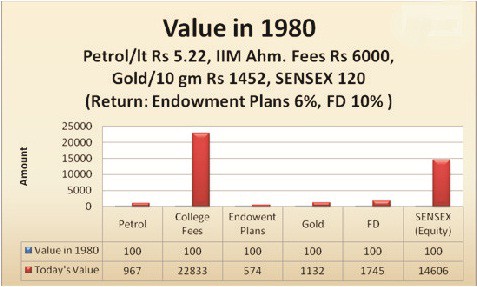
This chart shows 30-plus years of data across various asset classes – equity, gold, FDs, real estate, and inflation. The conclusion is stark and consistent: in the long term, equity is the clear winner. The difference is not marginal – it is enormous.

Long term asset comparison India equity FD gold

In the 35 years from 1990 to 2025, the Sensex delivered approximately 14 to 15% CAGR. Gold delivered approximately 10 to 11% CAGR. FDs delivered 7 to 8% pre-tax (5 to 5.5% post-tax for a 30% bracket investor). Inflation ran at approximately 6 to 7%.

The implication: FDs and debt instruments have delivered negative real returns (below inflation) for most high-bracket investors in most long periods. Equity has delivered 7 to 8% real returns consistently. This does not mean all your money should be in equity – it means equity must be the primary wealth builder in any long-term plan.

Also read: Why Fixed Deposits and Debt Returns Will Always Give Negative Real Returns

Chart 2 – The negative real return of debt

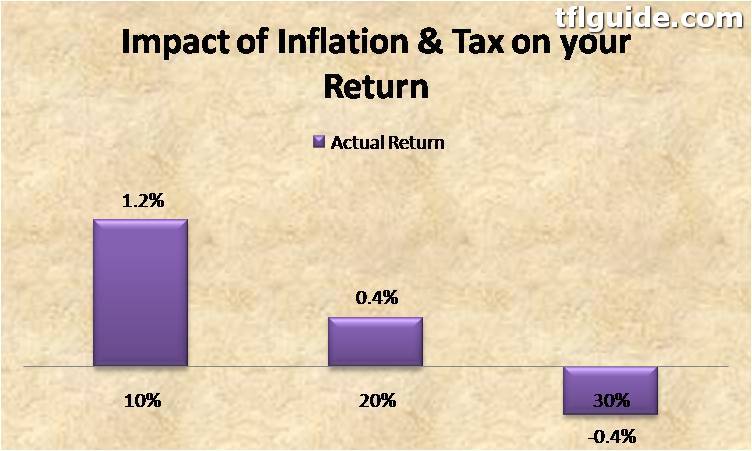
This chart makes the same point more directly: when you factor in inflation and tax, most debt instruments give negative returns in real terms. This is not a one-year phenomenon – it has been structurally true for most of the past 30 years in India.

Negative real return of debt after inflation tax India

The calculation: SBI FD at 6.75% – 30% tax = 4.72% post-tax return. Inflation at 5.5% (CPI 2024-25 average). Real return = 4.72% minus 5.5% = -0.78%. The FD made you poorer in real terms.

This is not an argument against FDs for short-term goals or emergency funds. They have an important role. It is an argument against treating FDs as a long-term wealth creation tool. Safety is not the preservation of rupee value. Real safety is the preservation of purchasing power.

Chart 3 – Why people lose money in equity

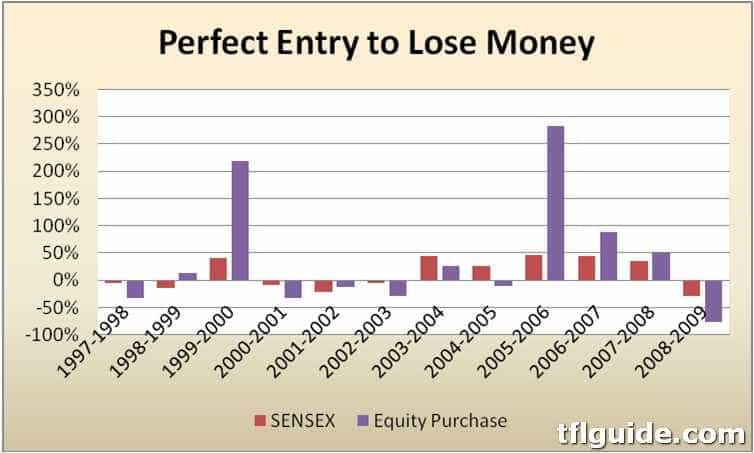
This is a behavioural finance chart that shows the classic pattern: SIP inflows into equity mutual funds peak near market highs and crater near market lows. Investors pile in when others are excited, and exit when others are fearful. The result is that most investors earn far less than the market actually delivers.

Why investors underperform the market India

The DALBAR data I have cited elsewhere: US equity markets returned 9.14% annually from 1991 to 2010. Average equity investors received 3.27%. A 5.87% annual gap, compounded over 20 years, is the difference between Rs.1 lakh becoming Rs.58 lakh versus Rs.19 lakh. This is not a market problem. It is a human behaviour problem. Investing is not a numbers game – it is a mind game.

Also read: Behave Yourself Financially – The Most Important Investing Skill

Chart 4 – The magic of SIP through a market cycle

This chart shows what happens when a SIP runs through a semi-circular market – down 50%, then recovering to the original level. The investor feels like they broke even. But the SIP investor who kept investing through the bottom actually earned a 27% CAGR.

SIP returns through a market cycle India

This is the mathematical reality of rupee cost averaging: buying more units when prices are low means your average cost is lower than the average price. When markets recover even to the starting point, you are significantly in profit. The investor who stops their SIP during a crash converts a paper loss into a locked-in shortfall.

Also read: SIP Complete Guide: How Systematic Investment Plans Actually Work

Chart 5 – India’s growth story

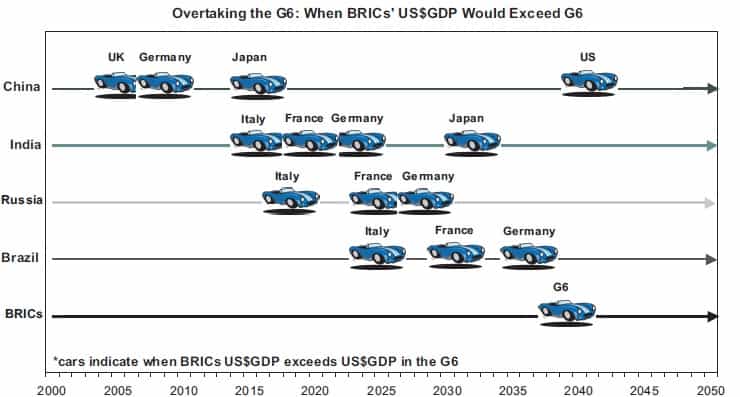
This chart shows India’s trajectory toward becoming the world’s third-largest economy – a Goldman Sachs projection that has been tracking well. The 2011 version of this post said India’s GDP growth was “nearing 9 to 10%.” The actual FY2023-24 GDP growth was 8.2%, making India the fastest-growing major economy for the third consecutive year.

India GDP growth story equity investing

The investing implication is straightforward: if you believe India will grow – and the evidence is strong – equity participation in that growth is the most direct way to benefit. The stock market is, over long periods, a barometer of economic growth. If you do not believe India will grow, there is no rational basis for investing in Indian equity. If you do believe it, there is no rational basis for avoiding it in the long term.

Do these charts describe your current portfolio?

Charts 1 and 2 tell you equity must drive your wealth creation. Chart 3 tells you behaviour matters more than product selection. Chart 4 tells you SIPs must run through corrections, not stop. Chart 5 tells you India is the right place to deploy long-term capital. If your current portfolio reflects all five principles, you are in good shape. If not, a portfolio review might be overdue.

Book a Portfolio Review

Frequently asked questions

Is equity always better than FDs in India over the long term?

Over any rolling 15-year period in India, diversified equity indices have outperformed FDs significantly after adjusting for tax and inflation. However, equity’s advantage requires time – 5-year periods can produce negative equity returns while FDs deliver positive returns. The comparison is only valid for long-term money (10-plus years). For money needed in under 3 years, debt instruments remain appropriate regardless of their lower returns.

Why do Indian investors underperform the market?

The primary reason is behavioural: investors increase investments when markets are high and attractive, and reduce or stop them when markets fall and are actually better value. This results in a higher average cost than the market’s average price, producing lower returns than a simple buy-and-hold or SIP strategy. Fear and greed override rational decision-making – particularly for investors without specific goal anchors to keep them invested.

Should I continue my SIP during a market crash?

Yes – and ideally increase it if you have the capacity. A market crash means lower prices, which means your monthly SIP buys more units at a lower average cost. When the market recovers, you benefit disproportionately. Stopping a SIP during a crash is the most reliable way to convert a temporary paper loss into a permanent shortfall. The SIP investor who kept investing through the 2008-09 crash recovered much faster than one who stopped.

Which of these five charts was most useful to you? Is there a concept about Indian investing you would like me to visualise? Tell me in the comments.

How to Choose the Best Term Insurance Plan in India

A 28-year-old man — a friend of my sister — died from food poisoning. Just like that. No warning, no illness, no dramatic accident. He left behind a wife and a 2-year-old daughter.

No term plan. No life cover. Nothing.

The emotional vacuum? Nobody can fill that. But the financial vacuum — the EMIs, the daughter’s future, the daily expenses — that was a choice. A choice he never made.

You know what Benjamin Franklin said — death and taxes are the only certainties. We plan obsessively for taxes. But for the other certainty? Most Indians don’t even want to think about it.

That needs to change. And it starts with one decision: choosing the right term insurance plan.

⚡ Quick Answer

Don’t chase the cheapest premium — that’s a trap. Choose your term plan using three criteria in this exact order: (1) Claim Settlement Ratio above 97%, (2) Company reputation and financial strength, and (3) Premium comparison only among shortlisted insurers. And split your total cover across two different companies. This one strategy can save your family from a catastrophic claim denial.

How to Choose Best Term Insurance Plan in India

Why Most People Choose the Wrong Term Plan

I get this question almost every week: “Hemant bhai, which is the cheapest term plan? Just tell me the name.”

And every time, my answer disappoints them: the cheapest plan is NOT the best plan.

Think about it this way. You’re buying an umbrella — not for sunny days. You’re buying it for that one terrible storm. If the umbrella collapses exactly when the storm hits, what was the point?

A term plan that denies your family’s claim is worse than having no term plan at all. At least without a plan, your family knows where they stand. A denied claim after years of premium payments? That’s betrayal disguised as financial planning.

The 3-Step Framework to Choose the Best Term Plan

After 18+ years of helping families with life insurance decisions, I’ve seen what works and what doesn’t. These three criteria — in this exact order — will guide you to the right choice.

Step 1: Claim Settlement Ratio (CSR) — The Only Number That Matters

Why are you buying life insurance? So that if you’re not there, your family gets the money. Period.

If the company doesn’t pay claims reliably, everything else — premium, riders, brand name — is meaningless.

What is CSR? It’s the percentage of claims an insurer settles out of total claims received in a financial year. IRDAI publishes this data annually.

CSR Range What It Means Should You Consider?
98% and above Excellent — settles almost every claim ✅ Yes — top tier
95% – 97.99% Good — reliable track record ✅ Yes — acceptable
90% – 94.99% Average — check reasons for rejection ⚠️ Proceed with caution
Below 90% Poor — too many denied claims ❌ Avoid

But here’s what most articles won’t tell you: CSR alone can be misleading. A company with low sum-assured policies (₹2-5 lakh) will naturally have a higher CSR than one writing ₹1-2 crore policies. That’s why you should also check the Amount Settlement Ratio (ASR) — the percentage of total claim VALUE settled, not just the count.

An insurer with 98% CSR but only 75% ASR might be settling small claims easily while contesting big ones. You want both numbers to be high.

🚫 Don’t Fall for This Trap

Some comparison websites rank term plans by premium alone — cheapest at the top. That’s how they earn affiliate commissions. Your family’s financial security deserves better research than sorting by price.

Step 2: Company Reputation & Financial Strength

This is harder to measure than CSR, but just as important.

A term plan is a 25-35 year commitment. The company must be around and financially healthy when the claim actually arises — which could be decades from now.

What to look for:

Solvency ratio — IRDAI mandates a minimum of 150%. This measures whether the insurer has enough assets to pay all potential claims. Higher is better. Check this on IRDAI’s website or the insurer’s annual report.

Track record — How long has the company been operating in India? Has it changed ownership multiple times? Stability matters.

Claims process — Read real customer reviews about the claims experience, not the buying experience. Anyone can sell a policy with a smile. The real test is how they behave when your family files a claim.

I’m not saying go only with LIC because it’s government-backed. Several private insurers — HDFC Life, ICICI Prudential, Tata AIA, Max Life — have built excellent track records over 20+ years. But do your homework.

Step 3: Compare Premium — But Only Among Your Shortlisted Companies

NOW — and only now — compare premiums. After you’ve filtered by CSR (97%+) and reputation, you’ll likely have 5-7 companies left. Among those, go with the one that offers the best value for your specific age, health, and coverage need.

Premium varies based on: your age, smoking status, sum assured, policy term, payment frequency, and riders you add. A 30-year-old non-smoker will pay significantly less than a 40-year-old smoker for the same cover.

Selection Criteria Priority What to Check
Claim Settlement Ratio #1 — Non-negotiable IRDAI annual data + Amount Settlement Ratio
Company Reputation #2 — Eliminates weak players Solvency ratio, years in operation, ownership stability
Premium Comparison #3 — Only among shortlisted Compare at same age, term, sum assured, rider combination
Rider Options #4 — Add-on value Critical illness, accidental death, waiver of premium

Not sure how much term cover you actually need?

The right sum assured depends on your income, loans, dependents, and future goals. A financial planner can calculate this precisely.

Talk to a Financial Planner →

How to Make Sure Your Claim Never Gets Rejected

Even the best insurer can reject your claim if you’ve given them a reason. Here’s how to make your policy bulletproof:

Fill the form yourself. Don’t let the agent rush through it. I’ve seen agents tick “non-smoker” for smokers just to get a lower premium and faster commission. When the claim comes, the insurer investigates — and a wrong declaration becomes grounds for rejection.

Disclose everything. Smoke occasionally? Mention it. Had a minor surgery 5 years ago? Mention it. Take medication for blood pressure? Mention it. Even things you think are small. Non-disclosure is the #1 reason claims get rejected in India.

Declare all existing policies. If you hold other life insurance — ULIPs, endowment plans, group cover from your employer — list them all. Insurers cross-check this, and undeclared policies raise red flags during claim investigation.

Keep your nominee details updated. If you got married after buying the policy, update the nominee. If your nominee passed away, assign a new one immediately. Outdated nominee records create legal complications that delay claim settlement for months — sometimes years.

The One Strategy Every Family Should Follow: Split Your Term Plan

This is something I recommend to every client, and I’ve seen it save families more than once.

Don’t put your entire life cover with one company. Split it across two.

Say you need ₹2 crore of cover. Instead of one ₹2 crore policy, buy ₹1 crore each from two different insurers.

Why this works:

Protection against claim denial. If Company A denies the claim (rare but possible), your family still has Company B’s ₹1 crore. They’re not left with nothing. And here’s the powerful part — if Company B settles the claim and Company A denies it, your family can go to the Insurance Ombudsman and argue: “The same person, same health history — Company B paid. Why won’t Company A?”

Flexibility as life changes. Ten years from now, your loans might be paid off, your children might be earning, and your need for cover might reduce. With two policies, you can drop one and keep the other — instead of being stuck with an oversized single policy.

Lower concentration risk. Just like you shouldn’t put all your investments in one stock, don’t put all your life cover with one insurer. Diversification isn’t just for mutual funds.

What About Riders? Are They Worth It?

Riders are add-on benefits you can attach to your base term plan. The three most common ones:

Critical Illness Rider — pays a lump sum if you’re diagnosed with specified illnesses (cancer, heart attack, stroke, etc.). Useful, but check for overlaps with your health insurance.

Accidental Death Benefit Rider — pays an additional sum if death is due to an accident. It’s cheap, so usually worth adding.

Waiver of Premium Rider — waives future premiums if you become permanently disabled. This ensures your policy stays active even if you can’t earn.

My advice: the base term plan is essential. Riders are optional enhancements. Don’t overload your policy with riders and then complain about the premium. Get the base cover right first.

What Happens to Your Home Loan if Something Happens to You?

This is a fear I see in almost every young family. You’ve taken a ₹50 lakh home loan, and the thought hits you at 2 AM: “What if I’m not around to pay the EMIs?”

Your term plan sum assured should cover your outstanding loans. But some people also consider a separate home loan protection plan that specifically covers the reducing loan balance. It’s cheaper than a regular term plan for this purpose.

The key insight: your total cover = family’s living expenses + children’s education + outstanding loans + any other financial goals. Don’t guess this number. Calculate it.

Quick Checklist Before You Buy

Checkpoint Done?
Calculated your Human Life Value (total cover needed)
Checked insurer’s CSR AND Amount Settlement Ratio on IRDAI data
Verified solvency ratio is above 150%
Decided to split cover across 2 insurers
Filled proposal form truthfully (no agent shortcuts)
Disclosed all medical history and existing policies
Updated nominee details
Informed family about both policies and how to claim

Tax benefit: Your term insurance premiums qualify for deduction under Section 80C of the Income Tax Act (up to ₹1.5 lakh per year). And the death benefit received by your nominee is completely tax-free under Section 10(10D). So you’re protecting your family AND saving tax — that’s a rare win-win in Indian taxation.

Still confused about which term plan to choose?

A fee-only financial planner can calculate your exact coverage need and help you pick the right policy — without earning commission from the insurer.

Get Unbiased Insurance Advice →

That 28-year-old who died from food poisoning? He didn’t plan to die. Nobody does. But he could have planned for his family’s survival. That choice was available to him — every single day — and he never made it.

The best term plan isn’t the cheapest. It’s the one that actually pays your family when you can’t.

💬 Your Turn

Have you split your term cover across two companies — or is everything with one insurer? What made you choose your current term plan? Share your experience below.

Ask Readers: Can you Share LIC Samridhi Plus Review

The post that originally sat at this URL was a request to readers to share a review of LIC Samridhi Plus. That product was discontinued years ago.

But the two reader comments it generated in 2011 were genuinely insightful – and they capture a debate that is still very much alive in 2026. I want to use this space to settle it properly.

Naresh wrote: “One should buy term insurance only as per requirements. For investments, there are mutual funds, equity, and debt to choose from.”

Sanket wrote: “I am an LIC agent myself but have been advising people against buying ULIPs. I have burnt my own hands buying ULIPs. Only after I became an agent did I understand how I was at a loss. One would rather invest in MFs for growth and term plans for risk cover.”

An LIC agent telling clients to avoid ULIPs. That is how obvious this should be.

Quick Answer

ULIPs mix insurance and investment in a structure where neither is done well. The insurance cover is inadequate for the premium paid. The investment returns are dragged down by multiple charges (premium allocation, policy administration, fund management, mortality). Term plan plus mutual fund almost always beats a ULIP on every dimension – coverage, returns, flexibility, and liquidity. The only exception is if you need forced savings and cannot maintain separate investments independently.

ULIP vs Term insurance and mutual fund India

Why mixing insurance and investment is almost always a bad idea

The argument for products like ULIPs and endowment plans is emotional: “You get insurance AND investment in one.” This sounds like more value. It is not.

Insurance and investment are fundamentally different purposes. Insurance is about replacing lost income for dependents if you die young. The best insurance is pure risk cover – maximum sum assured for minimum premium. Investment is about growing wealth for your goals. The best investment is the one with the highest risk-adjusted return for your timeline.

When you combine them, you compromise both:

The insurance is weak: A Rs.10 lakh premium in a ULIP buys you a Rs.10 to 15 lakh sum assured (sometimes just 10x annual premium). The same Rs.10 lakh in a term plan at age 35 buys you Rs.1.5 to 2 crore sum assured. The ULIP provides 10% of the life cover at the same premium.

The investment is expensive: ULIPs carry 4 to 7 separate charges in the early years – premium allocation charge (1 to 5%), fund management charge (1.35%), policy administration charge, mortality charge, partial withdrawal charges. These charges compound negatively and can consume 20 to 35% of your premium in the first 5 years. A mutual fund’s total expense ratio is 0.5 to 1.5% per year – nothing else.

The honest ULIP vs term+MF comparison

Let us run the numbers for a 35-year-old with a 20-year horizon investing Rs.1 lakh per year:

ULIP option: Rs.1 lakh premium. After charges of approximately 2 to 3% annually (improving with newer ULIPs), assume a post-charge CAGR of 10%. After 20 years: approximately Rs.50 to 55 lakh. Life cover: Rs.10 lakh.

Term + MF option: Rs.12,000 term plan premium for Rs.1.5 crore cover. Rs.88,000 invested in equity mutual funds at 12% CAGR after 1.5% expense ratio (net 12%). After 20 years: approximately Rs.71 to 75 lakh. Life cover: Rs.1.5 crore.

The term+MF option delivers approximately 30 to 40% more corpus AND 15x more life cover for the same annual outflow.

This is not a close call. This is the reason Sanket, the LIC agent, told clients not to buy ULIPs even while selling them.

When might a ULIP still make sense?

I want to be fair. There are a few genuine use cases:

Forced savings with no discipline: If someone genuinely cannot maintain separate investments and will cash out a mutual fund at the first opportunity, the surrender charges of a ULIP can serve as a behavioural lock-in. This is a reasonable argument, but it is an admission of a discipline problem rather than a product advantage.

Newer, low-charge ULIPs post-IRDAI reforms: IRDAI significantly clamped down on ULIP charges in 2010 and further in subsequent years. Some current ULIPs from established insurers have total charges below 2% annually after 5 to 7 years – which is closer to mutual fund territory. If you are being sold a ULIP, ask for the exact charge structure in writing before signing.

Estate planning in specific situations: In some NRI or high-net-worth situations, the ULIP’s structure (sum assured paid directly to nominee, outside probate) has estate planning advantages. This is a specialist use case, not a general recommendation.

The LIC endowment question

Everything I have said about ULIPs applies with even more force to traditional endowment plans – LIC Jeevan Anand, LIC Jeevan Lakshya, and their equivalents. These are non-market-linked products where your money earns approximately 4 to 6% internal rate of return over 20 to 25 years. With inflation at 5 to 6%, your real return is barely positive or negative.

If you hold existing LIC endowment policies: calculate the actual IRR using a present value calculator before surrendering. Surrendering after 10 to 15 years may not be worth it due to surrender penalties. Keep paying if the policy is near maturity. But never buy a new one.

Also read: Returns Cannot Be Your Goals – Why Product Selection Matters Less Than You Think

Do you have ULIPs or endowment policies you are unsure about?

The decision to continue, surrender, or paid-up an existing insurance-cum-investment policy depends on the specific terms, your age, and how many years remain. We do this analysis as part of our financial planning process – helping you understand what to keep and what to replace.

Book a Clarity Call

Frequently asked questions

Is a ULIP better than a mutual fund?

For most investors, no. A ULIP carries multiple charges – premium allocation, mortality, fund management, policy administration – that significantly reduce net returns, particularly in the early years. A mutual fund’s total expense ratio is lower and more transparent. The combination of a term plan (for risk cover) and mutual fund (for investment) almost always delivers better outcomes than a ULIP for the same premium outflow, except in specific edge cases involving forced savings behaviour or estate planning needs.

Should I surrender my existing ULIP?

It depends on how long you have held it, what the surrender value is, and how many years remain. Surrendering in the first 5 years typically results in heavy losses due to front-loaded charges. After 5 years (the mandatory lock-in), calculate the internal rate of return you have earned so far and compare it to what you could earn with the surrender proceeds invested elsewhere after tax. If the remaining policy years are few and the charges are now low, continuing to maturity may be better. Get a specific analysis before deciding.

Are endowment plans a good investment?

No, for the purpose of wealth creation. Traditional endowment plans from LIC and other insurers typically deliver 4 to 6% internal rate of return over their tenure. With inflation at 5 to 7%, the real return is negligible or negative. The guaranteed return and bonus feel attractive but compound slowly. The same premium split into a term plan and equity mutual fund delivers significantly more both on the insurance coverage and the investment corpus. Endowments are appropriate only if you want an absolute capital guarantee with zero equity exposure and have no interest in maximising returns.

Do you have a ULIP or endowment policy you are unsure about? Share the situation in the comments – the more specific you are, the more useful the discussion becomes.

LIC Samridhi Plus Review – Don’t Invest (Plan Now Discontinued)

Someone once asked me on our Ask Us page — “Please let me know your take on LIC Samridhi Plus. Should I go for it? Is Guaranteed Highest NAV usually preferred?”

My answer was one word: NO.

That was in 2011. Fifteen years later, LIC Samridhi Plus has been discontinued. But thousands of policyholders are still stuck with it — wondering whether to hold, surrender, or make it paid-up. If you are one of them, this review is for you.

⚡ Quick Answer

LIC Samridhi Plus (Table No. 804) was a ULIP with a “Guaranteed Highest NAV” gimmick — discontinued since May 2011. The plan’s charges were excessive (6% premium allocation + fund management + guarantee charges + administration charges = 4-6% annually eaten from your investment). If you still hold this policy: check your fund value, compare with surrender value, and consult a fee-only advisor before deciding. In most cases, exiting and redeploying into low-cost mutual funds is the better move.

🚫 Plan Discontinued

LIC Samridhi Plus (Plan 804) was discontinued for new sales in May 2011. This review exists for existing policyholders evaluating their options and for educational purposes.

What Was LIC Samridhi Plus?

LIC Samridhi Plus was a market-linked insurance plan (ULIP) that promised to protect your investment from market fluctuations. The headline feature was “Guaranteed Highest NAV” — meaning your maturity benefit would be based on the highest NAV achieved in the first 100 months of the policy, or the NAV at maturity, whichever was higher.

Sounds wonderful on paper. In reality, it was a cleverly packaged product where the guarantee worked against the fundamental principles of equity investing.

5 Reasons This Plan Was a Bad Deal

1. It Mixed Insurance and Investment — The Cardinal Sin

We have said this for 25 years and will keep saying it: never mix insurance with investment. If you need insurance, buy a term plan. If you need investment returns, buy mutual funds. Products that combine both do neither well — and charge you double for the privilege.

2. “Guaranteed Highest NAV” Was a Marketing Gimmick

Most people confused “highest NAV” with “highest return.” They are not the same thing.

Here is how it actually worked: the fund used a strategy called CPPI (Constant Proportion Portfolio Insurance). When markets fell, the fund manager shifted money from equity to debt to protect the NAV. When markets rose, he shifted back to equity.

Think about what this means. In a falling market — exactly when you should be buying equity cheap — the fund was selling equity and buying debt. And in a rising market — when equity is expensive — it was buying more equity. It did the exact opposite of sensible investing. The guarantee protected the NAV number on paper while destroying your real returns.

3. Similar Schemes Performed Poorly

LIC launched a similar product called LIC Wealth Plus with even more fanfare. Its performance was disappointing. In the same period when the Sensex delivered 15%+ returns, these “guaranteed NAV” products barely managed to beat fixed deposits — after charges.

The pattern repeated across the industry. Every “guaranteed” ULIP underperformed a simple diversified equity mutual fund over the same period.

4. The Accidental Benefit Was a Gimmick Too

The accident benefit was marketed as a generous add-on — “up to Rs 50 lakh, subject to certain conditions.” But it was not free. LIC charged Rs 0.50 per thousand of accident benefit sum assured every month. And the “certain conditions” made the actual claim process harder than advertised.

5. The Charges Were Brutal

This is where LIC Samridhi Plus truly hurt investors:

Charge Type LIC Samridhi Plus Direct Mutual Fund (2026)
Entry/Allocation Charge 6% in Year 1, 4.5% thereafter Zero
Fund Management 0.9% per year 0.3-0.5% (index fund) / 0.5-1.0% (active)
Guarantee Charge 0.4% per year Not applicable
Administration Charge Rs 30/month (escalating 3% yearly) = 2.4% on Rs 15K premium Zero
Mortality Charge Age-specific, deducted monthly Not applicable (buy separate term plan)
Total Annual Drag 4-6% of your investment 0.3-1.0%

With 4-6% of your money being eaten by charges every year, your actual investment barely had a chance to grow. A direct mutual fund with 0.5% expense ratio would have left 95%+ of returns in your pocket.

And LIC reserved the right to increase charges — with IRDAI approval. They were upfront about this, at least.

If You Still Hold LIC Samridhi Plus — What to Do

If you bought this policy in 2011 and have been paying premiums (or made it paid-up), here is how to evaluate your options:

Step 1: Check your fund value. Log into the LIC portal or contact your branch. Note the current fund value and the surrender value.

Step 2: Calculate your actual return. Total premiums paid vs current fund value. What CAGR did you actually earn? Compare with what a Nifty 50 index fund delivered over the same period (~14-15% CAGR).

Step 3: If the lock-in period is over (5 years), you can surrender or make partial withdrawals. The surrender value after the lock-in period equals the fund value minus discontinuation charges (if any).

Step 4: Redeploy wisely. The surrendered amount should go into a combination of direct mutual funds (equity + debt based on your goals) and a separate term insurance plan if you need life cover.

Step 5: Do not fall for the sunk cost fallacy. “I have already paid so much” is not a reason to keep paying into a bad product. Read: Throwing Good Money After Bad

Stuck with a ULIP or endowment policy you regret buying?

A fee-only advisor can calculate whether to hold, surrender, or make it paid-up — based on numbers, not emotion.

Get an Insurance Portfolio Review

The Bigger Lesson

LIC Samridhi Plus was launched at the end of the financial year — when millions of Indians rush to complete tax-saving investments. Every year, insurance companies launch new products precisely at this time. They know you are desperate. They know you will not read the fine print.

A responsible company that billions trust with their money should not exploit that trust. But they do.

As I wrote back in 2011, this sher (poetry) captures it:

“Ek hi ullu kaafi hai barbaade gulistaan karne ko,
Anjaam-e-gulistaan kya hoga jab har shaakh pe ullu baitha ho.”

(One owl is enough to ruin a garden. Imagine what happens when there is an owl on every branch.)

The owls have not left the branches. But now you know what they look like.

Every mis-sold policy is a lesson paid for in real money. The question is whether you let the lesson compound — or the loss.

Stop the bleeding. Start the healing. The best time to exit a bad investment is today.

💬 Your Turn

Were you sold LIC Samridhi Plus or a similar “guaranteed NAV” ULIP? Did you hold it to maturity or exit early? What was your actual return? Share your experience — it might save someone else from the same trap.

How a fake Financial Planner Puts his Investor into Trouble

A client’s son called me in 2023. His father, a retired school teacher, had lost Rs.8 lakh to someone who had introduced himself as a “SEBI-registered financial planner” on a WhatsApp group. The person had run a fake investment scheme for 18 months before disappearing.

I asked: did the father check the SEBI website to verify the registration? He had not. He trusted the WhatsApp recommendation.

In 2011, when I first wrote about fake financial planners, the risk was agents mis-selling insurance and churning mutual funds for commission. Those risks still exist. But in 2026, a new and more dangerous category has emerged: online investment scams dressed up as financial planning.

Quick Answer

A genuine SEBI-registered investment adviser (RIA) is registered on SEBI’s public database at sebi.gov.in and follows strict fee disclosure and fiduciary standards. In 2026, the biggest threat is not the commission-hungry agent – it is the fake “advisor” on Telegram and WhatsApp promising 30 to 40% annual returns. Verify before you trust. Verify again before you invest. And read the checklist at the end of this article before hiring any financial advisor.

How to identify a fake financial planner India

The 2026 landscape – what has changed since 2011

In 2011, financial planning in India was largely unregulated. Anyone could call themselves a financial planner. The primary threat was the insurance agent or mutual fund distributor who prioritised commission over client interest.

SEBI addressed this with the Investment Adviser (IA) regulations introduced in 2013, strengthened in 2020. Today:

  • A SEBI-registered Investment Adviser (RIA) is legally obligated to act as a fiduciary – the client’s interest comes first.
  • RIAs cannot receive commissions from product manufacturers. They charge fees directly from clients.
  • All RIAs must be registered at sebi.gov.in (check the “SEBI Registered Intermediaries” portal).
  • Qualification requirements are strict: CFP, CA, CFA, MBA Finance, or post-graduate degree with relevant experience.

This is a significant improvement from 2011. But it has also created a new problem: fraudsters now claim SEBI registration they do not have. SEBI’s registration number is public and verifiable. Fake advisors use real registration numbers that belong to other people. Always verify the number on SEBI’s website directly.

The digital scam – the biggest threat in 2026

How to identify financial fraud India

The modern fake financial advisor does not knock on your door. They find you on Telegram, YouTube, Twitter/X, or WhatsApp groups. They operate sophisticated-looking websites and share “verified” call screenshots showing profits.

Warning signs specific to digital scams:

  • Guaranteed return promises: “30% monthly return guaranteed.” No legitimate investment guarantees returns above bank FD rates. SEBI does not permit return guarantees.
  • Unverifiable identity: Anonymous Telegram handles, stock tip channels with no verifiable human behind them.
  • Pressure to act fast: “Only 10 slots left.” “Offer closes tonight.” These are pressure tactics – not the language of a fiduciary.
  • App-based investments outside regulated platforms: “Download our app and invest directly.” Legitimate investments go through SEBI-registered brokers, AMCs, or depositories. No genuine investment product requires a custom app download from an unknown entity.
  • Social proof manipulation: Screenshots of gains, “client testimonials” – all easily fabricated.

Five ways a traditional fake financial planner still puts investors in trouble

The 2011 list I wrote still applies. The methods are the same even if the delivery has evolved:

1. No emergency fund discussion. If your advisor never asked about your emergency fund or emergency contingency plan, they are building a portfolio without a foundation. When a market correction forces you to redeem at a loss, that is partly on them.

2. Debt repayment not prioritised before investment. Investing in a mutual fund at 12% expected return while carrying a personal loan at 18% is mathematically irrational. Any advisor who recommends investment before expensive debt repayment is not acting in your interest.

3. Insurance need misjudged – endowment or ULIP pushed instead of term. This remains the most common mis-sale in India. A Rs.1 crore endowment policy sold as “good for the family” while the client needs Rs.2 crore in term cover and a separate investment strategy.

4. Trading or F&O recommended. If anyone recommends that you trade individual stocks or derivatives (F&O) as a “strategy,” exit that conversation. Over 93% of F&O traders in India lose money according to SEBI’s own study.

5. Churning the portfolio. Switching mutual funds every 1 to 2 years – generating exit load costs, capital gains tax events, and fresh entry loads – while claiming to “optimise performance.” The advisor earns trail commission with every switch. You pay the costs.

The checklist – before and after hiring any financial advisor

Before hiring:

  • Verify SEBI registration at sebi.gov.in if they claim to be an RIA. Ask for their registration number and check it yourself – do not take a screenshot as proof.
  • Ask explicitly how they are paid: Fee from you, commission from product manufacturers, or both? A fiduciary RIA earns only from the client. A distributor earns commission and may also charge fees. Both are legitimate models but you must know which you are dealing with.
  • Get advice in writing. Any recommendation – buy this fund, take this policy – should come in writing with reasoning. Verbal advice leaves you with no recourse if it goes wrong.
  • Ask for the negative side of every recommendation. Legitimate advisors explain risks. If every product is “excellent” with no downsides, leave.
  • Do not sign blank forms. Never. Not even with advisors you trust completely.
  • Check for time pressure. “You must decide today” is a red flag in financial planning. Good advice does not expire overnight.

Ongoing:

  • Every 3 years, get an independent audit of your advisor’s recommendations.
  • Monitor whether advice has benefited you or primarily generated transactions.
  • Trust your instinct when something feels off – and verify before acting.

Also read: How to Choose the Right Financial Advisor in India

Working with a SEBI-registered advisor you can verify

Hemant Beniwal, CFP CTEP, is a SEBI Registered Investment Adviser (INA100001927). You can verify this registration on SEBI’s website. RetireWise works with senior executives aged 45 to 60 planning their retirement – with transparent fee disclosure and no product-based incentives.

View Our Services

Frequently asked questions

How do I verify if a financial advisor is genuinely SEBI registered?

Go to sebi.gov.in, navigate to “SEBI Registered Intermediaries” or use the SEBI intermediary portal (intermediaries.sebi.gov.in), and search for the advisor’s name or registration number. Do not rely on screenshots, PDFs, or certificates shown by the advisor – always verify directly on the SEBI website. If the registration is not found or the name does not match, do not proceed.

What is the difference between a SEBI-registered investment adviser and a mutual fund distributor?

A SEBI-registered investment adviser (RIA) is a fiduciary – legally required to act in the client’s best interest, charges only fees from clients, and cannot receive commissions from product manufacturers. A mutual fund distributor earns commissions from AMCs when they sell mutual funds – they are not fiduciaries. Both models are legal. The key is knowing which model your advisor uses. A distributor giving good advice is better than a bad RIA, but the structure matters for conflict of interest assessment.

How do I report a fraudulent financial advisor in India?

File a complaint with SEBI through scores.gov.in (SEBI Complaints Redress System) or email [email protected]. For online investment fraud specifically, also file an FIR with the cybercrime wing at cybercrime.gov.in. Keep all evidence: transaction records, communications, agreements, screenshots. Report to RBI if the fraud involved unregistered deposit-taking. Early reporting improves recovery chances and helps protect others.

Have you encountered a fake financial planner or investment scam? What happened? Sharing your experience in the comments helps others recognise the patterns before they lose money.

What is Indian Union Budget ?

Every February, the Union Budget dominates television, WhatsApp groups, and office conversations for 48 hours. People react to each announcement – income tax slabs, customs duty changes, infrastructure allocations. Then the conversation moves on, and most people have no idea what the budget actually is, how it is structured, or why it matters for their financial decisions.

This is the explainer that fills that gap. Once you understand how the budget works, you will read the annual announcements very differently.

Quick Answer

The Indian Union Budget is the government’s annual financial statement – listing expected revenues (mainly taxes) and planned expenditures for the coming year. It is also the vehicle through which changes to income tax, capital gains, customs duty, and investment incentives are announced. For personal finance, the most important budget elements are income tax changes, capital gains tax changes, and fiscal deficit numbers – which influence interest rates, inflation, and the broader economy.

What is the Indian Union Budget

What the Union Budget actually is

At its core, a budget is what every household does: estimate your income, decide your expenses, figure out how to bridge the gap if expenses exceed income. The Union Budget is India’s national version of this exercise.

The Finance Minister presents the budget in Parliament on February 1 every year (moved from the last day of February in 2017). The budget covers the following financial year – April 1 to March 31.

The budget has two key documents: the Finance Bill (the actual law containing tax changes) and the Annual Financial Statement (the government’s income and expenditure projections). The Finance Bill must be passed by Parliament; until it is, the government runs on a Vote on Account – a temporary authorisation to spend.

The three funds – how government money is organised

India’s government finances are organised under three distinct accounts:

The Consolidated Fund of India is the primary account. All government revenues – income tax, GST, customs duty, corporate tax, dividends from PSUs – flow into this fund. All government expenditures are drawn from it. Every single rupee the government spends requires parliamentary approval via the Consolidated Fund.

The Contingency Fund is essentially the government’s emergency fund – money available to the President and Governors to meet unforeseen expenditures without waiting for parliamentary approval. Once Parliament meets, the amount used from the Contingency Fund is replenished from the Consolidated Fund.

The Public Account covers funds held in trust by the government – Provident Fund contributions, small savings deposits (PPF, Post Office), and other accounts where the government acts as a custodian rather than an owner. This is why PPF returns are linked to government decisions – the money is technically in the Public Account.

Revenue vs capital – the distinction that matters

Government expenditure is divided into Revenue Expenditure and Capital Expenditure. This distinction matters significantly:

Revenue Expenditure covers ongoing operational costs: salaries of government employees, interest payments on past debt, subsidies on food and fertiliser, grants to states, defence maintenance. This spending does not create assets – it keeps the current system running. A Revenue Deficit (when revenue expenditure exceeds revenue receipts) is a warning sign because it means the government is borrowing to fund day-to-day operations rather than investment.

Capital Expenditure is investment spending: building highways, railways, schools, hospitals, defence equipment, and other infrastructure. Capital expenditure creates assets that generate returns over decades. A higher capital expenditure allocation in the budget is generally positive for long-term growth. India’s capital expenditure allocation has grown significantly in recent budgets – from Rs.5.54 lakh crore in FY2022-23 to a projected Rs.11.11 lakh crore in FY2025-26.

Fiscal deficit – the most watched number

The fiscal deficit is the single most important number in any budget. It measures the gap between what the government spends and what it earns. The government covers this gap by borrowing – primarily by issuing Government Securities (G-Secs) in the bond market.

Fiscal deficit = Total Government Expenditure minus Total Government Receipts (excluding borrowings)

It is expressed as a percentage of GDP. India’s fiscal deficit target for FY2025-26 is 4.4% of GDP, down from 5.6% in FY2022-23. The FRBM (Fiscal Responsibility and Budget Management) Act sets a target of 3% as the long-term goal.

Why does this affect you personally? When the fiscal deficit is high, the government borrows more. Large government borrowing competes with private sector borrowing and can push up interest rates – which affects home loan rates, FD rates, and bond yields. It also affects inflation expectations and the rupee’s value. This is why foreign institutional investors, fund managers, and bond traders watch the fiscal deficit number so closely.

Fiscal policy vs monetary policy – the two levers

Fiscal policy is the government’s tool: taxation levels, spending priorities, size of the deficit. The Union Budget is the primary vehicle for fiscal policy. It affects the economy through how much money the government takes from citizens (taxes) and pumps back in (spending).

Monetary policy is the Reserve Bank of India’s tool: interest rates (the repo rate), money supply, and credit conditions. The RBI’s Monetary Policy Committee (MPC) meets every two months to set the repo rate. The repo rate is the rate at which banks borrow from RBI – it flows through to your home loan, FD, and debt fund returns.

These two policies work in coordination but are institutionally separate. The Finance Ministry drives fiscal policy; the RBI drives monetary policy. Sometimes they work in the same direction (both loosening during COVID) and sometimes they pull in opposite directions (government spending rising even as RBI raises rates to control inflation).

What to look for in a Union Budget – a personal finance lens

Most of the budget is irrelevant to individual personal finance decisions. What actually matters:

Income tax slab changes: Any change to tax slabs, standard deduction, or HRA calculation affects your take-home pay immediately. Since FY2023-24, the new regime is the default and most exemptions have been removed from it. Budget changes to the new regime affect all salaried taxpayers directly.

Capital gains tax: Budget 2024 changed equity STCG from 15% to 20% and LTCG from 10% to 12.5%. These are the changes that most directly affect investment portfolios. Watch for any changes to holding period definitions or exemption limits.

Section 80C and other deductions: Under the old tax regime, deductions under 80C (Rs.1.5 lakh), 80D (health insurance), HRA, and home loan interest directly reduce your tax liability.

Fiscal deficit target: A lower-than-expected deficit is good for bond markets (yields may fall, bond fund NAVs may rise). A higher deficit may push yields up.

Infrastructure and sector allocations: Large increases in highways, railways, housing, defence, or manufacturing can drive sector-specific equity performance for 1 to 3 years after the budget.

Also read: Are You Financially Literate? The 5 Questions That Actually Test It

Budget changes affect your financial plan – have you reviewed yours this year?

Tax rule changes in the Budget – capital gains rates, deductions, new vs old regime – can change the optimal strategy for your SIPs, redemptions, and insurance. We help clients review and adjust their plans after each Budget as part of our ongoing advisory process.

Book a Clarity Call

Frequently asked questions

What is the Indian Union Budget and when is it presented?

The Union Budget is the central government’s annual financial statement showing projected revenues and planned expenditures for the coming financial year (April to March). It is presented by the Finance Minister in Parliament on February 1 each year. The budget includes the Finance Bill (containing tax changes that require parliamentary approval) and the Annual Financial Statement (income and expenditure projections).

What is fiscal deficit and why does it matter for investors?

Fiscal deficit is the gap between total government spending and its total earnings (excluding borrowings), expressed as a percentage of GDP. When the deficit is high, the government borrows more by issuing bonds, which can push up interest rates across the economy – affecting home loan rates, FD rates, and bond market returns. A lower fiscal deficit is generally positive for interest rates and inflation outlook. India’s FY2025-26 fiscal deficit target is 4.4% of GDP.

What is the difference between fiscal policy and monetary policy?

Fiscal policy refers to the government’s decisions on taxation and spending – the Union Budget is the primary fiscal policy document. Monetary policy refers to the RBI’s control of interest rates and money supply – the repo rate, reverse repo, and CRR are its main tools. Both affect the economy, but through different channels. Budget changes affect your tax liability and investment incentives directly; monetary policy changes affect your borrowing costs and deposit returns through the interest rate channel.

Is there a specific budget concept you have always found confusing? Drop it in the comments – I will add a plain-English explanation.

Why Fixed Deposit Returns Are Always Negative in Real Terms (2026 Update)

“Inflation is taxation without legislation.” – Milton Friedman

A client came to me some years ago with a question he was proud of: “Hemant, I have Rs 50 lakh in fixed deposits. I am getting 7.5%. That is Rs 3.75 lakh per year. I am set, right?”

I asked him two questions. One: what is your tax bracket? “30%,” he said. Two: what is your estimate of current inflation? He paused.

After tax, his Rs 3.75 lakh became Rs 2.625 lakh. With inflation running around 5-5.5%, his real purchasing power was actually declining every year despite earning “7.5%.” He was not set. He was losing ground in slow motion.

This is the silent conspiracy that most Indian savers never calculate.

⚡ Quick Answer

The real return on a fixed deposit is not the interest rate on the certificate. It is the interest rate minus inflation minus tax. For a 30% tax bracket investor with a 7% FD and 5% inflation, the real post-tax return is approximately 0% – or even slightly negative. This is why 90% of Indian financial savings in debt instruments cannot build retirement wealth. The math does not work.

Fixed deposit and debt returns - real return calculation for retirement investors in India

How Debt Returns Are Built

To understand why FD returns tend toward zero in real terms, start from how interest rates on debt instruments are constructed.

The interest rate on any debt instrument is built from three components. First, expected inflation: the largest component. If long-term inflation is expected at 5%, this alone accounts for 5% of the stated interest rate. Second, the real riskless rate: a small amount (typically 0.5-1%) paid for the time value of money. Third, a risk premium: compensation for credit risk and duration risk, which increases for longer-term instruments and lower-credit issuers.

So a 7% bank FD rate is approximately: 5% inflation compensation + 0.5% real riskless rate + 1.5% credit and duration premium. The bank is not giving you 7% as a bonus. It is largely returning the purchasing power inflation will erode, plus a small amount for your trouble.

“In 25 years of practice I have never seen a client build retirement wealth through fixed deposits alone. Not because FDs are bad instruments – but because the math does not allow it. Inflation and tax together consume almost everything the FD earns.”

– Hemant Beniwal, CFP, CTEP | Founder, RetireWise

The Real Return Calculation: Where Your FD Money Actually Goes

Let us work through the actual numbers for 2025-26.

A senior SBI fixed deposit offers approximately 7-7.5% per annum for a 1-3 year tenure. Take 7%.

For a person in the 30% income tax bracket (income above Rs 15 lakh per annum under the new regime, or above Rs 10 lakh under the old regime), the after-tax return on this FD is: 7% x (1 – 0.30) = 4.9%. Plus surcharge and cess this reduces further to approximately 4.6-4.7%.

CPI inflation in India averaged approximately 4.5-5.5% over 2024-25. Using 5%:

Real post-tax return = 4.7% – 5% = approximately -0.3%.

Not zero. Negative. The purchasing power of the money is declining despite being “invested” in a bank FD.

For a person in the 20% tax bracket: after-tax return is 7% x 0.80 = 5.6%. Real return: 5.6% – 5% = 0.6%. Barely positive. Not enough to grow retirement wealth.

For a person in the 10% bracket (income below Rs 7 lakh): after-tax return is 6.3%. Real return: 1.3%. Small positive, but still insufficient for meaningful retirement corpus building over 20-30 years.

Is your retirement corpus actually growing, or just keeping pace with inflation?

A RetireWise retirement plan calculates the real post-inflation, post-tax return on your entire portfolio – and shows you what allocation actually builds retirement wealth.

Book a Free 30-Min Call

Why FDs Will Always Tend Toward Zero Real Returns

This is not a temporary condition caused by current interest rates or current inflation. It is structural.

Interest rates on debt instruments are set by markets and RBI policy. The RBI’s inflation target is 4% (with a 2-6% band). When inflation is around target, the RBI sets policy rates to produce a small positive real interest rate. This is by design: the system is not set up to produce large real returns on debt for individuals. A large positive real return on government bonds would mean the government is paying above-market rates to borrow money, which is economically unsustainable.

So the structural reality is: nominal FD rates will tend to stay approximately 1-2% above inflation (before tax), producing 0% to small negative real returns after tax for higher-bracket investors. This is not a failing of the banking system. It is how debt markets are designed to work.

The FD Deposit Insurance Update

One important update from the original 2011 version of this post: the DICGC (Deposit Insurance and Credit Guarantee Corporation) insurance limit on bank deposits was raised from Rs 1 lakh to Rs 5 lakh per depositor per bank in 2020. This means deposits up to Rs 5 lakh per bank are insured. For larger amounts spread across multiple banks, each bank provides separate coverage. Corporate FDs and cooperative bank deposits are NOT covered by DICGC insurance, which is why their higher rates represent genuine additional risk.

What This Means for Retirement Planning

The implication is direct: a retirement portfolio built primarily on fixed deposits will not grow at a rate that maintains purchasing power for a 20-30 year retirement. A corpus of Rs 1 crore in FDs earning 0% real return produces the same purchasing power every year, while life expectancy extends and healthcare inflation runs at 7-10% annually. Within 15-20 years, the same corpus buys significantly less.

This does not mean FDs have no role in a retirement portfolio. They serve specific functions: emergency fund, short-term liquidity buffer, capital preservation for amounts needed within 1-3 years, and a component of the debt allocation in a balanced portfolio. What they cannot do is serve as the primary vehicle for building retirement wealth over a 15-20 year accumulation phase.

The accumulation phase requires equity. The allocation and proportion depend on timeline, risk capacity, and existing corpus. But the math of debt returns leaves no room for a retirement plan that avoids equity entirely.

Read – ETF and Index Funds India: The 2026 Guide for Retirement Investors

Read – It’s Tomorrow That Matters: Why Difficult Markets Are the Retirement Investor’s Best Friend

Frequently Asked Questions

Are there any debt instruments that can beat inflation after tax in India?

Tax-free bonds (when available at appropriate yields) and sovereign gold bonds can provide inflation-beating returns in specific circumstances. PPF (Public Provident Fund) at 7.1% is tax-free under the old tax regime and can provide positive real returns for lower-bracket investors – though under the new tax regime, PPF interest is taxable. RBI Floating Rate Savings Bonds (currently at 8.05% in 2025-26) provide better real returns for conservative investors. But none of these provide the 4-6% real returns over 20 years that equity has historically produced in India.

My parents and in-laws survived on FDs. Why can’t I?

Two reasons. First, interest rates in India in the 1990s and early 2000s were 10-14%, while inflation was lower relative to those rates, producing genuinely positive real returns after tax. Those conditions no longer exist. Second, life expectancy has increased significantly. A retiree at 60 in 2026 may need their corpus to last 30 years. The same corpus at 0% real return loses purchasing power every year to inflation for all 30 years. The FD retirement model worked for a shorter retirement phase with higher real interest rates. It does not work as well in 2026.

What percentage of my retirement corpus should be in debt?

This depends entirely on your age, timeline, risk tolerance, and other income sources. A general framework: during accumulation (20-25 years to retirement), debt allocation of 20-30% provides stability without sacrificing too much growth. In the 5-10 years approaching retirement, gradually shifting to 40-50% debt reduces sequence-of-returns risk. In retirement itself, the allocation depends on income needs, withdrawal rate, and remaining timeline. There is no universal answer – which is exactly why a personalised retirement plan matters more than a generic allocation rule.

Fixed deposits are not bad instruments. They are the wrong primary vehicle for building retirement wealth. The math of inflation and tax makes this unavoidable. A Rs 50 lakh FD returning 0% real after tax is not building anything. It is treading water while your retirement expenses grow every year with inflation.

Safety that loses purchasing power is not safety. It is slow erosion.

Want to know your retirement portfolio’s real post-inflation return?

RetireWise builds retirement plans that calculate real returns, model inflation scenarios, and show you exactly what allocation is needed to meet your retirement target.

See Our Retirement Planning Service

💬 Your Turn

What percentage of your savings are in FDs and debt instruments? Has this post changed how you think about the real return on those deposits? Share in the comments.