
Last Updated on April 21, 2026 by teamtfl
“The best deal is the one where you buy something you actually needed, at a fair price. The worst deal is the one that felt like a bargain but consumed money you were saving.”
A cousin got married a few years ago. I volunteered to help with online shopping for the arrangements, figuring the internet would deliver better prices than Jaipur’s markets.
My inbox was full of “inaugural discount,” “midnight sale,” “deals ending in 2 hours.” Every site opened with a banner screaming SALE. I spent three hours comparing prices across platforms and eventually asked myself: if every shopping site is always on sale, what exactly is the original price?
That question led me to the insight that shapes how I think about discounts, deals, and the entire psychology of sale-driven spending.
⚡ Quick Answer
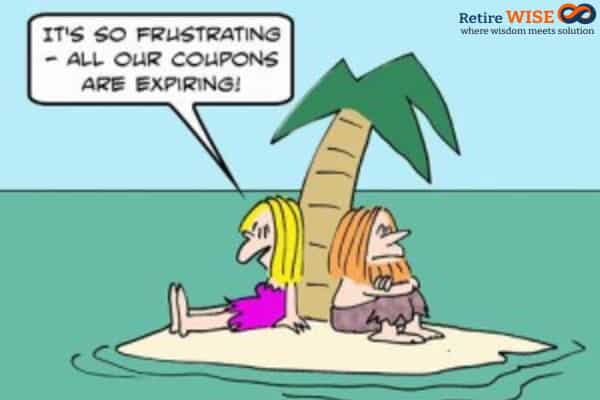
Sales, coupons, and deals save money only when you were going to buy the item anyway, at that price, at that time. When a sale creates a purchase you would not otherwise have made, it is not saving money. It is spending money with extra steps. The psychology of discounts is designed to override your judgment about whether you actually need something. Understanding this changes how you interact with every Amazon sale, Flipkart Big Billion Day, and “limited time offer.”
The Discount Psychology: How It Works on You
Retailers are not offering discounts because they are generous. They are offering discounts because discounts work. The research on this is extensive.
Anchoring: when you see “MRP Rs 2,999 – Now Rs 1,499”, your brain anchors to the Rs 2,999 and evaluates the Rs 1,499 against that anchor. It feels like a Rs 1,500 saving. But if the product was never actually worth Rs 2,999 to begin with, you did not save Rs 1,500. You spent Rs 1,499.
Urgency: “Offer ends in 4 hours.” “Only 3 left at this price.” These are psychological pressure mechanisms. They short-circuit your ability to evaluate whether you actually want the product by introducing time pressure that makes thoughtful consideration feel risky.
Loss aversion: missing a discount feels like a loss, even if you were not planning to buy the product before you saw the discount. The brain treats “failing to save Rs 1,500” as equivalent to losing Rs 1,500. This is irrational but consistent – and every e-commerce platform is designed around it.
“I have never met a client who saved money by shopping more. Every rupee spent on a 50% discount on something you did not need is a full rupee gone from your retirement savings.”
– Hemant Beniwal, CFP, CTEP | Founder, RetireWise
When Deals Are Genuinely Beneficial
Not all discount-driven purchasing is irrational. There are situations where using coupons and sale pricing is genuinely smart financial behaviour.
Buying something you had already planned to buy. If you need a new laptop and you know a sale is coming, waiting for that sale is rational. The decision to buy was already made. The discount simply reduces the cost of an already-committed purchase.
Buying consumables in bulk at a significant discount. Grocery staples, household supplies, personal care products. If the discount is real (not manufactured), the product has a long shelf life, and you have storage, buying in bulk at a sale price is genuinely cost-effective. The key qualifier: these are items you will definitely consume.
Using cashback and credit card rewards on planned spending. If you are going to spend on insurance, travel, or utilities anyway, routing these through a card that gives 1-2% cashback or reward points on planned expenditure is a small but legitimate saving. The discipline required: do not let the rewards justify spending you would not otherwise make.
Is lifestyle spending absorbing what should be going to your retirement?
A RetireWise retirement plan identifies the gap between current savings and retirement target – and maps exactly what lifestyle choices are creating it.
When Deals Hurt Your Finances
Buying something you would not have bought without the sale. This is the core problem. The sale did not save you money. It cost you money that would otherwise have stayed in your account. The test: would you have bought this item at full price, in the next 30 days, if the sale had not appeared? If no, the “saving” is actually spending.
Buying more than you need because the per-unit price is lower. “Buy 3 get 1 free” on items you only need one of. “Buy Rs 2,000 to get free shipping” when you only needed Rs 800 of product. The Rs 1,200 of additional purchases are not savings. They are spending triggered by pricing architecture.
Shopping as entertainment. The Amazon app and Flipkart app are designed to be browsed. Browsing creates desire. Desire creates purchases. The person who opens these apps as casual entertainment and “just looks around” consistently buys things they did not plan to buy, at prices that feel like deals but represent net outflows from the savings pool.
Seasonal sale psychology. The Big Billion Day, the End of Season Sale, the Republic Day sale. These events create a social environment where not buying feels unusual. The FOMO is social and ambient. The discipline required: have a pre-committed list before entering the sale. Buy only what is on the list, at a price that is genuinely below normal. Nothing else.
The Retirement Arithmetic of Sale Spending
Let me make this concrete. A senior executive earning Rs 3 lakh per month who spends Rs 15,000-20,000 per month on sale-driven unplanned purchases across Amazon, Flipkart, Myntra, and offline sales is consuming Rs 1.8-2.4 lakh per year in avoidable spending.
Rs 15,000 per month redirected to equity SIPs at 12% CAGR for 15 years: approximately Rs 74 lakh of additional retirement corpus.
That is the retirement cost of habitual sale shopping. Not a lecture about frugality. A specific number.
Read – The 50-30-20 Rule: How to Budget Your Way to Retirement Wealth
Read – Your Annual Bonus Is a Retirement Accelerator. Are You Using It Right?
Frequently Asked Questions
How do I know if a deal is genuinely good?
Three questions: First, was I planning to buy this in the next 30 days before I saw the sale? Second, is this price actually lower than the normal price (check CamelCamelCamel for Amazon price history, or simply remember what the item typically costs)? Third, do I have the cash to pay for this without affecting my monthly savings target? If yes to all three, it is a reasonable purchase. If no to any, it is a sale-triggered impulse buy.
Are loyalty points and cashback worth accumulating?
Cashback and reward points are worth using on planned spending. They are not worth chasing. The person who spends Rs 5,000 extra to earn Rs 100 in points has made a poor trade. The person who earns Rs 500 in annual cashback on insurance premiums and utility bills that they were paying anyway has captured a small, genuine benefit. The discipline is ensuring the tail (points) never wags the dog (spending decisions).
My spouse loves sale shopping and it is creating household tension. What should I do?
This is a family finance conversation, not a shopping conversation. The most productive approach is to agree on a monthly budget for discretionary spending that includes whatever both partners enjoy spending on, without judgment on the category. When the budget is consumed, it is consumed. Neither partner is asking for permission to spend within their agreed allocation, and neither is causing financial harm beyond it. The problem in most households is not that one person shops; it is that spending is not discussed, budgeted, or tracked, so neither person knows whether it is a problem until the savings rate reveals it.
A sale is not money saved. It is an invitation to spend. Whether you save money or spend money depends entirely on whether you would have made that purchase without the sale. That distinction, applied consistently, is worth lakhs in retirement savings over a career.
The best purchase is one you needed. The second best is one you planned. Everything else is the retailer winning.
Want to understand how your spending patterns are affecting your retirement outlook?
RetireWise builds retirement plans that start with your actual cash flows – what goes in, what goes out, and what needs to change.
💬 Your Turn
Have you ever bought something specifically because it was on sale and later regretted it? What would you have done with that money if the sale had not existed? Share in the comments.
Hi Hemant,
I am very happy when reading this blog post because blog post was written in a good manner and write on a good topic.
Thanks for sharing valuable information. 🙂
Thanks Nidhi 🙂
impulse buying is different and planned buying through hunting online using coupon code discount is different
and certain things you can buy online certain things you have to buy in shop
for home needs i bulk buy 3 get 4 offers because we use them every month like washing powder etc
pleasure items like pizza etc i look for deals and coupon and order
textile etc we normally shop 2-3 stores and buy..india good quality means people think costly.
again i earn money to spend..spending 3 hrs on internet to save 100Rs is waste of time
You are right Dr. Agarwal. COD option is the best thing to try for new sites. And @Ashwin i got my money refunded by TIMTARA through their payment gateway CC Avenue. Hats off to them. They were highly co-operative right from my first mail to their customer care. My every mail was attended with very strict instructions to TIMTARA people. Once again Hats off to CC Avenue.
@ashwin…one more person cheated by TIMTARA…one recommendation i have for those buying online…whenever u r buying from a site for the frst time, always prefer to pay on delivery, and not by credit/debitcard or net banking..u may lose ur money, if company fails to deliver…after u get confidence for that site, u can change to credit card facility..
yup!! you are right . we’r getting into the impulse buying and i often did that , but abse i’ll try my best to resist myself :p as u said these coupons regularly keep on offering so why should i buy which i haven’t planned 🙂
Good & helpful article. Agreed for price comparison but also need to be careful when price is less on one portal. I wanted to buy rather want to buy RO water purifier. I was looking for Kent Grand+ model. I checked almost all well known online portals including Kent store too and price was the same for all except on Timtara. They were offering the same model with 35% discount (code T35K). I thought how & why it is so cheap for them to send it to me. For an opinion, I talked to my brother (who is more aware of this online stuffs) and he told me that he had placed order for something on Timtara 3 months back and delivery is yet awaited. Their customer care now stopped talking to him. It’s now almost 5 months and the product is yet awaited. Use online wisely.
@ yogesh..company TIMTARA was a bogus website and its CEO and some more people have been arrested.
i am an avid buyer from internet, but i look for the things i need only and then compare various sites and prices and buy only from names i trust like ebay, homeshop, indiatimes etc. a couple of times, when i received some faulty products, these companies replaced the things with their own expenses.
i feel, i cant buy things from net, that need to check for fittings like clothes, shoes etc. but for things like daily consumables, cosmetics brands, baby items etc i prefer to buy online. what i like is that it saves me a lot of time and i can place the order at night also, sitting on the bed and sipping my coffee. and yes, these coupons sometime helps/ sometime not, but do stick to what u need.
Good Article.
check stationary that arrives with credit card statement => Then these people only talk about GO GREEN !!!
Hi Hemant,
Yes, Coupons and deals may change the decision to buy or not. This is irrespective of whether we buy online or offline. This is just to make some extra savings, if possible. I am sure, not all of them, are using coupons appropriately.
There are people who impulse buy, based on the decision that they need it, and wouldn’t even check the coupons/other deals. In my opinion, they are the ones who can’t save more. These people spend only if they think its required and don’t care about coupons/deals at all.
The other set of people, just buy only when there is a discount and won’t even think whether its required or not. These people may create a hole in their packet if they buy things unnecessarily. Think, one person not requiring a smartphone and because he sees a ad saying 15% cashback, he goes and buy a new smartphone from Samsung.
The last set of people make use of the opportunities. They think when they need the items. Also, they make use of the coupons/deals when it is present.
Each person can also be part of all the three categories depending on the circumstances.
I bought a Volini spray just because there was some 50% discount. I didn’t need it by then but thought it would be useful when required and no harm in stocking it up. Otherwise, usually when you are looking to spend more, just check how much in other sites and compare offline before you make your decision.
For books, I came across this good site thisyathat. com which compares the prices of books and helps in saving.
Thanks,
Manickkam.
Dear Hemant,
Thanks for your well written articles on various financial topics.
I too am generally an e-commerce fan and really got some good deals on mobiles and tablets from Indiatimes , homeshop 18 and a couple of other good sites. But you have to be really very strict whether you are buying the product you really need or whether you are buying the thing just becoz of the offer. Also one should try to avoid any run of the mill site. I got a very bad experience from a site called TIMtara. it used to flood my mail box with some great offers but they just didnt deliver the product till two months and then i had to take the help of their payment gateway company CC Avenue to compel them to give me refund of my amount.
I had a bitter experince with Indiatimes. I paid the money in full and never received the goods. And no one picks up the phone at other end.
If you go around online hunting for deals/discounts, many times we fail to notice that the discounted prices as advertised, are actually the present prices of those items. The online sites, in order to generate some excitement among mindless shoppers, strike out the price at which that item was available 6 months back or at launch, and show the difference as a heavy discount!!
Very few sites offer genuine discounts on their displayed items, so due diligence on the shopper’s part is imperative, to avoid getting ripped off by such misleading discount claims.
THANKS FOR THOUGHT PROVOKING INFORMATION.
Hi Hemant
Very simple term ‘There is no free lunch’ 🙂
Discounts / Coupons / Value added Points – all this exposed without any profit ?
Definitely there is some profit. But the point is here, they will do this kind of business with some margin and the discounts adjusted with some other areas in terms of rate cutting / maximize sales.
I used to compare and buy product where I get cheaper with quality. But, I am very strict what I need.
For my case, I used to recharge my mobile (prepaid) through online only (freerecharge.in), normally they will give some discount coupons (Rs. 50, Rs. 100, Rs. 200 for Pizza, Movie, etc) if you ready to pay Rs. 10/Rs.20 extra with your recharge amount.
I never used this kind of discount coupons. My need is to recharge my mobile only. If I want to go Pizza (normally not), i will look better deal in google.
Thanks
Nagarajan Santhan
Well said Hemant. When a sale banner pops in front of a shop, from the very next moment it will be filled with customers. There would be hardly any room to breathe and finally we end up emptying our pockets. This is a trend going on for years and we are easily lured into it.
I truly agree to the blog of Hemant, that Online shopping is making people to buy more than what they actually want.
Even though malls / e-commerce companies provides Sale/Discount Coupons. The main thing you can look at these offers will be mostly on the Clothes/Footwear etc only. Unless the producer gives any discounts they won’t be giving any discounts or offers in the items that are regularly bought by us.
Many people does go to malls/supermarkets to buy items and end up coming back home with huge bags of unplanned items.
But, the answer is in our hands, as you said we need to checkout two to three shops / supermarkets / internet shopping sites before deciding about buying.
Do Not Just decide to Buy because of the Offer ! It makes holes in your pocket and your monthly budget too.
My online shopping is limited to only books. I prefer to buy my clothes from stores where I can try them and get the alterations done if needed.
Hi Anil,
Let me share 2 instances:
First, I was looking for one book – on flipkart it was around 1400 & on bookadda 1000.
Second, I checked sports shoes in our nearest mall – same shoes were available at 40% discount on some online store.
So we can’t completely ignore benefits of online buying but my point was – is it making people impulsive buyer??