
Last Updated on April 26, 2026 by teamtfl
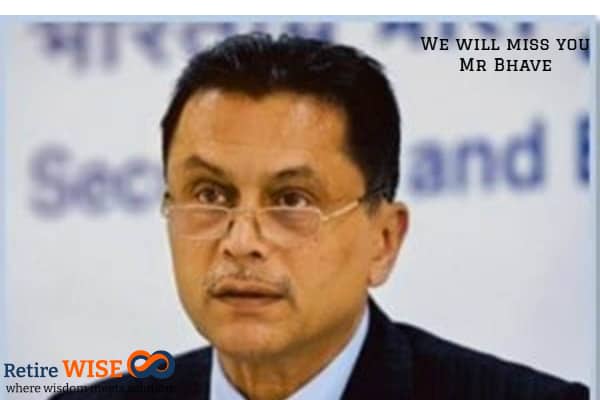
In 2009, I wrote an article that never got published. I was working with a mutual fund company at the time and did not have freedom of speech. The article was about C.B. Bhave, Chairman of SEBI, and the decision he had just taken – abolishing entry loads on mutual funds.
That frustration of not being able to express what I believed eventually led me to start this blog and my own financial planning practice. So in a very real sense, Mr. Bhave shaped not just the mutual fund industry – he shaped my career.
I am publishing that 2009 article here, with a 2026 update on what actually happened after his decision.
Quick Answer
C.B. Bhave’s decision to abolish entry loads on mutual funds in 2009 was one of the most consequential regulatory moves in Indian personal finance. It ended the era of commission-driven churning and began the slow shift toward advice-based distribution. Fifteen years later, the industry looks radically different – and almost entirely for the better.
The article I wrote in 2009 – published here for the first time
Written on 2nd July 2009. The views are as they were then.
SEBI took a great decision. “Brave Heart” Mr. Bhave. This will completely change the way financial advice is delivered in future – the industry shifting from commission-based to fee-based advice. This is the healthiest thing that has ever happened to the craft of advice, but it needs a sea change in the way advisors relate to their clients.
In the present system, financial services are delivered through an agency model, not a financial advisory model. Most so-called service providers are product providers. This entire concept was wrong, and this move will rectify the problems associated with this industry.
The equity AUM of the mutual fund industry was Rs.24,000 crore in June 2000. By mid-2009, it was just above Rs.1.4 lakh crore – and had been below Rs.1 lakh crore at the worst of the 2008-09 market fall. If we are not wrong, had the money been left untouched in some good funds, we would have achieved the same AUM or more – because the average return of diversified equity funds from June 2000 was over 18% per annum, with the best funds delivering over 30% per annum.
So what efforts did the industry actually make to grow the market? Because of entry loads and excessive remuneration, money kept churning from one scheme to another. Look at the data from June 2000 to May 2009:
| Category | Amount (Rs. crore) |
|---|---|
| NFO Sales | 1,19,009 |
| Regular Sales | 2,92,708 |
| Total Sales | 4,11,717 |
| Redemptions | 3,01,532 |
| Net Sales | 1,10,185 |
The investor cost during this period: more than Rs.9,000 crore in entry loads alone (Rs.4.11 lakh crore × 2.25% = Rs.9,264 crore). The industry was not growing the investor base – it was sharing the existing cake through churning.
Mr. Bhave’s decision will bring good business sense. Reduced churning. More focus on SIPs and retail money. More long-term AUM. The insurance industry, where maximum mis-selling happens, will eventually be forced to change too.
“He who rejects change is the architect of decay. The only human institution which rejects progress is the cemetery.” – Harold Wilson
What actually happened – the 2026 update
Fifteen years later, we can see how right Mr. Bhave was. The numbers tell the story:
AUM growth: Mutual fund industry AUM crossed Rs.67 lakh crore in 2024 – nearly 50x the Rs.1.4 lakh crore of 2009. More importantly, this growth came from genuine new investors, not from churning existing money.
SIP revolution: Monthly SIP inflows crossed Rs.25,000 crore in 2024. Active SIP accounts crossed 10 crore. This retail participation through systematic investing was exactly what Mr. Bhave envisioned – long-term money, not hot money.
The RIA framework: SEBI’s 2013 Investment Adviser regulations, which introduced SEBI-registered RIAs as fiduciaries separate from distributors, built on the foundation Bhave laid. The fee-based advisory model he foresaw now has a regulatory structure.
Distributor evolution: The distributors who survived did so by building genuine client relationships rather than relying on churning. The industry did not collapse as many predicted – it flourished by doing the right thing.
The ULIP battle: Mr. Bhave’s famous confrontation with the insurance regulator over ULIPs being sold as investments was another landmark. He was right there too – IRDAI eventually tightened ULIP charges significantly in 2010 and beyond.
What Mr. Bhave meant to me personally
There are few regulators in any country who make decisions that are structurally right but commercially unpopular, and hold firm against intense industry pressure. Mr. Bhave did this repeatedly.
The no-entry-load decision cost him popularity in the distribution community. The ULIP battle made powerful insurance companies his enemies. He did both anyway because he believed the investor deserved a fair deal.
In 25 years of advising families, I have seen what commission-driven mis-selling does to people – the Rs.12 lakh tied up in ULIPs that provide no real insurance, the endowment policies that deliver 4% real returns over 20 years. Mr. Bhave tried to change the structural incentives that created these outcomes. He succeeded more than his critics expected.
Also read: How to Identify a Fake Financial Planner – and the SEBI Checklist Before You Hire Anyone
The shift from commission to advice is still ongoing
Mr. Bhave started a structural reform that is 15 years old and still incomplete. Many investors still work with distributors who earn commissions on every product they recommend. Knowing how your advisor is compensated remains one of the most important questions you can ask.
Frequently asked questions
What was C.B. Bhave’s biggest contribution to Indian mutual funds?
C.B. Bhave, as SEBI Chairman from 2008 to 2011, abolished entry loads on mutual funds in 2009. Until then, investors paid 2 to 2.5% of their investment as upfront commission to distributors whenever they bought a mutual fund. This incentivised churning – switching investors between funds to generate fresh commission – rather than long-term investing. Abolishing entry loads ended this structural conflict of interest and began the shift toward advice-based distribution.
How has the Indian mutual fund industry grown since the no-entry-load decision?
Mutual fund AUM grew from approximately Rs.1.4 lakh crore in 2009 to over Rs.67 lakh crore in 2024 – a nearly 50x increase. Monthly SIP inflows crossed Rs.25,000 crore and active SIP accounts crossed 10 crore. The growth came from genuine retail participation rather than institutional churning. The distribution community adapted and survived, contrary to predictions of industry collapse after the entry load removal.
What is the difference between a mutual fund distributor and a SEBI RIA?
A mutual fund distributor earns trailing commission from AMCs on the assets they manage – typically 0.5 to 1% per year depending on the fund category. A SEBI-registered Investment Adviser (RIA) is a fiduciary who cannot receive commissions and charges fees directly from clients. Both models are legal. The distributor model involves a structural conflict of interest – the distributor earns more when clients stay in higher-commission funds. The RIA model aligns advisor income with client outcomes. C.B. Bhave’s 2009 reform was the first step toward this distinction.
Did Mr. Bhave’s decision affect your investment journey? Were you an investor or a distributor when the entry load was removed? Share what changed for you in the comments.
Less than flattering development for Bhave. Let’s keep our minds open
http://www.moneylife.in/article/dr-mohan-gopals-explosive-exposé-of-sebis-functioning-under-bhave/16246.html
Hi Mr Debashish,
I read these articles yesterday & it was bit shocking for me. (particularly copy of that letter to prime minister)
I limited my above thoughts to MF No Entry Load & ULIP Ban issues – which I thought was good decisions. (may be bcoz from where I saw them)
I had a long discussion with my mentor(can’t share his name) after I wrote this article. His Views:
“Bhave is anything but a saint, he is made out to be.
Bhave is a blatant supporter of Stock brokers. He went about enabling transactions for stock brokers in their platform ( when there was a settlement related problem regarding MF where units would be issued before money is recovered from clients ) in double quick time. He was a votary of demat in MFs when there are no certificates and demat does not have any sanctity.
He is a shameless supporter of a few institutions like NSE, NSDL etc. He went after others that he perceived as wrongdoers. Till this point the kickbacks he might have received have not surfaced. His tenure in NSDL was not above blemish. After coming to SEBI, he saw that he was exonerated. He is just another bureaucrat – not the great guy he is made out to be.
Where is the sense in prohibiting the disclosure of portfolio and yields in FMPs?
Where is the sense in not allowing a MF distributor to not invest under his arn, when he has passed the exam ( in every other areas like insurance, stocks, post office , company Fd etc. it is possible ).
You might be aware that if a person in Jhunjhunu were to invest he would have to take a DD and also get a letter from his bank manager as to which account and other details the amount is coming from. Branch managers are refusing to issue such letters- rightly so – why should they comply with requirements of madcaps like SEBI / AMFI. So much for investor friendliness.
He created an uneven playing field for Mfs in the name of investor.
If churning is the issue there could be laws brought in to curb that.
His basic contention that the entire industry is crooked and all distributors are crooks smacks of arrogance, sweeping generalisation and ignorance… it shows that he has never ever come out of his ivory tower. Normally it is crooks who see crooks everywhere.
Think my friend. We do not all have to toe the line that Bhave has popularised. He talks about investor friendliness when all he did was distributor baiting – not investor friendly. It was positioned as investor friendly move.” 🙁
For me matter was over that day.
Anyways, I have seen that you have written 2 cracking articles on Speak Asia Online – even I have added one
https://www.retirewise.in/2011/05/speak-asia-online.html
Is there no way to stop this madness – they have already reached 10 lakh members & I am sure they will touch 15-20 lakh before 20th May. (when fees is going to be hiked)
“Mr.Bhave is a disciplinarian” says Business India.True,he used his offices and authority to crack the whip on bad practices and generally batted for the small investors’ interest.Many would miss him.
He was true Fighter.
“Impartiality will be his legacy” – Article in today’s Business Standard.
Rightly so.
Aseem Chugh
He was ‘hand of god'(remember Maradona’s goal in WC final) for retail investors.
Salutes Mr. Bhave… You had the courage to do things. And more over, you had common sense and considerations for the common man. We miss you Mr. Bhave..
Shinoj
Hi Shinoj,
He really fought for common investor – hope Mr Sinha don’t reverse anything.