
Last Updated on April 21, 2026 by teamtfl
“An investment in knowledge pays the best interest.” – Benjamin Franklin
My daughter was two years old when I first made a financial plan for her wedding.
Not because I was in a hurry. But because the math is simple: a wedding planned for 20 years away requires a very different investment approach than one planned for 3 years away. Same destination. Same amount needed. Completely different journey.
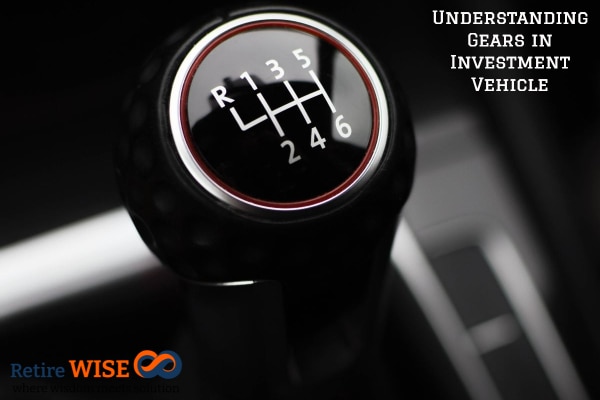
This is the gear analogy – and it is the clearest framework I know for explaining why investment selection is not about finding the “best” product, but about matching the right instrument to the right timeline.
⚡ Quick Answer
Investment products are vehicles that carry you from your current financial position to your goal. Like gears in a car, different instruments suit different speeds and distances. Equity is the high gear for long distances (7-plus years) – it moves fast but needs road to accelerate. Debt is the low gear for short distances (under 3 years) – slower but stable. Most Indian investors damage their wealth by using the wrong gear: equity for short-term goals (too volatile) and debt for long-term goals (too slow to beat inflation).

The Vehicle Analogy: Where Are You Going?
Investment products are called “vehicles” because they carry you from Point A to Point B financially. Point A is your current position – your savings today. Point B is your goal – the corpus needed for retirement, your daughter’s wedding, your son’s education, or a second home.
The question is not “which vehicle is best?” The question is “which vehicle is right for this particular journey?”
Nobody drives to the corner shop in a plane. Nobody walks from Jaipur to Delhi. The mode of transport is determined by the distance, the urgency, and what you can afford to risk. Financial instruments work exactly the same way.
Low Gear: Debt for Short-Distance Goals
When your destination is nearby – under 3 years – you need a vehicle that is stable, predictable, and will not break down. You cannot afford a sudden 30% drop in value when you need the money in 18 months.
Debt instruments – FDs, liquid funds, short-duration debt funds, PPF for accessible portions, RBI bonds – are the first and second gear. Slow. Steady. Reliable. The returns are modest (6-8%), but the capital is protected for near-term withdrawal.
The tragedy in Indian investing is not that debt exists. It is that debt is used for everything. A 30-year-old investing for retirement in FDs is driving from Mumbai to Delhi in first gear. Technically possible. Practically ruinous – by the time they arrive, inflation will have eaten most of the journey’s value.
“The biggest wealth-destruction in India happens silently: people parking long-term money in FDs and endowment plans while inflation quietly erodes its real value every year. They feel safe. They are not building wealth.”
– Hemant Beniwal, CFP, CTEP | Founder, RetireWise
High Gear: Equity for Long-Distance Goals
When your destination is far – 7 years or more – you need a vehicle built for distance. Equity is the highway gear. It moves fast. It has volatility on the short-term road. But over long distances, it reliably outpaces inflation and creates real wealth.
The Sensex has delivered approximately 14-15% CAGR over the last 30 years. Rs 1 lakh invested in 1994 is worth approximately Rs 25-30 lakh today at those rates. The road was never smooth – crashes in 2000, 2008, 2011, 2015, 2020 – but the direction was consistently upward over decades.
However: equity in the short term is dangerous. It is like taking a highway vehicle off-road. The vehicle that excels at 120 km/h on the expressway is not designed for a potholed village road. A client who needs money in 18 months should not be in equity – a sudden 40% correction at the wrong time can be financially catastrophic when the need is near.
Are your investments in the right gear for each of your goals?
A RetireWise retirement plan maps each financial goal to the correct instrument – matching distance, timeline, and risk capacity to the right investment vehicle.
The Reverse Gear: Insurance Endowment Plans and Savings Accounts
The most underappreciated gear in the analogy is reverse. Some financial products do not just fail to move you forward – they actively move you backward.
A savings account for long-term money at 3-4% interest, with inflation at 5-6%, produces negative real returns. Every year you park retirement money in a savings account, you are moving backward in real purchasing power terms.
Insurance endowment plans and ULIPs sold as “investment-cum-insurance” are similarly destructive. The mortality charges and administrative costs reduce investment returns so significantly that after 20 years, the real return often barely matches inflation. You feel like you are moving forward because the nominal balance is growing. In real terms, you have been in reverse gear.
The solution is the one Hemant has been recommending for 25 years: buy term insurance for protection at the lowest cost. Invest separately for wealth building. Keep the two completely apart.
The Gear Change: Shifting as Goals Approach
A vehicle does not stay in the same gear for the entire journey. As you approach your destination, you slow down and shift to a lower gear. The same principle applies to investments.
A 35-year-old planning for retirement at 60 should be predominantly in equity – high gear for a 25-year journey. By age 50, with 10 years left, a gradual shift begins: some equity moved to hybrid funds, some to short-duration debt. By 58, two years from retirement, most of the corpus that will be needed in the first 3-5 years of retirement should be in safer instruments – not because equity is bad, but because the journey is almost over and it is time to shift gears.
This is asset allocation glide path – the systematic reduction of equity exposure as retirement approaches – and it is one of the most important principles in retirement portfolio management.
Read – Low Risk High Return Investment: Why It Does Not Exist and What to Do Instead
Read – Timing the Market vs Time in the Market: Why Staying Invested Wins
Frequently Asked Questions
What is the right equity-debt split for retirement planning?
A common starting point: 100 minus your age in equity. At 35: 65% equity, 35% debt. At 50: 50% equity, 50% debt. At 60: 30-40% equity for the corpus that will not be needed for 7-plus years, with 60-70% in debt and liquid instruments for near-term withdrawals. These are guidelines, not rules – the exact split depends on your retirement corpus size, monthly withdrawal needs, other income sources, and risk tolerance. The principle is directionally correct: reduce equity exposure progressively as retirement approaches.
My goal is 7 years away. Should I use equity or debt?
Seven years is at the border. For equity to work, you generally need a full market cycle (5-7 years minimum) to smooth out volatility. For a 7-year goal, a 60-70% equity and 30-40% debt allocation is reasonable – more equity than debt, but with a meaningful debt buffer. Start shifting progressively toward debt from year 4 or 5 so that by year 6-7 the majority is in lower-risk instruments. This prevents a bad market year just before your deadline from damaging the corpus significantly.
What about hybrid mutual funds? Where do they fit in the gear analogy?
Hybrid funds – balanced advantage funds, aggressive hybrid funds, conservative hybrid funds – are the 3rd gear. They participate in equity growth but with lower volatility than pure equity funds. They are appropriate for medium-term goals (4-7 years), for investors who want equity exposure with somewhat lower drawdown risk, and for the transition phase of a retirement portfolio as you approach withdrawal. They are not a substitute for pure equity in early accumulation, nor a substitute for debt when capital preservation is the priority – but they serve an important middle role.
Wealth is not destroyed by choosing wrong investments. It is destroyed by choosing right investments for the wrong goal. Equity in the right gear creates retirement wealth. Equity in the wrong gear – for a goal two years away – creates anxiety and loss. Match the gear to the journey. That is the whole framework.
Get in the right gear before it is too late.
Want a retirement plan where every rupee is in the right gear?
RetireWise builds retirement plans that map each goal to the correct instrument, with a systematic gear-change schedule as retirement approaches.
💬 Your Turn
Which gear are your long-term investments in today – highway gear (equity) or slow gear (FDs and endowment)? Has this analogy changed how you think about your current portfolio? Share in the comments.
hi,
Today, Investor invest in gold and debt like fmp and short term plan . No doubt gold has recently given good return. So investor have a long term money he goes only for an equity. gold invest is good for hedge purpose.
Hi Vipul,
Yes you are right – gold should be used for hedge or emergency or at best small part of asset allocation.
All the investors should carry the following point in the pocket.
It really makes a lot of sense.
“Equity should be for Long term and Debt for short term, but investor does the opposite, Equity for short term and debt for long.”
Thanks Appaji.
Nice Article in simple language
Thanks Sachin
Article is good simple and concise. The analogy is good. But I have few doubts. Please correct me if I am wrong. Article says:
-We should invest in Equities when your financial target is far off.
-We should invest in Debt mainly when our financial target is nearby
What about Asset Allocation or Diversification? Financial journey like life is a marathon and we need to have a balance between long term and short term targets. I have read that in Equities one should put 100 – Your age %.
I also have doubts regarding the “For people who are not specialists, it is better we leave to professionals and invest in Equity Mutual Funds.”
I can still not forget how I among other investors lost our money when we had invested in JM Financial Contra Fund because the Fund manager Sandip Sabarwal had given great returns in SBI Contra and we thought he would replicate the magic.
With so many mutual fund choices : we are told to invest in fund(s) which has 4 star or 5 star rating and then when it tanks asked to move into another new fund. Ex: Reliance Regular Saving Fund was recommended by many magazine and websites earlier not now.
As long as it is my hard earned money in the line..I would take advice with a pinch of salt and learn from my mistakes for as you rightly quoted Warren Buffet “Investor has to do very little things right as long as he avoids Big Mistakes.”
Hi
Its not like 100% equity or 100% debt but which asset should have more weightage in your portfolio.
Any advice should be taken with caution be it from advisor or fund manager. But feel that even a mediocre fund manager is much better than a layman.
Now coming to Sandip Sabharwal’s point – he is having a different style of managing funds & he is very aggressive in his calls. Don’t only look at performance of SBI funds in 2005-06 but also check what happened in 2002-03. (similar fall as compared to JM Funds but recovered in next bull run & become top funds in even 10 year period) He generated lot of alpha over longer period but unfortunately in JM he was for short time. Also check beta of his funds in archives – it was always in range of 1.3-1.5 (full throttle). So one should expect more fall when market is correcting 60% & midcap/smallcap 70%-80%. Here comes role of diversification & asset allocation which is responsibility of investor/advisor- if someone don’t follow the basics & invest 40-50% of his investment in single fund house or chase performance he will feel the pain.
Again let me quote “Investor has to do very little things right as long as he avoids Big Mistakes.”
Thanks for the reply.
You have rightly mentioned for the long term one needs to invest in equity for it would make the money grow and beat the inflation monster.
For the ordinary investor who is busy earning his “roti kapda aur makaan” Mutual funds are the way. But we need to use Mutual Funds as an investment vehicle correctly. What most of the investors do chase the fund with highest return or go in for NFO( Reliance Power Fund euphoria). Sadly our investment advisers are chasing their own commissions. Your post https://www.retirewise.in/2010/08/understanding-mutual-fund.html explains it well.
Thanks for Info on Sandip Sabarwal, his timing in JM Fund coincided with the crash.
Kirti
v we’ll said hemant sir. for every long term goal such as retirement planing, children education, buying home, one shud choose ownership asset. also one shud start investing as early as possible but in india majority tends to put off long term goal ad they r too bussy in meeting immediate financial needs, rather than thinking about what vl hapen after 20-25 years
Hi Manish.
Someone rightly said “Plan for the future, because that’s where you are going to spend the rest of your life”.
Written in very simple and lucid language Hemant. Keep up the good job – I really liked the analogy.
Thanks Radhey.
Hi Hemant,
As it is said that equity is a long term product. Let us take 10yrs as long term. Of course the longer the better.
As you have rightly said, 1990-2010 sensex returned 17% and 1980-2010 sensex returned 19%.
I would like to know the return of sensex in the following spans of years?
i) 1980-1990
ii) 1992-2002
iii) till 2003 since inception
iv) 2003-2007
Want to figure out if the super golden run of sensex from 2003-2008 creating any illusion amongst us?
Hi Kannan,
Nice Question – check the figures
i) 1980-1990 (sensex went from 128 to 783) 20% CAGR
ii) 1992-2002 (sensex went from 4387 to 3500) -2% CAGR (this is the only negative period in 31 years if we make 10 year rolling returns – senxes in 1991 was 1193 & in 1993 it was 2311)
Let me add what happened from 1990-2002 (sensex went from 783 to 4387) more than 5 times in 2 years & PE of sensex was above 50.
https://www.retirewise.in/2010/11/sensex-pe-ratio.html
If you buy things at top of the bubble – no one can help you. That’s the reason I keep saying it is a mind game. If you bought Gold & Silver in 1980 (in dollars) – by 2000 Gold was down by 70% & Silver was down by 90%.
iii) till 2003 since inception (sensex went from 100 to 3081) 16% return
iv) 2003-2007 peak (sensex went from 3500 to 21000) 47% CAGR
These figures miss out dividend yield of 2-3% generated by index stocks.
I will try to write an article on all this 🙂
Thanks Hemant! One more question, what would have been SIP returns in those periods?
Hi Kanan,
Will try to add calculation in article.
Another excellent article and a great analogy, loved reading Hemangji. As you pointed out correctly, I was one of those who booked short term profits from equity and left the debt fund for long term. Past year or so, as I learned more about finances, I am glad I am doing the right thing now. Thank you.
Hi Mansoor,
“I was one of those who booked short term profits from equity and left the debt fund for long term.” it is a very common practice. Even if we compare one stock to another or one equity fund to other – people will prefer to sell winners & keep laggards with them. 🙁
Thank you for Best article
🙂
Hi Hemant
Nice Article!!
Why don’t you write a book on Investment…….??
Haha… a book on investment
I am 100% sure that book will be banned in India bcoz first chapter will be “In India insurance companies sell everything other than INSURANCE” 😉
Very true.
Hi Hemant,
Very nicely written.
Regards,
Ritesh
Thanks Ritesh.
Thanks for another of your excellent written article and the simple explanation,
appreciate your hard work and simple language.
thumbs up to you
regards
Thanks Tony.
One of the bestest article till date..Simply AWESOME..I think once the INDIAN MINDSET is open to LONG TERM INVESTMENT through EQUITY, our economy and our country as a whole will be the SUPERPOWER of the world..Hats off Hemant..
Thanks Dhawal.
For growth of the economy every country needs equity investments or we can call equity culture.