Home Blog Page 24

Can You Afford a Baby? The Real Costs of Parenthood in India (2026)

A couple came to me for a financial review six months before their first child was due. They were both 32, earning well, and felt financially ready. When I asked them to estimate the cost of the first three years of parenthood, they said around Rs. 5 to 6 lakh.

I asked them to go through it category by category with me. Delivery and hospital stay. Post-delivery care. Infant formula or lactation support. Paediatrician visits and vaccinations. Childcare or creche while both returned to work. Baby equipment and clothes. The income gap while one parent was on maternity leave. A broader health insurance cover. By the end of the exercise, the number was closer to Rs. 15 to 18 lakh over the first three years – and that was in their Tier 2 city. In Mumbai or Bangalore, add 40%.

They were not unprepared people. They simply had never calculated it properly.

Quick Answer (2026 Estimates)

The total cost of having and raising a child in India from birth to age 18 ranges from Rs. 50 lakh to Rs. 2 crore+ depending on lifestyle choices, city, and education path. Immediate first-year costs alone typically run Rs. 3 to 8 lakh for delivery, infant care, and equipment. Key financial preparation: build 12 months of household expenses in liquid savings before the birth, review and upgrade health insurance cover, run a 6-month trial of living on one income, and update your will and life insurance before the child arrives.

Can You Afford a Baby India 2026 - Financial Cost of Parenthood

Table of Contents

What the First Year Actually Costs

The honest calculation starts before birth. Pre-natal care – regular consultations, tests including anomaly scans and NIPT if chosen, iron and folate supplements, and any specialist referrals – typically costs Rs. 30,000 to Rs. 80,000 over a 9-month pregnancy depending on the hospital and city.

Delivery costs in 2026 vary enormously. A government hospital delivery is heavily subsidised. A mid-range private hospital in a Tier 1 city charges Rs. 50,000 to Rs. 1.5 lakh for a normal delivery and Rs. 1.5 to Rs. 3 lakh for a caesarean including the hospital stay. A premium hospital in Mumbai or Bangalore can charge Rs. 3 to 6 lakh for a caesarean with 3 to 4 days of post-delivery care.

Post-birth first-year costs include a vaccination schedule (government vaccines are free; private full schedule with combination vaccines costs Rs. 8,000 to Rs. 15,000), paediatrician consultations (Rs. 500 to Rs. 1,500 per visit, typically 6 to 8 visits in year one for a healthy child), infant formula if breastfeeding is supplemented (Rs. 3,000 to Rs. 5,000 per month for premium formulas), diapers (Rs. 2,500 to Rs. 4,000 per month), and baby equipment – cot, pram, car seat, monitor (Rs. 30,000 to Rs. 80,000 one-time).

Childcare or creche for the second half of year one, when most mothers return to work, costs Rs. 8,000 to Rs. 25,000 per month in metro cities depending on the facility and hours.

Total year-one cost for a two-income urban household in a Tier 1 city: Rs. 5 to 8 lakh, excluding any significant income reduction from maternity leave. This is not a theoretical calculation – it is what most couples actually spend once itemised carefully.

“Most couples estimate Rs. 5 lakh for a baby. They are usually right for the first three months. The number that catches them is the recurring monthly cost that does not reduce for the next 18 years. A baby is not a one-time expense. It is a long-term financial commitment that changes the shape of every other financial goal.”

The Income Impact: Planning for Maternity Leave

Under the Maternity Benefit Act 2017, women employees in organisations with 10 or more employees are entitled to 26 weeks of paid maternity leave for the first two children. This is a significant improvement from the earlier 12 weeks. However, several practical realities complicate this.

Not all employers pay full salary throughout the 26-week period – some pay a fixed percentage after a certain point. Self-employed women have no statutory entitlement and typically face a complete income gap for 2 to 4 months. Consultants and contract workers fall outside the Act’s coverage.

Paternity leave in India remains weak. Most private sector companies offer 5 to 15 days of paternity leave; there is no statutory entitlement for private sector employees at the national level.

The practical financial planning step: run a 6-month trial on one income before the birth. If the household can function on one income for 6 months, the post-birth income reduction will not create a financial crisis. If it cannot, that gap needs to be closed before the baby arrives – either through savings, reduced fixed costs, or both.

Insurance: What Needs to Change Before the Birth

Three insurance changes are needed before or immediately after a child arrives.

Health insurance upgrade. The newborn must be added to the health insurance policy within 30 to 90 days of birth (the window varies by insurer – check your policy). A family floater that covered two adults needs to be reviewed: the sum insured may need to increase to cover three people including a child who will have frequent medical needs in the first few years. Most family floater policies cover the newborn automatically as an additional member once declared to the insurer within the stated window.

Term life insurance increase. Before a child, a term cover of 10 to 12 times annual income may have been adequate. With a dependent child, the recommendation rises to 15 to 20 times annual income for each earning parent. A child who loses a parent at age 5 needs income replacement for 18 to 20 years. Ensure this is in place before the birth – premiums increase after age 35, and any health condition that develops during pregnancy can complicate new policy applications.

Will and estate planning. A will should be written or updated before the birth, naming the child as a beneficiary with appropriate guardian designations. Nomination details on all financial accounts, provident fund, insurance policies, and demat accounts should be updated to reflect the child’s arrival.

The Long Game: Education Cost Planning

Education inflation in India runs at 10 to 12% annually – significantly higher than general inflation. A private school in a Tier 1 city that charges Rs. 1.5 lakh per year in fees today will charge Rs. 4 to 5 lakh per year in 10 years at this rate. An engineering degree from a private college that costs Rs. 12 to 15 lakh today will cost Rs. 30 to 40 lakh in 18 years. An MBA from a top-tier institution could cost Rs. 50 to 70 lakh by then.

The only way to handle education costs without derailing retirement savings is to start a dedicated education SIP from the year of birth. A SIP of Rs. 10,000 per month started at birth, growing at 15% CAGR over 18 years, produces approximately Rs. 1.4 crore – enough for most education scenarios in India. Delaying the start by 5 years and achieving the same corpus requires nearly triple the monthly investment.

Keep education savings separate from retirement savings. Mixing them creates the dangerous temptation to underfund retirement to pay for education. Both goals need dedicated funding from the start.

Sukanya Samriddhi Yojana (for girl children)

If the child is a girl, Sukanya Samriddhi Yojana (SSY) is worth considering as part of the education and marriage corpus. Current interest rate: 8.2% per annum (FY 2024-25). Contributions up to Rs. 1.5 lakh per year qualify under Section 80C. The account matures at age 21 or on marriage after 18. SSY works well as the fixed-income component of an education corpus, complemented by equity SIPs for the growth portion.

The Parenthood-Retirement Tradeoff

This is the conversation most financial advisors avoid. A child is expensive. The cost of raising a child to age 18 and funding their education can easily run Rs. 1 to 2 crore in metro India. For many households, this money competes directly with retirement savings.

The framing that matters: you can borrow for a child’s education. You cannot borrow for retirement. If a retirement year comes and the corpus is insufficient, there is no loan product for it. Your child can take an education loan; you cannot take a retirement loan.

This does not mean denying your child a good education. It means being deliberate: the retirement SIP is non-negotiable. The education SIP is added on top. Lifestyle inflation – the tendency to spend more on child-related experiences as income grows – is managed consciously rather than allowed to crowd out savings.

The parents who arrive at retirement in the strongest financial position are those who funded both goals from day one and protected the retirement corpus from being raided for education or wedding expenses.

A Financial Checklist Before the Birth

6+ months before birth: Run the 6-month one-income trial. Build a dedicated baby fund of at least 12 months of current monthly expenses. Review health insurance and plan the newborn addition process. Increase term life insurance cover. Draft or update will with guardian designation.

3 months before birth: Confirm maternity and paternity leave entitlements with employer. Set up a dedicated education SIP to start at birth. Review childcare options and budget. Understand hospital bill payment procedures and what your health insurance will reimburse vs what requires advance deposit.

Immediately after birth: Add newborn to health insurance within the policy window (typically 30 to 90 days – do not miss this). Update nominations on all financial accounts. Open SSY account if applicable within the first year. Start education SIP if not already set up.

Planning for a Child Without Derailing Your Retirement

RetireWise helps families plan both education and retirement goals in parallel – so neither goal is funded at the expense of the other. Explore how we structure goal-based retirement planning.

See Our Services

Frequently Asked Questions

How much money should I have saved before having a baby in India?
A reasonable target: at least 12 months of current household expenses in liquid savings before the birth, plus a separately identified education SIP plan starting at birth. The 12-month liquid buffer covers the income dip during maternity leave, unexpected medical costs not covered by insurance, and the higher monthly expenses of the first year. If this buffer does not exist, build it before proceeding.

What is the total cost of raising a child in India?
From birth to age 22 including education, the total cost varies significantly by city, lifestyle, and education choices. A reasonable range: Rs. 50 lakh to Rs. 1.5 crore for a child educated in private schools and a private undergraduate degree in India. Add Rs. 30 to 50 lakh for a postgraduate degree. International education adds significantly more. These are today’s costs – with education inflation at 10 to 12%, the future costs will be substantially higher.

Should I pause my SIPs when a baby arrives?
No – this is one of the most consequential mistakes young parents make. The SIPs started in your 20s and early 30s have the longest runway for compounding. Pausing them for 2 to 3 years while adjusting to parenthood costs creates a permanent corpus gap that is difficult to recover. The right approach: build a pre-birth baby fund specifically to cover the higher first-year costs, so you do not need to touch SIPs when expenses increase.

How should I plan for a child’s education expenses?
Start a dedicated education SIP from the year of birth. Keep it completely separate from retirement savings. At a 15% CAGR, Rs. 10,000 per month started at birth produces approximately Rs. 1.4 crore by age 18 – sufficient for most Indian higher education scenarios. For girl children, supplement with a Sukanya Samriddhi Yojana account for the fixed-income portion. Review the education target every 5 years and increase the SIP as income grows.

Before You Go

Related reading: Midlife Crisis and Money: Decisions You Will Regret Later and 10 Investment Mistakes That Cost Indian Investors Lakhs.

What was the biggest financial surprise you encountered as a new parent? Share in the comments – your experience will help other couples prepare.

One question for you: When you became a parent (or if you are planning to), what financial preparation do you wish you had done differently?


5 Investment Risks Every Retirement Investor Must Understand (And One They Usually Miss)

A client called me in March 2020, three weeks into the COVID crash. The Sensex had fallen 38% in 40 days. He was 58, planning to retire at 60, and he was scared. “Tell me honestly,” he said. “Should I move everything to FDs?”

I told him no. Not because the markets would definitely recover by his retirement date – I did not know that. But because the risk he was trying to escape by moving to FDs was smaller than the risk he would be creating. If he locked everything into FDs at 6%, and inflation ran at 6 to 7% over his 25-year retirement, he would run out of money in his 70s. The risk of a 38% temporary market decline was real. The risk of permanent purchasing power erosion was worse.

He held. By December 2020, his portfolio had recovered and moved past his pre-crash levels. But the more important lesson was about risk itself – what it actually is, and what it is not.

Quick Answer

Risk in investing is not just the possibility of losing money in the short term. For retirement investors, the more dangerous risks are inflation risk (money losing purchasing power over 25 years), sequence of returns risk (bad returns in early retirement depleting the corpus faster), and longevity risk (outliving your money). The goal is not to eliminate risk but to identify which risks are acceptable given your goals and timeline – and to ensure the risks you are avoiding do not create larger risks elsewhere.

Investment Risk and Retirement Planning India

Table of Contents

Risk Is Unavoidable – The Question Is Which Risk

There is no zero-risk investment. Bank FDs carry negligible default risk with DICGC insurance up to Rs. 5 lakh per depositor per bank, but they carry significant inflation risk and tax risk. PPF is sovereign-backed with tax-free returns but carries liquidity risk (locked for 15 years) and reinvestment risk when interest rates change. Equity mutual funds carry market risk and volatility. Real estate carries illiquidity risk, concentration risk, and title/legal risk.

Every investment decision is not a choice between risk and no risk. It is a choice between different types of risk. The investor who moves everything to FDs to avoid market risk has not eliminated risk – they have traded market risk for inflation risk. Over a 25-year retirement, this is often the worse trade.

The right framework: list the risks in your current portfolio, the risks you are most afraid of, and the risks you are unconsciously accepting. Most investors have a strong fear of short-term market loss and almost no awareness of long-term inflation erosion. The portfolio that results from this fear profile is not safe – it is just exposed to different risks than the ones the investor is worried about.

“A ship is always safe at the shore – but that is not what it is built for. The FD investor feels safe. But 25 years of 6% FD returns against 6% inflation and 30% tax leaves nothing. The safest-feeling investment is sometimes the most dangerous one.”

Risk and Volatility Are Not the Same Thing

This is one of the most important distinctions in investing. Volatility is the fluctuation in the price of an asset over time. Risk is the probability of permanent loss of capital relative to your goals.

Equity markets are highly volatile. The Sensex has fallen more than 20% on at least 10 occasions since 1990. But for a long-term investor who stayed invested, none of those falls were permanent. The Sensex was at 2,000 in 1990, 5,000 in 2000, 15,000 in 2010, 65,000 in 2023, and above 75,000 in 2024. Every fall in that 35-year journey felt like risk. None of them turned out to be permanent loss for the patient investor.

By contrast, a fixed deposit that earns 6% when inflation is running at 7% is not volatile – the number in the account grows steadily every month. But it is generating a guaranteed real return of -1% or worse after tax. This is risk with no volatility – which is a peculiarly deceptive combination.

For a retirement investor with a 20 to 25 year horizon, volatility is a feature to be tolerated, not a risk to be eliminated. The permanent risks – inflation, longevity, sequence of returns – deserve far more attention.

The Risk Nobody Talks About: Inflation

Inflation is the silent destroyer of retirement plans. Consider a retired couple with Rs. 2 crore in FDs at 7%, withdrawing Rs. 1.4 lakh per month for expenses. At first, this works. But if their expenses grow at 6% annually – which is below historical Indian inflation – they will need Rs. 2.5 lakh per month by year 10 and Rs. 4.5 lakh per month by year 20. Their FD interest has not kept pace. By year 18 to 20, they are drawing down principal and the corpus depletes rapidly.

This is the FD trap. It looks safe. The balance is stable or growing. But its purchasing power is eroding every year, and the math of the corpus eventually fails.

The solution is not to avoid FDs entirely – they have a role in the near-term liquidity bucket of a retirement portfolio. But a portfolio that is 80 to 100% in fixed-income instruments in retirement is not a conservative strategy. It is a strategy that accepts inflation risk as the dominant risk, often without the retiree realising it.

The Real Return on FDs After Tax

A 7% FD for a person in the 30% tax bracket earns 4.9% post-tax. Inflation at 6% means the real return is -1.1% per year. Rs. 1 crore invested in FDs at these rates is worth Rs. 75 lakh in real purchasing power after 10 years. This is not safety. This is slow, invisible erosion. Every retirement plan should explicitly calculate the inflation-adjusted return on its fixed-income allocation.

Sequence of Returns Risk: The Retirement-Specific Danger

This is a risk unique to the withdrawal phase of retirement that most accumulation-phase investors have never heard of. It refers to the outsized impact that the order of investment returns has on a portfolio from which regular withdrawals are being made.

Two retirees can have identical average returns over 20 years but very different outcomes depending on whether the bad years came early or late. The retiree who retires just before a market crash – say, March 2008 or March 2020 – and begins withdrawing at the bottom is selling units at the worst price. The portfolio does not fully recover because the corpus has been reduced by withdrawals during the down period.

The retiree whose bad returns come in years 15 to 20 of retirement faces the same volatility but is in a much better position – the earlier years of compounding have built a larger buffer, and the absolute withdrawal amounts are drawing on a larger base.

Managing sequence of returns risk is one of the most important functions of a well-structured retirement withdrawal strategy. The standard approach: maintain 1 to 2 years of living expenses in a liquid fund or short-duration debt fund as a buffer, so equity does not need to be sold during market downturns to fund expenses. Withdraw from debt during down years and allow equity to recover.

Risk Is What Remains After You Have Thought of Everything

Carl Richards’ observation is worth internalising: risk is what is left over after you have thought of everything. The COVID pandemic was not in most retirement plans in February 2020. The Franklin Templeton debt fund crisis of 2020 was not anticipated by investors who assumed all debt mutual funds were safe. The Ukraine conflict and its effect on global markets in 2022 was not priced in.

This is not an argument for paralysis. It is an argument for building portfolios that are designed to survive surprises rather than to optimise for predicted conditions. A portfolio with adequate diversification across asset classes, a liquidity buffer for short-term needs, and equity for long-term growth is designed to absorb the unknown, not predict it.

The investor who builds a concentrated portfolio – all in one asset class, one geography, one sector – may do brilliantly when their prediction is right. But the unknown risks they have not accounted for have no buffer to absorb them.

How to Manage Risk Without Destroying Returns

Risk management in a retirement portfolio is not about minimising risk. It is about aligning the types of risk you accept with the types that make sense for your timeline and goals.

The practical framework: divide your retirement corpus into three buckets. The first bucket (1 to 2 years of expenses) in liquid fund or short-duration debt – this is your protection against sequence of returns risk and market volatility. The second bucket (years 3 to 7 of expenses) in balanced advantage funds or a combination of debt and equity – moderate growth, moderate stability. The third bucket (rest of the corpus) in equity for long-term growth – this fights inflation over 15 to 20 years.

As the first bucket is drawn down, it is replenished from the second, and the second from the third. The equity bucket gets maximum time to compound without being forced to sell during down markets. This structure accepts market risk intelligently while managing sequence risk and inflation risk simultaneously.

For more on building a retirement withdrawal strategy, see our guide on how to save for retirement in India.

Is Your Retirement Portfolio Managing the Right Risks?

RetireWise builds retirement portfolios that address all three key retirement risks – inflation, sequence of returns, and longevity – not just short-term market volatility. Explore how we approach retirement withdrawal planning.

See Our Services

Frequently Asked Questions

What is the biggest risk in a retirement portfolio?
For most Indian retirees, the biggest risk is not market volatility but inflation risk and longevity risk – the combination of living longer than expected (many people now live to 85 to 90) while their portfolio loses purchasing power in a predominantly fixed-income allocation. A Rs. 2 crore FD-heavy portfolio that earns 7% pre-tax, generates approximately 4.9% post-tax for a 30% bracket individual – which is below or at inflation. The portfolio’s real value declines every year while appearing to grow nominally.

How much equity should a 60-year-old have in their portfolio?
Conventional wisdom says reduce equity as you age. Better guidance says reduce equity based on your withdrawal timeline. If you are 60 and need to fund 25 to 30 years of retirement, your equity allocation should be meaningful – typically 40 to 60% – to fight inflation over that horizon. The equity allocated to years 15 to 25 of retirement does not need to be available tomorrow. A bucket approach allows this equity to remain invested for the long term while short-term needs are met from debt.

What is sequence of returns risk and why does it matter?
Sequence of returns risk is the danger that poor investment returns early in retirement – combined with regular withdrawals – can deplete a portfolio faster than average returns would suggest. If you retire in 2008 and experience a 40% market fall in year one, the withdrawals you make during that year lock in losses permanently. Even if the market fully recovers, you have fewer units left to benefit from the recovery. A liquidity buffer of 1 to 2 years of expenses in stable assets protects against this by allowing equity to recover without being sold at depressed prices.

Is FD-heavy portfolio safe for retirement?
It eliminates market volatility but creates inflation risk and longevity risk. For a retirement that could last 25 to 30 years, a portfolio that generates below-inflation real returns is not safe – it is slowly depleting in purchasing power terms. Most retirement planners recommend maintaining meaningful equity exposure throughout retirement, reducing it gradually as the investor ages, rather than eliminating it entirely at retirement.

Before You Go

Related reading: Herd Mentality in Investing: Why the Crowd Is Almost Always Wrong and The Sunk Cost Fallacy: Why You Hold Bad Investments Too Long.

Which investment risk do you find hardest to accept – short-term market volatility or long-term inflation erosion? Share in the comments.

One question for you: If your retirement portfolio lost 30% of its value tomorrow but recovered fully in 18 months, would you hold or sell – and why?

7 Financial Planning Lessons From India’s World Cup Victories (2011 to 2024)

“Champions keep playing until they get it right.” – Billie Jean King

I wrote the first version of this post on the night of April 2, 2011. India had just beaten Sri Lanka in the World Cup final. Dhoni had promoted himself up the order. Kohli had carried Sachin on his shoulders. The country was awake till 2 AM.

Thirteen years later, in Barbados on June 29, 2024, Rohit Sharma lifted the T20 World Cup. Virat Kohli played one of his most important innings of the decade under pressure. Hardik Pandya, carrying the weight of IPL criticism and public judgment, bowled the final over and held his nerve when South Africa needed 16 off 5 balls.

Two different formats. Two different generations. The same financial planning lessons.

⚡ Quick Answer

Cricket and financial planning share seven core principles: set a target (financial goal), diversify your portfolio (like a balanced batting lineup), don’t judge on short-term performance (Zaheer’s bad overs don’t make him a bad bowler), beware of mis-selling, find the right coach (financial planner), keep your eyes on the goal not the scoreboard (market levels), and take responsibility for your own financial captaincy. These lessons hold across every World Cup and every market cycle.

Financial planning lessons from India World Cup wins cricket

Lesson 1: Set a Target and Plan Extra for What You Haven’t Planned

After the 2011 final, Sangakkara said: “If you need to beat India, you have to score 350.” He was planning for the goal he needed, with a buffer for the unexpected.

In retirement planning, the equivalent is not planning for what you expect to spend, but planning for what life might actually cost. Healthcare inflation runs at 8-10% annually. Your parents may need care. Your retirement may last 30 years, not 20. The investors who retire comfortably are those who built in a buffer – typically 20-25% above their estimated corpus need – rather than those who planned exactly to the number.

A retirement plan that assumes everything goes right is not a plan. It is a wish.

Lesson 2: Asset Allocation Is a Batting Lineup, Not a Single Star

In the 2011 final, Sreesanth bowled poorly. It did not matter because Zaheer, Yuvraj, and Harbhajan collectively built enough pressure. In the 2024 T20 final, Bumrah’s figures were outstanding but it was the collective effort across all departments that won the game.

A portfolio that depends on one asset class – entirely equity, entirely FDs, entirely real estate – is a team built around a single player. When that player has a bad day, the whole team suffers. Diversification across equity, debt, gold, and real assets means that when one asset class underperforms, the others carry the weight. No single instrument needs to be perfect every year. The portfolio needs to be resilient across years.

Lesson 3: Don’t Judge Investments on Short-Term Performance

In the 2011 semi-final against Pakistan, Sehwag got out for a duck and Zaheer gave away runs in the death overs. If you judged them purely on that match, you would drop them both. But in the context of their careers and the tournament, they were still two of India’s most valuable players.

A mutual fund that underperforms the Nifty for one year, or even two years, is not automatically a bad fund. A quality fund manager going through a style cycle is not permanently broken. The investors who exit good funds during underperformance and enter recently outperforming funds are doing the equivalent of dropping Zaheer after a bad spell and picking someone with great recent figures – who then gets hit for 20 in the crucial final.

Give your investments a time horizon appropriate to the asset class. Equity deserves at least 5 years. Judge it over cycles, not quarters.

Lesson 4: Beware of the Toss – and of Mis-selling

There is an old story about the 2011 final toss – whether the right coin was called, whether something irregular happened. The details were disputed. The lesson was clear: even before you start investing, the process can be manipulated by those who benefit from your confusion.

The financial services equivalent is mis-selling: a product presented as safe that isn’t, returns quoted without mentioning the exit load or tax, insurance packaged as investment, or projected returns that assume the best-case scenario continuously. The way to protect against it is the same as in cricket: understand the rules before you play, verify the claims, and do not hand over your financial life to someone who benefits more from your decision than you do.

Lesson 5: Find a Gary Kirsten

Gary Kirsten barely smiled during the entire 2011 World Cup campaign. He was not the star of any match. Nobody interviewed him at the end of a victory. But every player – Sachin, Dhoni, Kohli – credited him as the foundational reason for India’s success. He saw what the players couldn’t see about themselves. He asked better questions than he gave answers. He created the environment where the talent could perform.

A good financial planner is Gary Kirsten. Not the person making the headlines by predicting the next stock market move. The one who quietly reviews your asset allocation before it becomes a problem, who holds you to your plan when you want to exit during a crash, who reminds you of your 2011 goals when you are distracted by 2025 market noise.

In March 2020, one of my clients called me at 8 PM. The markets had fallen 35%. He wanted to redeem everything. I reminded him of the stress test we had run when we built his plan – the one that showed his portfolio could withstand a 40% fall and still fund his retirement at the original timeline. He did not redeem. By December 2020, his portfolio had fully recovered.

That call, not any stock selection, was the value of having a financial planner.

Lesson 6: Eyes on the Goal, Not the Scoreboard

In the 2011 final, the Indian chase was shaky at the start. In the 2024 T20 final, South Africa came desperately close in the last over. In both cases, the players who performed under pressure were the ones who focused on the process – the next ball, the next delivery – rather than on the required run rate or the overall match situation.

Your equivalent of checking the scoreboard too often is checking your portfolio value daily. Or weekly. Or even monthly, if you are a long-term investor. Every time you see a portfolio value below where you bought, the brain registers a loss. Research consistently shows that the more frequently an investor reviews their portfolio, the more anxious they become, and the more likely they are to make a poor timing decision.

Set your portfolio review schedule to once per quarter for SIP investors and once per year for long-term goal tracking. Look at the goal progress, not the daily NAV.

Lesson 7: Take Responsibility – You Are the Captain of Your Financial Family

In the 2011 final, Dhoni promoted himself above the in-form Yuvraj, took the pressure of a match-deciding innings at the biggest possible moment, and delivered a six to finish the game. Nobody asked him to. He decided. He backed himself. And when it worked, the credit belonged to every member of the team.

You are the Dhoni of your family’s financial plan. No one else will decide when to start your child’s education SIP, when to buy adequate health insurance, when to review your asset allocation. The financial system is designed to make decisions for you – by selling you products, by defaulting your savings to savings accounts, by letting your insurance lapse. Inaction is a decision. Delegation without oversight is a decision. Taking responsibility means owning the process, even when it is uncomfortable.

The financial decisions that protect your family – adequate term insurance, a written will, a structured retirement corpus – are as hard to commit to as Dhoni promoting himself up the order. But they are the decisions that matter most.

The March 2020 Lesson

During the COVID crash of March 2020, one of my clients called wanting to exit her daughter’s education corpus entirely. She asked me: “Is this corpus safe enough for her admission in 2023?” We looked at the stress test together. The corpus, even after the crash, was adequate for the goal at the target date. She stayed invested. By June 2020 it had largely recovered. The goal was not affected. The panic had no basis in the actual plan – only in the day’s newspaper.

A retirement plan with a written stress test is the equivalent of a match plan. It gives you something to return to when the scoreboard looks frightening.

Cricket and financial planning share one truth: process beats panic, every time.

RetireWise builds financial plans with stress tests, clear goals, and the discipline to stay on course when markets look like the last over in Barbados.

See How RetireWise Plans for Long-Term Goals

India has won the World Cup with different captains, different formats, and different playing conditions. The principles that produced those victories have not changed. Neither have the principles that produce retirement security.

Do the right thing. Sit tight. Back your plan.

Every investor needs a Gary Kirsten. A good financial planner is that person.

RetireWise works with senior executives across India on their retirement plans – the ones that hold when markets look like the last over in Barbados.

Book a Free 30-Min Call

Your Turn

Which of the seven lessons resonates most with where you are in your financial planning right now? And is there a cricket parallel from any World Cup that taught you something about your money? Share in the comments.

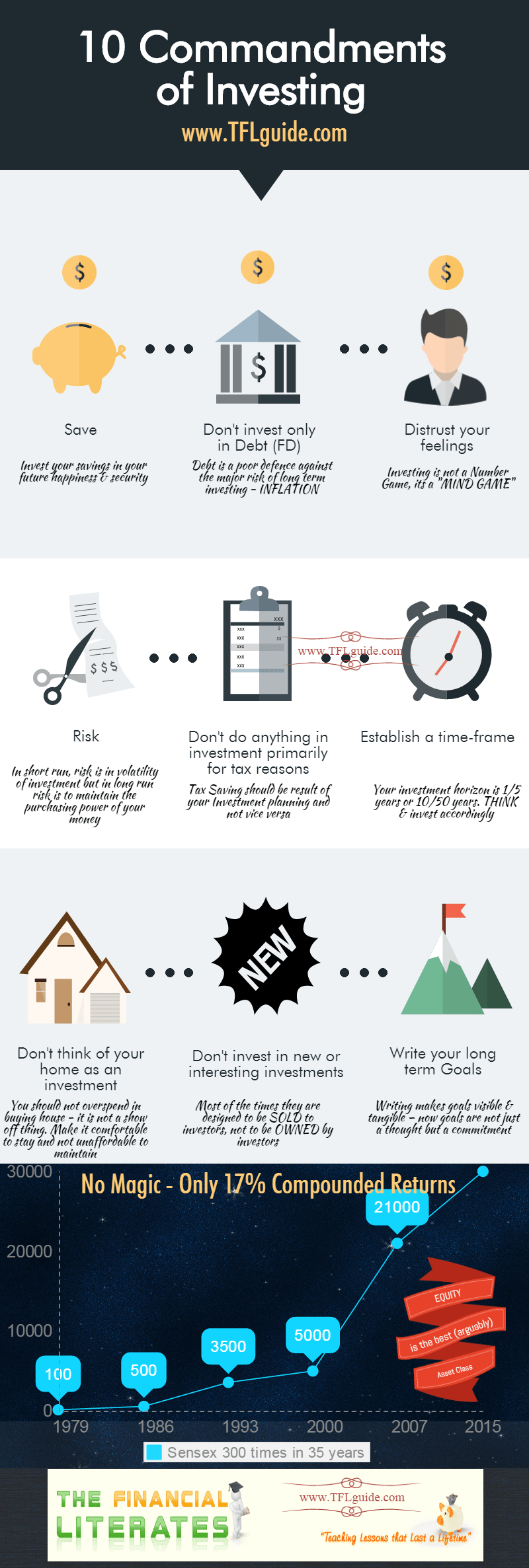
10 Commandments of Investing: Timeless Principles for Long-Term Wealth

“The simplest things are often the truest.” – Richard Bach

When I started in financial planning in the late 1990s, the biggest challenge was not finding the right mutual fund. It was getting people to start. The hesitation was always the same: “I’ll invest when the market is right.” “I’ll start once I understand it better.” “I’ll do it after Diwali.”

The commandments in this infographic are my answer to those hesitations. None of them are complex. All of them matter.

⚡ Quick Answer

The 10 commandments of investing are timeless principles that determine long-term investment success far more than any fund selection or market timing decision. The core insight: investing is not primarily a technical skill – it is a behavioural one. The investor who starts early, invests regularly, diversifies, ignores short-term noise, and stays the course will almost always outperform the investor who spends their time trying to pick the perfect fund or the perfect entry point.

10 commandments of investing - timeless principles for long-term wealth creation

Why These Commandments Still Matter in 2026

This infographic was created over a decade ago. None of it is outdated. The fundamentals of investing have not changed, and they will not change, because they are grounded in human psychology and economic reality – not in market conditions or product features.

What has changed: the products available (more index funds, direct plans, robo-advisors), the platforms (SIPs are now automated in seconds), and the market level (Sensex was 28,000 in 2015, it crossed 75,000 in 2024). What has not changed: the investor who panics and sells during corrections, who chases last year’s best-performing fund, and who invests in things they do not understand, still loses. Year after year, cycle after cycle.

Let me expand on the three commandments that matter most in my experience.

Start Early and Let Time Do the Heavy Lifting

A 25-year-old who invests Rs 5,000 per month at 12% CAGR until retirement at 60 will accumulate approximately Rs 3.2 crore. A 35-year-old who invests the same amount at the same return will accumulate approximately Rs 1.0 crore. Ten years of delay costs Rs 2.2 crore – not because of the money invested, but because of the compounding years lost.

The mathematics of compounding is unforgiving about time. The first decade of investing is not where the returns come from – it is where the foundation is built. The returns come in the third and fourth decades. Delay the foundation and you get a smaller building regardless of how hard you work later.

Saving for investing is therefore not optional. It is the first commandment because nothing else works without it.

The best time to start was 10 years ago. The second best time is today.

RetireWise builds investment plans that account for your specific starting point, timeline, and goals – and tells you exactly what is achievable from here.

See What’s Achievable From Your Starting Point

Don’t Put All Eggs in One Basket

This commandment sounds obvious but is violated constantly. The most common violation is not putting all money into one stock – it is putting all of the investment portfolio into a single asset class. The person whose entire retirement savings is in fixed deposits. The person whose entire portfolio is in real estate. The person who took a 2021 tip on a small-cap stock and concentrated 40% of their wealth in it.

Diversification is not about owning many things. It is about owning things that behave differently under different conditions. Equity and debt move inversely in many market conditions. Gold and equity are loosely negatively correlated in crisis periods. A portfolio that combines these in appropriate proportions is more stable than any individual asset, and delivers better risk-adjusted returns over time.

For most Indian investors, a simple three-asset portfolio – equity mutual funds for long-term growth, debt funds or FDs for stability, and 8-10% gold for crisis hedge – is more than sufficient. Complexity beyond this rarely adds value.

Never Time the Market

Market timing is the belief that you can predict when the market will go up and when it will go down – and adjust your investments accordingly. Decades of research and the actual experience of millions of investors confirm that it does not work systematically. Even professional fund managers – who do this full time with teams of analysts – consistently fail to time the market over long periods.

The investor who waits for the “right time” to enter the market is always waiting. In 2020, the right time seemed like after the COVID crash resolved. In 2022, it seemed like after inflation peaked. In 2023, it seemed like after the election uncertainty resolved. Every year has a reason to wait. The investor who waited missed compounding that is now impossible to recover.

SIPs eliminate this problem structurally. When you invest a fixed amount every month regardless of market level, you automatically buy more units when prices are low and fewer when they are high. Over time, this averaging effect produces better outcomes than lump-sum timing attempts by most investors.

Read: What Is Equity? The Right Way to Think About It

These commandments are not exciting. They will not make you rich in a year. They will, with patience and consistency, make you wealthy over two decades – which is the actual goal. Excitement in investing is usually a warning sign, not an opportunity.

Boring, consistent, and patient. That is the winning formula.

How many of the 10 commandments are you currently following?

RetireWise builds investment plans grounded in these principles – with goal-linked asset allocation, automated SIPs, and regular reviews to keep you on track.

Book a Free 30-Min Call

Your Turn

Which of these commandments do you find hardest to follow – and which one has made the biggest difference in your own investing? Share in the comments.

Which ELSS Mutual Fund Should You Invest In? (How to Actually Decide)

“Best” is a word for eulogies. For investments, the word you want is “suitable.”

Every year in January and February, the same question floods into my inbox: “Which is the best ELSS fund for this year?”

I have been answering this question for 25 years. And my answer has never changed: there is no best ELSS fund. There is only the fund that is appropriate for your specific situation, held for long enough that performance has time to develop.

The question itself reveals a misunderstanding of how equity works. Let me explain.

⚡ Quick Answer

ELSS (Equity Linked Saving Scheme) is an equity mutual fund with a 3-year lock-in that qualifies for tax deduction under Section 80C – up to Rs 1.5 lakh per year. It is generally the best instrument within the 80C basket because it combines tax saving with long-term equity returns. For fund selection: consistency over 10+ years matters more than last year’s return. Look at rolling 3-year returns, not point-to-point. Pick 1-2 funds from established fund houses with long track records. Start a SIP and do not change funds based on short-term performance. Note: under the new tax regime (default from FY2023-24), Section 80C deductions are not available – ELSS is only relevant if you are under the old regime.

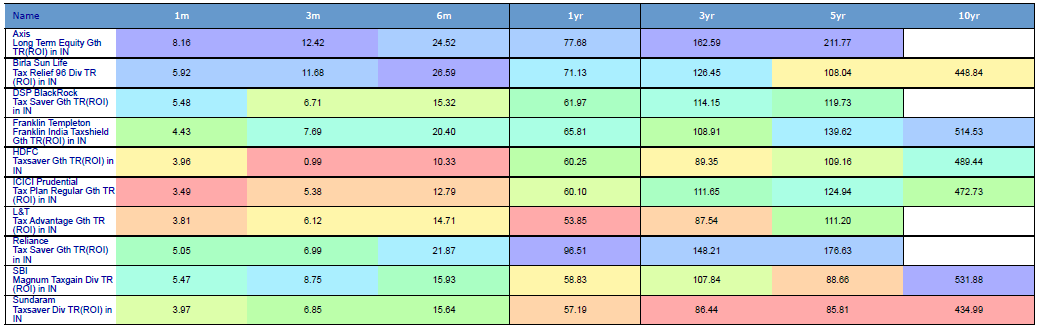
ELSS 3-year rolling returns - why rolling returns matter more than point-to-point
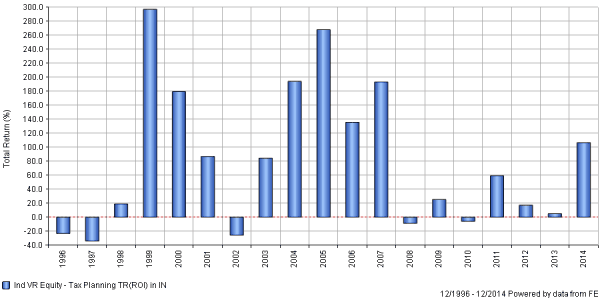
3-year rolling returns of ELSS funds – note the negative periods, and how they are followed by recovery

First: Is ELSS Relevant for You Under the New Tax Regime?

This is the most important question before anything else. From FY2023-24, the new tax regime became the default regime for all taxpayers. Under the new regime, deductions under Section 80C – including ELSS – are not available.

If you have opted for the old regime (either because you have a home loan, HRA, or other significant deductions that make the old regime more beneficial), ELSS remains one of the most attractive instruments in the 80C basket. If you are under the new regime, ELSS has no tax advantage – though it remains a perfectly good equity fund that you can invest in for long-term wealth creation without the lock-in constraint of the old ELSS framework.

Check with your employer or CA which regime applies to you before investing specifically for the 80C benefit.

Why “Best ELSS” Is the Wrong Question

Consider this: if someone had invested Rs 10,000 in ELSS funds at the market peak in January 2008 (Sensex at 20,800) and withdrawn exactly 3 years later in January 2011 (Sensex at 19,100), some funds would have given negative returns. The “best” fund of 2006 or 2007 may have been the worst performer for someone who happened to invest at the peak and exit at the minimum lock-in.

The problem with selecting based on recent returns is survivorship bias and mean reversion. Funds that top the charts in any given year are often there partly because they concentrated in a sector or theme that happened to outperform. That concentration can become a liability in the next cycle.

The investors who made money in ELSS are not the ones who picked the “best” fund each year and switched. They are the ones who picked a reasonable fund from a reliable fund house, invested through SIP, and held through the lock-in and beyond.

ELSS selection is a 10-minute decision. The 10 years after is what matters.

RetireWise selects ELSS and other equity funds as part of a complete goal-linked investment plan – not as a standalone tax-saving exercise.

See How RetireWise Builds Your Plan

What Rolling Returns Tell You (That Point-to-Point Returns Don’t)

Point-to-point returns (e.g., “5-year return ending March 2024”) are heavily influenced by the starting and ending points. A fund that happened to be high at your measurement start and low at the end looks terrible – but may be perfectly good over most other 5-year periods.

Rolling returns eliminate this problem. A 3-year rolling return calculates the annualised return for every possible 3-year period – starting January 2010, February 2010, March 2010, and so on through to the present. This gives you a distribution of outcomes: how often has this fund delivered positive returns over 3-year periods? What was the worst 3-year period? What percentage of 3-year periods gave more than 12%?

Looking at the rolling return chart above: there are negative 3-year periods – all of them starting at or near bull market peaks. But as the holding period extends to 5 years, negative periods almost disappear. The lesson is not which fund had the best rolling returns – it is that time horizon matters more than fund selection.

How to Actually Choose an ELSS Fund

There is no magic formula, but there are sensible criteria. Look at fund houses with long track records and professional fund management – the AMC’s overall reputation and investment process matters more than any individual fund manager. Look at consistency: a fund that has delivered 12-14% CAGR across multiple market cycles is more trustworthy than one that delivered 25% in one year and 3% over 10 years.

Avoid concentration in a single fund. Spreading across 2 established ELSS funds from different fund houses reduces the risk of one fund manager’s bet going wrong. More than 2-3 ELSS funds creates unnecessary complexity without meaningful diversification benefit.

Most importantly: do not change your ELSS fund because it underperformed for 1-2 years. Fund performance is cyclical. The manager who avoided IT stocks in 2021-22 (and therefore underperformed) may be the same one who outperforms when IT corrects. Switching funds based on recent performance is the surest way to always be in yesterday’s winner and miss tomorrow’s.

ELSS vs Other 80C Options

For investors under the old regime comparing 80C instruments: ELSS is generally the best long-term wealth creator in the 80C basket. PPF gives tax-free returns but at around 7.1% (subject to periodic revision), which barely beats inflation over long periods. Tax-saving FDs are fully taxable on interest. Endowment and money-back plans from insurance companies typically return 4-5% – below inflation after tax.

ELSS has the shortest lock-in (3 years vs 15 for PPF, 5 for tax FD) and the highest long-term return potential. The trade-off is equity volatility – your portfolio value will fluctuate, especially in the first year or two.

The lock-in, which most investors resent, is actually a gift. It forces the holding period that equity needs to work. The investor who cannot sell during the March 2020 crash (because they are locked in) is exactly the investor who benefits most from the subsequent recovery.

Read: ELSS vs PPF: Which Is Better for Tax Saving?

Stop looking for the best ELSS fund. Pick a consistent fund from a reliable AMC, set up a SIP, and hold through the lock-in and beyond. The return you earn will be determined far more by how long you stay invested than which specific fund you chose.

Consistency beats selection. Time beats timing.

Are you investing in ELSS as part of a plan – or just to save tax?

RetireWise integrates tax planning with long-term investment planning – so every rupee of tax saving is also building toward your retirement corpus.

Book a Free 30-Min Call

Your Turn

Are you under the old or new tax regime? And have you ever switched ELSS funds based on recent performance – and how did that work out? Share in the comments.

How to Stop Buying Things You Never Use: The Retirement Cost of Impulse Purchases

5

“The things you own end up owning you.” – Fight Club

A friend did his Diwali cleaning one year and discovered something that stopped him cold. His cupboard had more things than the year before. Not a few more. Significantly more. And a large portion of them had never been used.

There was the bread maker bought in an online sale “to save money on bread.” The exercise equipment purchased after a fitness resolution. The three identical blue shirts bought because one was on offer and “you can always use more shirts.” The kitchen gadgets. The books bought but never read. The gadgets still in their boxes.

He added it up roughly. Rs 80,000-90,000 of purchases made over 12 months that he could have lived without. That is Rs 7,000-8,000 per month. Invested over 15 years at 12% CAGR: approximately Rs 38-44 lakh of retirement corpus.

Not a lecture. A number.

⚡ Quick Answer

We buy things we never use for predictable psychological reasons: impulse triggered by deals, optimistic assumptions about our future habits, social pressure to own what others own, and the inability to imagine our future self not using the purchase. Breaking this pattern does not require deprivation. It requires systems that introduce a pause between impulse and purchase, and a habit of calculating what unused purchases cost in retirement terms.

How to stop buying things you never use - practical approaches for smarter spending

Why We Keep Buying Things We Never Use

The behaviour is so common that it is clearly not a character flaw. It is a predictable response to predictable psychological triggers. Understanding the triggers is the first step to breaking the pattern.

The “future self” illusion. We buy products based on the person we plan to become, not the person we are. The bread maker makes sense for the version of yourself who bakes bread every Sunday. The exercise equipment makes sense for the version of yourself who wakes up at 6am. The cooking course subscription makes sense for the version of yourself who has not had 12-hour workdays. But the person who actually uses the product is the present you, who has the same habits and constraints as yesterday. The gap between present self and imagined future self produces most of the purchases that never get used.

The deal trigger. A 50% discount on something you would never have bought at full price is still money spent. The discount does not create need. It creates the illusion of opportunity cost (“if I don’t buy this now, I’ll miss the deal”) that overrides the more relevant question: do I actually need this at all?

Social comparison. Buying what someone else has is one of the most consistent drivers of purchase regret. The neighbour’s new car. A colleague’s kitchen renovation. A friend’s holiday wardrobe. Social media has amplified this dramatically: we now see curated consumption from hundreds of people simultaneously. Every scroll is a purchase trigger designed by algorithm.

“Every object in your house that you never use represents a retirement savings decision you made – in the wrong direction. The bread maker is not just a bread maker. It is Rs 8,000 that is not compounding.”

– Hemant Beniwal, CFP, CTEP | Founder, RetireWise

Practical Systems to Stop the Pattern

The 72-hour rule. For any non-consumable purchase above Rs 1,500, wait 72 hours before buying. Do not add to cart and “save for later.” Walk away entirely. If after 72 hours you are still thinking about it and it still makes sense, buy it. Most impulse purchases evaporate within 24-48 hours. The ones that survive 72 hours are more likely to be genuine needs or considered wants rather than triggered impulses.

The “use case audit” before any purchase. Before buying anything, answer three questions: when specifically will I use this, where specifically will I store this, and what currently existing item does this replace or add to? If you cannot answer all three with specificity, the purchase is based on aspiration rather than actual use. Put it back.

Use cash for discretionary spending. When you pay with physical cash, the brain registers the outflow in a way that digital payment does not. The friction of counting notes and handing them over creates a natural pause that “tap to pay” eliminates. For discretionary weekly spending, withdrawing a fixed cash amount and limiting yourself to that amount is one of the simplest and most effective ways to reduce unnecessary purchasing.

The annual “what did I actually use” audit. Once a year, walk through your home and note everything that has not been used in 12 months. The total value of those items is the cost of the impulse purchasing cycle. Putting a number on it is more powerful than any abstract advice about “spending less.” People respond to specific numbers in a way they do not respond to principles.

Do you know how much of your monthly spending is going to things you rarely use?

A RetireWise retirement plan starts with your actual cash flows and shows you what even modest reductions in unplanned spending can produce at retirement.

Book a Free 30-Min Call

The Digital Shopping Problem

The original version of this post was written in 2015, before one-click purchasing, instant EMI on every product, and algorithm-driven “you may also like” recommendations became the norm.

The modern problem is significantly worse. Amazon Prime’s one-click purchase eliminates all friction. “No cost EMI” makes large purchases feel small by spreading them across months. App notifications about flash sales create urgency at any hour. The combination of these factors has made impulse purchasing faster, cheaper-seeming, and more socially normalised than it has ever been.

The system response: delete shopping apps from your phone. Purchase from a browser only, never from the app. This single change adds enough friction to eliminate most impulse purchases. The small amount of additional convenience lost is massively outweighed by the purchases that do not happen.

Read – Coupons, Deals and Discounts: When They Save You Money and When They Cost You Retirement

Read – The 50-30-20 Rule: How to Budget Your Way to Retirement Wealth

Frequently Asked Questions

Is it wrong to buy things that bring joy even if they don’t get used often?

Not at all. The goal is not to eliminate all discretionary spending. It is to make discretionary spending conscious and planned rather than impulsive and regretted. If you genuinely want something, value it, and have budgeted for it within your 30% “wants” allocation, buying it is completely appropriate. The problem is not wants. It is impulse purchases that bypass your own judgment about whether you actually want the thing.

How do I handle pressure from family members to buy things?

Family spending alignment is one of the most common sources of household financial friction. The most productive approach is to have an agreed household budget for discretionary spending rather than negotiating each purchase individually. When both partners understand the retirement corpus target and the monthly savings required to reach it, the “we can’t afford to spend Rs 5,000 on this” conversation becomes “this Rs 5,000 is in our wants budget this month, let’s decide together what we want to use it for.” Context makes the conversation easier.

I have a house full of things I never use. What should I do with them?

Sell or donate what you no longer need. OLX, Facebook Marketplace, and local community groups are effective for selling used household items. The money recovered is secondary to the psychological benefit: seeing the things leave makes the cost of the accumulation pattern concrete and motivates breaking it. Many families discover they can recover Rs 20,000-50,000 from a single thorough declutter of items purchased but never properly used.

Every unused object in your home was once a purchasing decision that felt justified. Most of them felt like they saved money or improved your life. Most of them did neither. The pattern is not a character flaw. It is a predictable response to environments designed to trigger purchasing. The system response is not more willpower. It is more friction, fewer purchase opportunities, and the habit of calculating what unused things actually cost.

Own less. Spend on what you use. Invest the difference.

Want to see what redirecting even Rs 5,000 per month of unplanned spending does to your retirement corpus?

RetireWise maps your current savings rate to your retirement target and shows you the specific impact of cash flow changes.

See Our Retirement Planning Service

💬 Your Turn

What is the most expensive thing you ever bought that you almost never used – and what would you do differently now? Share in the comments.

Tax on NRI Fixed Deposits in India: NRE, NRO and FCNR Explained (2026 Guide)

5

One of the most common questions I get from NRI clients is about the tax on their Indian bank accounts. They have an NRE FD earning interest, an NRO account where rental income lands, sometimes an FCNR deposit in a foreign currency – and they are not sure which is taxable, at what rate, and what they need to do about it.

The rules are not complicated, but they differ sharply between account types. Getting this wrong means either overpaying tax or, more dangerously, underpaying and facing compliance issues later.

Quick Answer: Tax on NRI Bank Account Interest (2026)

NRE FD interest: tax-free in India. NRO FD interest: taxable in India at 30% TDS (flat rate, regardless of slab). FCNR FD interest: tax-free in India. The key difference: NRE and FCNR accounts hold money remitted from abroad; NRO accounts hold India-sourced income (rent, dividends, pension). If your country of residence has a DTAA with India, NRO interest may be taxable at a lower DTAA rate instead of 30%. Always disclose NRE and FCNR interest in your ITR even though it is exempt – non-disclosure can create compliance issues.

The three NRI account types – and how they are taxed

NRE account (Non-Resident External)

An NRE account holds money remitted from abroad – your foreign earnings converted to rupees. Both savings and fixed deposit interest earned in NRE accounts is completely tax-free in India. The principal and interest are fully repatriable – you can send the money back abroad without restriction.

Current NRE FD rates (April 2026): SBI is offering 6.25 to 6.45% for various tenures; HDFC Bank 6.60%; ICICI Bank 6.70 to 7.25% depending on tenure. These rates are for NRE term deposits specifically.

Important: while the income is tax-free in India, it may be taxable in your country of residence. If you are a US person (citizen or green card holder), NRE interest is typically reportable income in the US. Check with a tax advisor in your country of residence – the Indian tax exemption does not automatically mean exemption everywhere.

NRO account (Non-Resident Ordinary)

An NRO account holds income that arises in India – rent from an Indian property, dividends from Indian companies, pension, income from a business in India, or money transferred from a resident account. NRO accounts are also used when an NRI returns to India temporarily and earns income during that period.

NRO interest is taxable in India. The TDS rate is 30% (plus applicable surcharge and cess), deducted by the bank before crediting interest. This is a flat rate regardless of income level – unlike resident Indians who pay at their slab rate.

However, if India has a DTAA with your country of residence, you may be entitled to a lower TDS rate on NRO interest. To claim the DTAA rate, you must submit: a Tax Residency Certificate (TRC) from your country of residence, Form 10F filed online through the income tax portal, and a self-declaration. Submit these to your bank before the interest is credited. Once submitted, the bank will deduct TDS at the DTAA rate instead of 30%.

NRO repatriation: you can repatriate up to USD 1 million per financial year from your NRO account after paying applicable taxes. Prior to repatriation, obtain a CA certificate (Form 15CB) and file Form 15CA on the income tax portal.

FCNR account (Foreign Currency Non-Resident)

FCNR accounts are term deposits only – no savings or current accounts. They are held in a foreign currency (USD, GBP, EUR, AUD, CAD, JPY) so there is no currency conversion risk on the principal. Both principal and interest are fully repatriable.

Interest earned on FCNR deposits is tax-free in India. Like NRE accounts, this may still be taxable in your country of residence.

FCNR deposits are useful when you want to keep a portion of savings in foreign currency while earning interest – useful if you plan to return to your country of residence and want to avoid rupee depreciation risk on those funds.

TDS on NRO accounts – what actually happens

Many NRO account holders are surprised to discover that 30% TDS has been deducted when they check their FD maturity amount. The bank is required by law to deduct this before crediting interest.

If you have submitted DTAA documentation and the DTAA rate is lower (for example, the India-US DTAA provides for 15% on bank interest in many cases), the bank should deduct at that lower rate. If you have already had 30% deducted and the applicable DTAA rate is lower, you can claim a refund by filing an ITR in India for that assessment year.

Even if your total India-source income is below the basic exemption limit, filing an ITR to claim the TDS refund is worthwhile if the amount is significant.

NRI taxation involves rules in two countries simultaneously

Most NRI clients we work with are surprised by how much tax can be saved by correctly structuring their India accounts and claiming DTAA benefits. The DTAA paperwork is straightforward once you know the process – but it needs to be done before the bank deducts TDS.

Book a Clarity Call

ITR filing for NRIs – what to disclose

NRIs must file an ITR in India if their taxable India-source income exceeds the basic exemption limit (Rs.2.5 lakh for most NRIs). NRO interest counts toward this threshold. NRE and FCNR interest, while tax-exempt, should still be disclosed in the ITR for compliance purposes.

The applicable ITR form for most NRIs with only investment income: ITR-2 (if NRO interest is the only income) or ITR-3 (if there is business income). ITR-1 is not available for NRIs.

Important 2026 update: The deadline for filing ITR for FY2025-26 is July 31, 2026 for most taxpayers. NRIs who need to file can do so through the income tax e-filing portal using their PAN credentials.

Summary table

Account Type Interest Tax in India TDS Rate Repatriation
NRE FD Tax-free Nil Fully repatriable
NRO FD Taxable at slab / DTAA rate 30% (or DTAA rate) Up to USD 1 million/year after tax
FCNR FD Tax-free Nil Fully repatriable

Also read: How NRIs Can Use DTAA to Reduce Tax in India: Complete 2026 Guide

Frequently asked questions

Is NRE fixed deposit interest taxable in India?

No. Interest earned on NRE savings accounts and NRE fixed deposits is completely tax-free in India. No TDS is deducted and no tax is payable. However, this exemption applies only in India – if you are a tax resident of another country (such as the US), the interest may still be reportable and taxable there. Always check the tax treatment in your country of residence separately.

What is the TDS rate on NRO fixed deposits?

The standard TDS rate on NRO fixed deposit interest is 30% plus applicable surcharge and cess (effectively around 31.2% for most NRIs). This is deducted by the bank before crediting the interest. If you have submitted DTAA documentation (Tax Residency Certificate + Form 10F filed online), the bank can deduct at the lower DTAA rate applicable to your country of residence instead. Submit these documents before the FD matures or interest is credited to benefit from the lower rate.

Can NRIs repatriate money from NRO accounts?

Yes, but with limits. NRIs can repatriate up to USD 1 million (approximately Rs.8.3 crore at current rates) per financial year from their NRO account after paying applicable taxes. To repatriate, you need a CA certificate in Form 15CB certifying that taxes have been paid, and you must file Form 15CA on the income tax e-filing portal before the remittance. NRE and FCNR accounts have no repatriation limits – the full principal and interest can be remitted abroad freely.

Are you an NRI with NRO interest being taxed at 30%? Have you checked whether your country’s DTAA with India allows a lower rate? Share your experience in the comments.

5 Reasons Not to Invest in a Mutual Fund NFO (2026 Update)

“In investing, what is comfortable is rarely profitable.” – Robert Arnott

Every bull market produces the same pattern. Markets rise for 18-24 months. Investor confidence builds. Fund houses respond to that confidence by launching new funds at the precise moment investors are most willing to buy. And investors respond by putting money into untested funds at Rs 10 per unit, convinced that “cheap” means “good value.”

The Rs 10 myth is one of the oldest and most persistent illusions in Indian mutual fund investing. And it continues to cost retail investors significant returns every cycle.

⚡ Quick Answer

An NFO (New Fund Offer) is the launch subscription of a new mutual fund scheme at Rs 10 per unit. The Rs 10 price does not mean the fund is cheap – it means it has no track record. An established fund at Rs 500 per unit is not more expensive than an NFO at Rs 10: what matters is future return, not current NAV. In most cases, an investor is better served by an established fund with a proven track record than an NFO with zero history.

5 reasons why not to invest in mutual fund NFO - explained for retirement investors

The Rs 10 NAV Myth: Why It Is Completely Wrong

The single biggest reason people invest in NFOs is the belief that Rs 10 is a low price and therefore a good deal. This belief is wrong in every meaningful sense.

A mutual fund NAV represents the current value of the fund’s portfolio divided by the number of units. An existing fund at Rs 500 NAV is not “five times more expensive” than an NFO at Rs 10. Both represent a claim on the underlying portfolio. A Rs 1 lakh investment buys you 200 units at Rs 500 or 10,000 units at Rs 10. The number of units is irrelevant. What matters is how the portfolio performs from here.

In fact, the fund at Rs 500 has a significant advantage over the NFO at Rs 10: it has a 5-10 year track record you can evaluate. You can see how it performed in the 2020 COVID crash, in the 2022 rate-hike-driven correction, and in the 2023-2024 bull run. The NFO at Rs 10 has none of this. You are being asked to invest based on hope and marketing material.

“Fund houses launch NFOs in bull markets because that is when investors are willing to buy them. They do not launch NFOs to serve your financial needs. They launch them to grow their AUM. The timing of an NFO tells you something important about who it was designed for.”

– Hemant Beniwal, CFP, CTEP | Founder, RetireWise

5 Reasons Not to Invest in an NFO

1. No track record to evaluate. Every established mutual fund category already has multiple funds with 5-10 year histories. You can compare rolling returns, downside capture, expense ratios, and fund manager tenure across dozens of options. An NFO offers none of this. You are evaluating a fund based on its investment mandate document and the fund house’s reputation – not on actual performance evidence.

2. NFOs are launched at the worst time to invest. Fund houses launch NFOs when markets are bullish and investor sentiment is positive. This is precisely when most markets and sectors are trading at above-average valuations. You are being asked to deploy fresh capital at elevated prices into an untested vehicle. Existing well-run funds have been navigating these valuations – the NFO has not.

3. The NFO subscription period creates artificial urgency. “Available only until [date].” This time pressure forces you to make an investment decision without the benefit of observing how the fund performs. With an existing fund, you can watch it for several market cycles before committing capital. The subscription window prevents this due diligence.

4. Sector and thematic NFOs carry concentrated risk. In the 2023-2024 bull run, fund houses launched dozens of thematic NFOs: defence funds, PSU funds, infrastructure funds, manufacturing funds, EV funds. These perform spectacularly when the theme is in favour. They underperform significantly when the theme rotates out of favour. For a retirement portfolio, thematic concentration is inappropriate. A diversified flexi-cap or multi-cap fund with a long history almost always serves a retirement investor better than a thematic NFO.

5. The fund manager has no existing portfolio to work with. When a new fund opens, the fund manager faces the “cash drag” problem: they have a large pool of money and must deploy it into the market within a short window. This forced deployment often happens at whatever market level prevails during that window – removing the manager’s ability to time entry even modestly.

Is your retirement portfolio built on track record and fundamentals, or on recent trends and new launches?

A RetireWise retirement plan selects funds based on consistent long-term performance, not current market enthusiasm.

Book a Free 30-Min Call

When an NFO Might Be Justified

NFOs are not categorically worthless. There are narrow circumstances where an NFO makes sense.

If a fund house is launching a genuinely new category that does not yet have an established product in the market – an index fund for a new index, for example, or a factor-based fund offering systematic exposure to a specific strategy – and you have specific reasons for wanting that exposure, an NFO may be the only way to access it. This is a fundamentals-based decision, not an NAV or urgency decision.

For most retail investors and for virtually all retirement corpus building, the NFO provides no advantage over established funds. The correct approach is to identify what type of fund you need (large-cap, flexi-cap, mid-cap, international), evaluate established funds in that category on 5-10 year rolling returns, expense ratio, and fund manager tenure, and invest in the best of those established options rather than the newest launch.

Read – How to Choose the Right ELSS Fund: A Framework That Actually Works

Read – Types of Mutual Funds: The Complete 2026 Guide

Frequently Asked Questions

What if the NFO is from a reputable fund house with strong existing funds?

A strong fund house is a positive signal but not sufficient reason to invest in a new fund. The fund house has strong existing funds precisely because those funds have delivered track records. The NFO is untested regardless of who launched it. If you want exposure to that fund house’s investment style, invest in their existing funds rather than the new launch. The established fund gives you everything the NFO offers plus a track record to evaluate.

I already invested in an NFO. Should I exit?

Not necessarily immediately. Evaluate the fund’s actual performance once it has 12-18 months of data. If it is performing in line with or better than category averages after costs, there is no rush to exit. If it is significantly underperforming the category without clear reason, switching to an established performer makes sense. Do not exit and re-enter purely on principle – exit only if the performance data supports it.

Are close-ended NFOs better than open-ended ones?

In almost all cases, no. Close-ended funds lock your capital for 3-5 years with no exit option. The theoretical advantage is that the fund manager can invest without worrying about redemptions. The practical disadvantage is that you lose all flexibility. If the fund underperforms, you cannot exit. If your financial situation changes, you cannot redeem. An open-ended fund with a proven track record provides better returns and full liquidity. The lock-in is a benefit for the fund house, not for you.

NFOs are designed to collect money from investors at the peak of enthusiasm for a theme or market cycle. They are not designed to maximise your retirement corpus. The investor who consistently avoids NFOs and invests in established, track-record-verified funds will almost always build more retirement wealth than the one who chases each new launch at Rs 10 per unit.

Track record over novelty. Consistency over excitement. Every time.

Want a retirement portfolio built on fundamentals, not market trends?

RetireWise selects funds based on consistent long-term performance across market cycles, not on which fund has the most recent buzz.

See Our Retirement Planning Service

💬 Your Turn

Have you ever invested in an NFO – and how did it perform compared to the established funds in the same category? Share your experience in the comments.