
Last Updated on April 22, 2026 by Hemant Beniwal
“Money is a tool. Used properly it makes something beautiful. Used wrong, it makes a mess.”
– Bradley Vinson
A client called me a few weeks before his retirement date. After 32 years in the same company, he had accumulated a corpus that would have seemed impossible to him at 30. The number was large. By any measure, he had done well.
But he was anxious. Almost panicked.
I asked him what was wrong. He said: “Hemant, my number isn’t as large as my colleague’s. He built more than me.”
I asked: “What do you plan to do in retirement?”
He had a list. Travel with his wife. Spend more time with grandchildren. Take up photography. Read the books that had been sitting on his shelf for years.
“And can your corpus fund all of that?” I asked.
“Yes. Comfortably. But it isn’t as large as his.”
This is Medium Maximisation. And it is one of the most quietly destructive forces in financial life.
⚡ Quick Answer
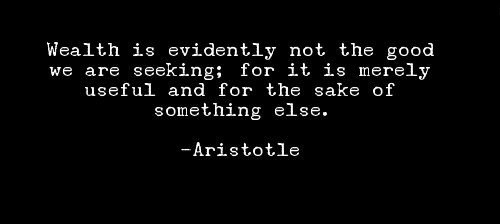
Medium Maximisation is the psychological trap of optimising for the instrument instead of the outcome. Money is a medium – a tool to fund a life you want. When money becomes the goal itself, the original goal disappears. The result is people who are financially successful but don’t know what they were working toward. The fix is not earning less. It is keeping the actual goal visible.
What Is a Medium?
A medium is something you receive as an intermediate step toward what you actually want. Reward points on a credit card are a medium – they are not useful by themselves, only in exchange for something. Salary is a medium. The score on an exam is a medium. The number in your investment portfolio is a medium.
The economist Raj Raghunathan at the University of Texas conducted a study where he asked people to name three wishes they would ask for if a genie appeared before them. Most people wished for money, success, fame, and power. Very few wished for happiness directly – even though the reason they wanted all those other things was to be happy. They were wishing for the medium, not the outcome.
Medium Maximisation occurs when the pursuit of the medium becomes the goal. When the number in the portfolio becomes the point, instead of what the portfolio enables.
Why This Happens – and Why It Is Getting Worse
The problem with money as a medium is that it is quantifiable, trackable, and comparable in a way that genuine wellbeing is not. You can check your net worth on your phone every morning. You cannot check how much meaning your life has.
Social comparison makes it worse. In previous generations, you compared yourself to neighbours and colleagues you could count on one hand. Today, LinkedIn shows you every peer’s promotion, every classmate’s IPO windfall, every connection’s milestone. The comparison set has grown from 20 people to 2,000. And the richest, most successful examples are algorithmically elevated to the top of your feed.
The result is a treadmill. You reach the number you thought would be enough. The comparison set has moved. The number no longer feels sufficient. You keep running.
Research in happiness economics has consistently shown that above a certain income threshold – sufficient to cover needs and basic comforts – additional wealth does not meaningfully increase life satisfaction. The Nobel laureate Daniel Kahneman’s famous study found that emotional wellbeing plateaued at an income level that would today be roughly equivalent to a middle-class professional income in India’s major cities. Beyond that point, more money correlated with more stress, not more happiness.
What I See in Retirement Planning Consultations
Over 25 years, the most consistent pattern I see is this: clients who have defined what they want from retirement – specifically, not vaguely – feel much better about their financial situation than clients who have focused purely on corpus accumulation. A person with Rs 2 crore and a clear picture of how they want to live their retirement is less anxious than a person with Rs 5 crore who has no idea what they are saving toward. The number alone does not create certainty. The purpose behind the number does.
I now ask every new client two questions at the start: “What are you trying to fund?” and “What does a good day look like for you at 65?” The answers change everything about how we structure the plan.
The Investing Version of Medium Maximisation
Medium Maximisation shows up in investing in ways that are easy to miss because they look like discipline.
The executive who saves 50% of his income, drives a car he doesn’t need, takes no holidays, and defers every pleasure in life “until the number is right” – is he being responsible? Or has the corpus become an end in itself?
The investor who refuses to spend on his health, his children’s experiences, or the trip he has been promising his wife for a decade – because “I need to keep compounding” – is optimising the medium at the expense of the outcome.
I have seen people die before reaching retirement with Rs 3-4 crore in assets and a list of things they were going to do “once they had enough.” The corpus was never touched. The list was never started. The medium was maximised. The outcome was missed entirely.
This is not an argument for reckless spending. Emergency funds matter. Retirement planning matters. Long-term investing matters. The point is that the corpus is instrumental – it is supposed to fund a life, not become the life.
How to Reorient From Medium to Outcome
The solution is not complicated. But it requires ongoing conscious effort because the culture around us constantly reinforces Medium Maximisation.
The first step is specificity. “I want to be financially secure” is a medium goal. “I want to fund 25 years of retirement at Rs 1.5 lakh per month in today’s money, travel once a year, and have a reserve for health emergencies” is an outcome goal. The first number is abstract and always insufficient. The second number can be calculated, planned for, and reached.
The second step is periodically spending money on experiences rather than accumulating it. Research consistently shows that spending on experiences – holidays, learning, relationships, time – produces lasting happiness more reliably than spending on objects. Objects normalise quickly. Experiences become part of your identity and memory. The Diwali trip to Rajasthan your family took in 2022 will still be a good memory in 2042. The television upgrade will be forgotten in a month.
The third step is to distinguish between spending that makes life uncomfortable and spending that makes life richer. Some discomfort is worth enduring for long-term financial security. Routinely sacrificing experiences and health for marginal corpus additions past a reasonable target is not discipline. It is Medium Maximisation with good branding.
Money as a Tool for Retirement – The Right Framework
In retirement planning, this distinction matters most. Many clients approaching retirement have accumulated more than they will ever need. The psychological difficulty is giving themselves permission to spend it.
The fear of “running out” is real and worth taking seriously. But it can also become a rationalisation for never using the corpus at all – for treating the number as an end rather than a means.
A well-structured retirement plan – with clear income projections, stress-tested withdrawal rates, a bucket strategy for stability, and regular reviews – addresses the legitimate fear of running out. Once that structure is in place, the question “do I have enough to do X?” has a genuine answer. And if the answer is yes, then not doing X is a choice, not a necessity.
A retirement plan is not just a withdrawal spreadsheet. It is a plan for a life.
We help clients figure out how much they need, structure the plan around what they actually want to do, and give them the clarity to stop running on the treadmill.
When my anxious client asked me about his number being smaller than his colleague’s, I asked him one more question: “What does your colleague plan to do in retirement?”
He paused. “I don’t know actually. He has never mentioned it.”
I said: “Maybe ask him.”
A few weeks later he called me back. His colleague had no plan. No list. No idea. He had just kept accumulating because that was what he knew how to do.
The larger corpus was the medium. The outcome remained undefined.
Money is a powerful tool. But a tool without a purpose is just weight you are carrying.
What are you building the corpus for? If you cannot answer that clearly, the number will never be enough.
The most important part of retirement planning is knowing what you are planning for.
We start every engagement by answering that question first. The numbers follow from the life design.
Your Turn
If you are honest with yourself: do you know specifically what you are accumulating toward? Or has the number itself become the goal? What would change if you had a clear answer to that question?
Wow!!! Brilliant article. I have read and re-read ” How to Live & Die Like Khushwant Singh”. This article is so so good.
Stabs
Thanks a lot, Stabs – unfortunately very few read such articles.
Dear Hemant Ji
First of all, I am a big fan of you.You write very fantastic. Again This article is great.
Thanks Pradeep for appreciating our effort 🙂
Excellent article Hemant, I can completely relate to it…
Thanks Deepak.