
Home Blog Page 38

HDFC Life Click 2 Protect Super Review 2026: Is It a Good Term Plan?

📢 Updated — April 2026

This review was originally written in January 2012 when HDFC Life first launched Click 2 Protect. The product has since evolved significantly — it is currently marketed as HDFC Life Click 2 Protect Super with multiple variants, improved coverage ages, and better features. All 2012-era premium tables have been removed. This 2026 update focuses on the current plan framework and how to choose the right variant.

When HDFC Life launched Click 2 Protect in 2012, online term insurance was still a novelty. Most Indians bought life insurance through agents, in branches, and primarily for tax saving. The idea of buying a Rs. 1 crore term plan in 20 minutes online for Rs. 7,000 a year was genuinely disruptive.

The plan and the market have both come a long way. Today, HDFC Life Click 2 Protect Super is a mature, comprehensive term product from one of India’s best-capitalised private life insurers — not a novelty, but a serious long-term protection tool that millions of families depend on.

⚡ Quick Answer

HDFC Life Click 2 Protect Super is a well-structured term plan with a claim settlement ratio consistently above 99%, coverage up to age 85, and multiple payout options. It is a suitable choice for most salaried executives. The key decision is not whether to buy HDFC Life vs another insurer — it’s whether you have adequate term cover at all. Most Indian executives are significantly underinsured.

Why Term Insurance Is the Only Life Insurance You Need

Before reviewing any specific plan, one principle: pure term insurance — no maturity benefit, no bonus, no return of premium — is the only life insurance most people need.

Life insurance has one job: to financially protect your family if you die before you’ve built enough wealth for them to be independent. A term plan does this at the lowest possible cost. Every rupee of premium goes towards the protection. Nothing is skimmed off for investment returns that underperform.

ULIPs, endowments, money-back plans — these mix insurance and investment. Both suffer as a result. The investment component earns less than a mutual fund. The insurance component covers less than a pure term plan would for the same premium. Separate your insurance and investment. Always.

HDFC Life Click 2 Protect Super — 2026 Overview

HDFC Life Click 2 Protect Super is the current flagship term product from HDFC Life Insurance. Key features as of 2026:

Coverage age: Entry age 18-65 years. Maximum coverage up to age 85 — allowing executives approaching retirement to extend coverage into their senior years if dependents remain.

Sum assured: Minimum Rs. 50 lakh, no upper limit. For a senior executive, a sum assured of Rs. 1-3 crore is typical.

Payout options: The plan offers flexibility in how the claim is paid: lump sum only, monthly income for a specified period, or a combination of lump sum plus monthly income. The monthly income option is worth considering — a surviving spouse who receives Rs. 1 crore as a lump sum faces investment decisions they may not be prepared for. Monthly income for 15-20 years is often more practical.

Return of premium variant: An optional variant returns all premiums paid if the policyholder survives to the end of the policy term. This is significantly more expensive than the pure term variant. In most cases, the pure term (no return of premium) plan with the premium difference invested in mutual funds will result in a better financial outcome. The return of premium variant’s appeal is primarily psychological — not mathematical.

Critical illness and disability riders: Waiver of future premiums if diagnosed with a critical illness or permanent disability. This is a genuinely useful rider — it ensures the policy remains in force even if you can no longer earn income due to illness.

Terminal illness benefit: If diagnosed with a terminal illness with less than 6 months to live, a portion of the sum assured is paid immediately — giving the policyholder resources for medical care and family arrangements while alive.

Claim settlement ratio: HDFC Life has maintained a claim settlement ratio above 99% in recent years — one of the highest in the private sector. This is the single most important metric when choosing a term insurer.

💡 How to Choose Between Term Plan Variants

Choose pure term (no return of premium) if you are financially disciplined and will invest the premium savings.
Consider return of premium only if you want a forced savings mechanism and the higher premium fits comfortably in your budget without compressing investments.
Add waiver of premium rider if you are the sole or primary earner — critical illness could eliminate your income at exactly the moment your family needs maximum financial security.
Consider monthly income payout if your spouse or dependents are unlikely to manage a large lump sum.

How Much Term Cover Do You Actually Need?

Most Indian executives are significantly underinsured. The standard benchmark of “10 times annual income” is a starting point, not a ceiling.

A structured approach: sum up all outstanding liabilities (home loan balance, car loan, personal loans), add 10-15 years of household expenses at current spending, add education costs for children if applicable, and subtract existing investments your family could liquidate in an emergency.

The resulting number is your minimum sum assured requirement. For a 40-year-old senior executive in a Tier 1 city with a family, this typically works out to Rs. 1.5-3 crore. A Rs. 50 lakh term plan — which many executives hold from their early career — is almost always inadequate by the time they reach 40.

⚠️ Review Your Term Cover Every 5 Years

A term plan bought at 30 for Rs. 50 lakh may have been adequate then. By 40, with a home loan, two children’s education to fund, and a 10x higher lifestyle, it may be only 20% of what you actually need. New term policies can be added alongside existing ones — you don’t need to surrender the old policy to buy more cover.

HDFC Life vs Other Term Insurers in 2026

The online term insurance market has matured considerably. Major players with strong claim settlement ratios and competitive premiums include HDFC Life, ICICI Prudential Life, Max Life, Tata AIA Life, and LIC (Tech Term). All are legitimate choices.

The decision criteria should be: claim settlement ratio (choose above 97%), financial strength of the insurer (check IRDAI solvency ratio), specific features matching your needs, and premium competitiveness. Do not choose purely on the lowest premium — a difference of Rs. 2,000-5,000 per year on a Rs. 1 crore term plan is trivial over 30 years of coverage. Claim settlement reliability is worth far more.

For executives who want to split their cover across two insurers (reducing single-insurer risk), HDFC Life as one of two policies is a sensible approach.

Not sure how much term cover you actually need?

A 30-minute planning session calculates your exact coverage requirement based on your liabilities, income, and family needs — so you’re not underinsured or overpaying. Most executives discover they need more cover than they thought.

Talk to a RetireWise Advisor

Frequently Asked Questions

Is HDFC Life Click 2 Protect Super a good term plan?

Yes — HDFC Life is one of India’s most financially stable private life insurers with a claim settlement ratio above 99%. Click 2 Protect Super is well-structured with meaningful variant options. It is a suitable choice for most salaried executives. The right variant depends on your specific needs and should be selected with advisor input.

How much term insurance do I need?

A structured approach: total all outstanding liabilities + 10-15 years of family expenses + children’s education costs, then subtract liquid assets. For most senior executives at 40-50, this results in Rs. 1.5-3 crore sum assured. A Rs. 50 lakh policy from early career is almost always inadequate by mid-career. Review your cover every 5 years.

Should I choose return of premium term plan?

Mathematically, the pure term plan (no return of premium) almost always wins when you invest the premium difference. The return of premium variant’s appeal is psychological — you feel you get “something back.” If financial discipline is not a concern, pure term + invest the difference is the better strategy. An advisor can run the specific numbers for your case.

HDFC Life Click 2 Protect Super vs LIC Tech Term — which is better?

Both are excellent. LIC has sovereign backing and brand trust. HDFC Life offers more flexibility in payout options and riders. Both have claim settlement ratios above 97%. For most executives, either is a sound choice — or both, if you want to split large cover across two insurers to reduce concentration risk.

Term insurance is the one financial product where paying the premium and never claiming is the best possible outcome. It means your family was never in crisis. That is not money wasted. That is money well spent.

Buy the right amount. Buy from a reliable insurer. Then do the one important thing — stay alive long enough to not need it.

💬 Your Turn

What term plan do you hold — and when did you last review the sum assured? Share below. The most common discovery when reviewing existing policies: the sum assured hasn’t been increased since the policy was first bought, even as income and liabilities grew significantly.

HDFC Ergo Optima Restore Review 2026: Is the Restore Benefit Worth It?

“The bitterness of poor quality remains long after the sweetness of low price is forgotten.” – Benjamin Franklin

A retired schoolteacher called me in 2023. Her husband had just been diagnosed with stage 3 cancer. They had an Optima Restore policy – Rs 5 lakh base cover – and she was confident they were protected.

What she did not know: the restore benefit only triggers after the base sum assured is fully exhausted. And it only covers a different illness, not the same one. Her husband’s cancer treatment alone was Rs 9 lakh over 8 months. The restored Rs 5 lakh could not be used for his follow-up chemotherapy – same illness.

She thought she had Rs 10 lakh of coverage. She effectively had Rs 5 lakh.

This is not a criticism of the product. It is an explanation of what “restore” actually means – which most policyholders discover too late.

⚡ Quick Answer

HDFC Ergo Optima Restore (formerly Apollo Munich Optima Restore) is one of the better health insurance products in India, but the restore and multiplier benefits are widely misunderstood. The restore benefit covers different illnesses only – not the same illness you claimed for. The multiplier doubles your cover in 2 claim-free years but resets by 50% if you claim in year 3. Worth buying – but only if you understand exactly what you are buying.

📋 FACTCHECK NOTE – April 2026

Apollo Munich Health Insurance was acquired by HDFC ERGO Health Insurance in 2020-21. The Apollo Munich brand no longer exists. The plan is now called HDFC Ergo Optima Restore and continues to be sold. All premium figures in the original 2012 version of this post (Rs 6,370 / Rs 8,281) are from 2012 and are completely stale. Premium examples in this updated version reflect approximate 2026 rates – always get an exact quote from HDFC Ergo or a broker before buying.

What is HDFC Ergo Optima Restore?

HDFC Ergo Optima Restore is a comprehensive health insurance plan with two headline features that set it apart from standard plans: the Restore Benefit and the Multiplier Benefit. Both are useful – but both are more limited than the marketing copy suggests.

It is available as an individual plan and as a family floater. The family floater is where the restore benefit is most valuable, because multiple family members drawing on a shared pool increases the probability of exhausting the sum assured.

The Restore Benefit – What It Actually Means

Under the Restore Benefit, if your base sum assured (and any accumulated bonus) is fully exhausted during a policy year, the company restores the base sum assured once – for use against a different illness or a different family member.

The critical limitations are not hidden – they are in the policy document. But most buyers never read the policy document. Here they are clearly:

First, the restore triggers only when the base SA plus all bonus is completely exhausted. If your policy has a Rs 5L base and a Rs 2.5L multiplier bonus (Rs 7.5L total), the restore only kicks in after all Rs 7.5L are gone.

Second, the restored sum cannot be used for the same illness or condition that triggered the exhaustion. If cancer treatment exhausts your cover, the restored amount cannot be used for further cancer treatment in the same year.

Third, the restore benefit is available only once per policy year. If you use it, it is gone for that year.

Fourth, if the restored sum is not used in that policy year, it lapses. It does not carry forward.

✅ When the Restore Benefit Actually Helps

Family floater, multiple members, different illnesses in one year. Example: wife uses Rs 3L for a knee surgery, husband uses Rs 2L for a cardiac procedure – total Rs 5L exhausted on a Rs 5L policy. Now the restore kicks in and gives the family another Rs 5L for any other illness. This is the scenario the feature was designed for.

The Multiplier Benefit – The Better Feature

The Multiplier Benefit (No Claim Bonus) in Optima Restore is genuinely different from standard NCB in other plans. Most health insurance plans give 5-25% NCB. Optima Restore gives 50% NCB in the first claim-free year and doubles the base SA (100% NCB) in the second consecutive claim-free year.

So a Rs 5L policy becomes Rs 7.5L after year 1 with no claim, and Rs 10L after year 2 with no claim. All for the same premium as a Rs 5L policy.

The catch: if you make a claim after the bonus has accumulated, the multiplier is reduced by 50% of the base SA in the following policy year. A Rs 10L effective cover falls back to Rs 7.5L if you claim in year 3.

Still, for a family that has a few healthy years, this benefit can effectively double coverage without any additional premium. That is genuinely valuable.

The Question Most Buyers Never Ask

Here is something I ask every client who comes to me with a health insurance review: what is the probability that a single hospitalisation event will actually exhaust your sum assured?

Average hospitalisation costs in Indian private hospitals (IRDAI Annual Report, 2024-25 data): cardiac bypass Rs 3-6L, cancer treatment per cycle Rs 80,000-2L, knee replacement Rs 1.5-3L, ICU admission Rs 30,000-60,000/day. A 7-day ICU stay alone costs Rs 2-4L.

With a Rs 5L base policy, a single serious event can exhaust the cover. The restore then gives you Rs 5L more – but for a different illness. If your family’s primary risk is one ongoing condition – diabetes complications, cardiac issues, cancer – the restore provides zero additional benefit for that condition in the same year.

Medical inflation in India is running at 14-17% per year (IRDAI data). This means a Rs 5L cover in 2026 has the same purchasing power as roughly Rs 3L had in 2020. The real question is not “do I have restore and multiplier?” but “does my total effective cover match my realistic worst-case hospitalisation cost?” For a family of 4 in a metro city in 2026, that worst-case is Rs 15-20L per year. A Rs 5L base with restore gives you Rs 10L maximum. The gap is real.

Premium Comparison – 2026

The original article quoted 2012 premiums. Those are meaningless today. Health insurance premiums have risen 3-4x since 2012 due to medical inflation and rising claim ratios. Here are approximate 2026 premiums for HDFC Ergo Optima Restore – get exact quotes from the company or a broker:

Configuration Sum Assured Approx Annual Premium (2026)
Individual, age 35 Rs 5 lakh Rs 8,500-11,000
Individual, age 45 Rs 5 lakh Rs 14,000-18,000
Family floater (2A+1C, age 35) Rs 10 lakh Rs 22,000-28,000
Family floater (2A+2C, age 45) Rs 10 lakh Rs 30,000-38,000

Is your health insurance cover sized for your real risk?

At RetireWise, insurance review is part of every retirement blueprint. We check what you have, what you need, and what to change. SEBI Registered. Fee-only.

See the RetireWise Service

Why Most People Buy Too Little Coverage

Here is something I have observed across 25 years of practice. People buy health insurance for the illness they are currently healthy enough not to worry about. They set the premium budget first and work backwards to the sum assured. It should be exactly the opposite.

Psychologists call this Optimism Bias – the universal human tendency to believe bad things are less likely to happen to us than to others. Research shows that 70-80% of people believe their health is better than average. Mathematically, that is impossible. But emotionally, it is how most people approach health insurance.

Combined with this is the Availability Heuristic – we judge the probability of events by how easily we can imagine them. If we have never been hospitalised for Rs 10L+, we cannot picture it happening. So we buy Rs 5L cover and call it done.

The time to stress-test your health cover is not when the diagnosis arrives. It is during your annual review, when you are healthy and thinking clearly.

What is Not Covered

Pregnancy and maternity – not covered. If you plan to start or expand your family, this is a critical gap. Buy a dedicated maternity rider or plan separately.

Pre-existing diseases – covered after a 3-year waiting period. Conditions like cataract and hernia have a 2-year waiting period. If you have known conditions, the clock starts from policy purchase.

Dental treatment – not covered as a standard benefit.

No loading on renewals – this is genuinely valuable. Many plans increase premiums after a claim. Optima Restore does not load premiums for claims, which matters for older policyholders who claim regularly.

Should You Buy HDFC Ergo Optima Restore in 2026?

Yes – with three conditions. First, choose the right sum assured. Rs 5L is almost certainly not enough for a family of 4 in a Tier 1 city in 2026. Start at Rs 10L minimum. Second, understand the restore benefit before you buy. It is not additional cover for the same illness. Third, combine it with a super top-up for true catastrophic coverage at reasonable additional premium.

The restore and multiplier features are genuine and differentiated. The plan has a 14-year track record. HDFC ERGO is a credible acquirer. The core product quality is sound.

But no health insurance plan, however well-designed, protects you from buying the wrong sum assured in the first place.

“Health insurance is the one product where the right time to buy more cover is when you don’t need it. By the time you need it, either the premium is unaffordable or the condition is excluded.”

– Hemant Beniwal, CFP, CTEP | Founder, RetireWise

Read next: HDFC Ergo Optima Super Top-Up – The Smarter Way to Add Health Cover

The schoolteacher’s story did not end badly – her husband recovered, and the Rs 5L shortfall was covered through savings. But she spent 14 years paying premiums on a plan she did not fully understand. That is 14 years of false confidence. The right kind of security is the kind that actually works on the worst day of your life.

Read the policy document. Know what restore means. And buy more cover than you think you need.

💬 Your Turn

Do you have Optima Restore – or its current HDFC Ergo version? Did you know about the same-illness restriction on the restore benefit before reading this? Share below – your experience could help someone else avoid the same mistake.

Why 2012’s Best Mutual Funds Are a Warning, Not a Guide (And What to Do Instead)

📢 Editorial Note — April 2026

This article was originally a list of “best mutual funds for 2012.” All the funds named then have since changed — through renaming, mergers, fund manager changes, or SEBI recategorisation. The 2012 return tables have been removed. This article has been updated to extract the real lesson that 14 years of data teaches about fund selection for retirement.

In January 2012, I published a list of the best mutual funds to invest in for that year. The list was carefully researched — five-star Value Research ratings, consistent 3-year returns, experienced fund houses.

Fourteen years later, let me tell you what happened to those funds.

DSP BlackRock was rebranded to DSP Mutual Fund. Fidelity Equity was acquired by L&T Finance and later merged into Mirae Asset. UTI Opportunities became UTI Flexi Cap. Birla Sun Life became Aditya Birla Sun Life. IDFC Premier Equity became Bandhan Core Equity. Reliance MIP became Nippon India Hybrid Bond Fund. HDFC Top 200 was renamed HDFC Top 100.

Of the original 12 funds I listed, not one retained its original name. Several changed fund managers. A few merged with other schemes. One fund house exited Indian retail mutual funds entirely.

And the returns from 2012 onward? They were completely different from what the 2012 rankings suggested.

⚡ The Core Lesson

A list of “best funds” is accurate only at the moment it’s written. Past rankings predict future performance poorly. The investors who did best over the 2012-2026 period were not the ones who found the optimal fund list in 2012. They were the ones who stayed invested in decent funds through every market cycle without stopping.

What Actually Happened to “2012’s Best Funds”

Let me be specific about the pattern that played out — not to criticise any fund house, but because understanding it is essential for your retirement planning decisions today.

Consistent top performers attract large inflows. In 2011-12, the funds with the best 3-year returns attracted massive new money. This created a problem: a fund that outperformed with Rs. 500 crore AUM faces significantly different challenges with Rs. 5,000 crore AUM. Execution becomes harder. The small-cap and mid-cap positions that drove returns become difficult to exit without moving the market.

SEBI’s 2017 recategorisation changed everything. SEBI mandated strict fund category definitions in 2017. Large-cap funds had to hold minimum 80% in top 100 stocks. Multi-cap funds faced new constraints. This forced many funds that had drifted from their original mandate to restructure — changing their character even if their name stayed the same. A fund you selected in 2012 for its mid-cap exposure may have become a quasi-large-cap fund by 2018.

Fund manager changes often went unnoticed. Several of the 2012 “best funds” had their star fund managers leave between 2013 and 2018. Most investors didn’t know, didn’t react, and continued holding a fundamentally different fund — managed by a different person with different processes — under the same scheme name.

💡 The Uncomfortable Truth About Fund Rankings

In a study of Indian equity mutual funds, fewer than 30% of funds that were in the top quartile of their category in any given 3-year period remained in the top quartile in the subsequent 3-year period. This means a fund’s recent ranking is a slightly better-than-random predictor of future relative performance. The best predictor of investor returns is something completely different: whether the investor stayed invested.

What 14 Years of Data Teaches About Fund Selection

If you are building or reviewing a mutual fund portfolio for retirement in 2026, here is what the evidence supports:

Category selection matters more than fund selection. Choosing the right category for your timeline (equity for 10+ years, balanced for 5-10 years, debt for shorter horizons) drives more of your outcome than picking the “best” fund within that category. A mediocre equity fund in the right category at the right stage of life outperforms an excellent debt fund in the wrong category for your goal.

Consistency across market cycles is the right filter. Rather than looking for the fund that topped the rankings in 2024, look for the fund that was consistently in the top half of its category across 2020 (COVID crash and recovery), 2022 (inflation-driven correction), and the broad 5-year period. Consistent mediocrity-that-never-crashes beats brilliant-performance-that-sometimes-collapses for retirement investors.

Expense ratio is one of the few reliable predictors. Lower expense ratio funds tend to outperform higher expense ratio funds in the same category over long periods. This is not a perfect relationship — but it is more reliable than return rankings.

Fund house stability deserves more weight than it gets. Check: has the fund house had major compliance issues? Unusual fund manager turnover? SEBI enforcement actions? A fund is only as good as the institution behind it — and institutions change over 20-year retirement horizons.

2-3 funds across different categories is sufficient. Every additional fund you hold beyond 3 increases administrative complexity without meaningfully improving diversification. The 2012 list had 12 funds — a classic case of pseudo-diversification. Most of those 12 funds were highly correlated in their equity exposure.

Fund Selection Framework for 2026 (What 2012 Should Have Taught)

WRONG FILTER

Last 1-year or 3-year return rank
Star ratings alone
“Hot fund” of the moment
12 funds across overlapping categories

RIGHT FILTER

Category match for your timeline
Consistency across bull AND bear cycles
Expense ratio competitiveness
Fund house stability
2-3 funds maximum

If You Hold Funds From 2012-2015 — What to Check Now

If you started SIPs in 2012-2015 and haven’t reviewed them, here’s what to check:

Has the fund changed category? Pull up your fund on SEBI’s AMFI website or Value Research and check its current SEBI category. If you selected it as a mid-cap fund and it’s now classified as large-cap, your original reason for selecting it no longer applies.

Has the fund manager changed? Check when the current fund manager took over. A fund with a 15-year track record may have had 3 different managers — only the current manager’s approach is relevant to future performance.

Are you holding more than 4 equity funds? If yes, map each fund to its SEBI category. If you find 3 funds in the same category (Flexi-cap, large-cap, etc.), consolidate. You are paying 3 expense ratios for one unit of diversification.

Is the fund house still in good standing? Check if there have been any SEBI enforcement actions, unusual AUM changes, or major fund manager departures in the past 2 years.

Is your current mutual fund portfolio still aligned with your retirement goals?

A portfolio review maps each fund to its current SEBI category, checks for category drift, and identifies consolidation opportunities. Most investors discover their 8-fund portfolio is really 2-3 categories.

Talk to a RetireWise Advisor

The best fund of 2012 looked obvious in January 2012. It looked very different by December 2022. The best fund of 2026 will look equally obvious today — and equally different in 2036.

Do the Right Thing and Sit Tight.

💬 Your Turn

Do you still hold any mutual funds you started before 2015? Have you checked if they’ve changed category, fund manager, or fund house since then? Share below.

Mutual Fund investments are subject to market risks. Please read all scheme-related documents carefully before investing.

12 Investment Mantras That Actually Work (From 25 Years of Advising)

In 25 years of managing money for senior executives, I have noticed something. The clients who build real wealth are not the smartest ones. They are not the ones who found the best stock or timed the market perfectly.

They are the ones who followed a few simple principles — and never stopped following them. Even when it was boring. Especially when it was boring.

Here are the 12 investment mantras I have seen work, over and over, through bull markets, crashes, scams, and everything in between.

⚡ Quick Answer

The 12 mantras that matter most: have a strategy before you invest, ignore get-rich-quick schemes, stay humble, choose fee-only advisors, be patient, invest slow and systematic, stop chasing past returns, control your emotions, educate yourself, avoid over-optimism, put your savings to work, and accept mistakes quickly. These are not new ideas — but the gap between knowing them and actually following them is where most investors lose money.

12 Investment Mantras That Actually Work

1. Have a Strategy Before You Invest a Single Rupee

A 45-year-old CTO from Bangalore — Vikram (name changed) — came to me with Rs 2.3 crore scattered across 47 mutual funds, 3 ULIPs, 2 endowment plans, and 11 direct stocks. He had been investing for 18 years. His portfolio had no strategy. No asset allocation. No goal mapping. Just random purchases triggered by tips, news, and banker calls.

We consolidated it into 6 funds aligned to his goals. His returns improved not because we found better funds, but because the portfolio finally had a purpose.

Markets will always be unpredictable. Your strategy should not be.

2. If It Sounds Too Good, It Is

Every few years, India gets a new get-rich-quick scheme. Speak Asia in 2011. Bitcoin mania in 2017. F&O trading hype on social media in 2023-24. SEBI’s own study found that 93% of individual F&O traders lost money over a 3-year period. The average loss was Rs 2 lakh per person.

The people who made money from these schemes were the ones selling them — not the ones buying in.

A disciplined SIP in a simple Nifty 50 index fund has delivered roughly 12-14% CAGR over most 10-year periods. That is not exciting. It is just wealth.

3. Stay Humble — The Market Is Smarter Than You

The moment you start thinking you have figured out the market, it will humble you. I have seen it happen to PhDs, IIT graduates, and people running billion-dollar businesses. Intelligence does not protect you from overconfidence.

Humility in investing means accepting that you do not know what the market will do next month. It means diversifying instead of concentrating. It means listening when someone challenges your thesis.

4. Choose Your Advisor Like You Choose Your Doctor

Would you trust a doctor who earns more money when you are sicker? That is exactly how commission-based financial advice works. The advisor earns more when they sell you products — whether or not those products are right for you.

A fee-only advisor — one who charges a flat fee or a percentage of assets and earns zero commission — has no incentive to push products. Their only incentive is to keep you as a long-term client by giving you good advice.

SEBI-registered investment advisors (RIAs) are legally required to act in your interest. Commission-based distributors are not.

5. Patience Is Not a Virtue — It Is the Strategy

Rahul (name changed), a senior VP at a pharma company, invested Rs 50 lakh in equity mutual funds in January 2020. By March 2020, his portfolio was down 35%. He called me in panic.

I told him one thing: “Do nothing.”

By December 2021, his portfolio was up 80% from the original investment. The Rs 50 lakh had become Rs 90 lakh. Not because we made any brilliant move. Because we did not make a stupid one.

Patience in a falling market is the single most valuable skill an investor can have. It costs nothing and earns everything.

6. Slow Money Beats Fast Money

The wealthiest clients I have worked with did not make their investment money quickly. They made it systematically — monthly SIPs, annual step-ups, reinvested dividends — over 15-20 years. The compounding did the heavy lifting.

Speed investing — jumping in and out based on market noise — is how traders lose money and brokers make it.

Investment Mantras to keep you ahead

7. Last Year’s Winner Is Often Next Year’s Loser

If chasing returns worked, every investor would be rich. They are not — because the fund that returned 40% last year is often the one that returns 5% the next.

I have seen this cycle repeat in every market condition. Small cap funds in 2017. Sectoral funds in 2020. PSU themes in 2023. By the time retail investors pile in, the easy money has already been made.

Stick with your diversified funds. Let the performance chasers chase.

8. Your Emotions Are the Most Expensive Thing in Your Portfolio

Fear makes you sell at the bottom. Greed makes you buy at the top. Regret makes you chase yesterday’s winners. Overconfidence makes you concentrate in one stock.

Every expensive mistake I have seen in 25 years of advising had an emotion behind it — not a calculation.

The best investors I know are not emotionless. They just have a system that prevents their emotions from becoming transactions.

9. What You Do Not Know Will Hurt Your Portfolio

A client once held Rs 15 lakh in a ULIP for 8 years without knowing the charges were eating 3% of his corpus every year. He thought he was invested in a “good plan” because his banker told him so.

Ignorance is not bliss in investing. It is a tax — paid silently, annually, and irreversibly.

Read the fine print. Understand the expense ratio. Know what you own and why you own it.

10. Optimism Is Good — Blind Optimism Is Expensive

“This time it is different” is the most expensive sentence in investing. Markets recover — but individual stocks sometimes do not. Sectors rotate. Companies go bankrupt.

Rational optimism means believing in long-term growth while accepting that your specific portfolio could be wrong. It means reviewing, rebalancing, and sometimes admitting that an investment has failed.

11. Savings Sitting in Your Bank Account Are Losing Value Every Day

At 3.5% interest in a savings account and 5-6% inflation, your money loses purchasing power every single day it sits in the bank.

Rs 1 crore in a savings account today will buy you only Rs 55-60 lakh worth of goods in 10 years. That is not safe. That is the slowest way to go broke.

Move your surplus into a combination of equity, debt, and gold — based on your goals and timeline. Even a simple mutual fund SIP is dramatically better than a savings account.

12. Admit Your Mistakes Fast — Cut Your Losses Faster

What do you do when you take a wrong turn while driving? You turn around. You do not keep driving in the wrong direction hoping the GPS recalculates.

The same logic applies to investing. If a stock has fundamentally deteriorated, sell it. If a fund has consistently underperformed its benchmark for 3+ years, replace it. If a ULIP or endowment policy was mis-sold to you, exit it.

The cost of admitting a mistake is small. The cost of holding on to a mistake is compounding — and not in your favour.

Following the mantras but still not sure about your portfolio?

A fee-only advisor can review your investments and align them with your actual life goals — not someone else’s tips.

Get a Portfolio Review

These 12 mantras are not about money. They are about discipline, patience, and the quiet courage to do nothing when everyone around you is doing something stupid.

The real investment mantra? Build a plan you can sleep with — and then actually sleep.

💬 Your Turn

Which of these 12 mantras has been the hardest for you to follow? For me, it was #5 — patience during the 2020 crash tested everything I believed. What about you?

This article was originally contributed by Anil Kumar Kapila, a long-time reader. It has been substantially rewritten and updated with practitioner perspectives and 2026 data.

Does it make much sense to invest in tax free bonds?

A client walked into my office in 2012 with a cheque ready to write. NHAI tax-free bonds had just launched. 8.2% tax-free. His eyes lit up when I showed him the tax-equivalent yield for someone in the 30% bracket – nearly 12%.

“Should I put everything here?” he asked.

I gave him my favourite answer: “Depends.”

That conversation is still relevant in 2026 – but the context has completely changed. No new tax-free bonds have been issued since 2016. The primary market that existed in 2012 is closed. But the secondary market question – whether to buy existing tax-free bonds trading on NSE/BSE today – is very much alive, especially for senior executives managing their debt allocation in retirement.

Quick Answer

Tax-free bonds (NHAI, PFC, REC, HUDCO, IRFC) are only available in the secondary market in 2026 – often at a premium to face value, with effective yields of 4.5 to 5.5% YTM. They make sense for investors in the 30% tax bracket looking for predictable, government-backed income. They do not make sense as a wealth creation tool. The three-question framework below tells you whether they belong in your portfolio.

Does it make sense to invest in tax free bonds?

The 2026 reality – no new issues, only secondary market

Between 2011 and 2016, the government allowed PSUs like NHAI, PFC, REC, HUDCO, IRFC, and NABARD to raise money through tax-free bond issues. These were popular, often oversubscribed, and offered coupon rates of 7.35% to 8.5% depending on tenure. Then the government stopped. No new tax-free bond issues have come since 2016.

If you want to buy tax-free bonds today, your only option is the secondary market on NSE or BSE, or through bond platforms like GoldenPi, IndiaBonds, or Wint Wealth. Two things to understand about the secondary market:

First, these bonds now trade at a premium to their face value in most cases – because they carry a higher coupon than currently available alternatives and are government-backed. A bond with a face value of Rs.1,000 and a 7.5% coupon may now cost Rs.1,100 to 1,200 to buy.

Second, the yield you actually earn is not the coupon rate – it is the Yield to Maturity (YTM). At a 15 to 20% premium to face value, the effective YTM on most tax-free bonds in early 2026 is approximately 4.5 to 5.5%. Always calculate YTM before buying, not just the coupon.

Also read: NPS Review 2026: A Retirement Advisor’s Honest Assessment

Question 1 – Are tax-free bonds risk free?

For most investors, risk means losing the principal. On that measure, tax-free bonds carry very little risk – they are issued by government-backed PSUs with AAA ratings from ICRA and CARE. The probability of default is close to nil.

But there are three other risks that matter more in practice:

Interest rate risk: Bond prices and interest rates move in opposite directions. If market rates rise, the market price of your bond falls. This only matters if you need to sell before maturity. If you hold to maturity, this risk is irrelevant.

Liquidity risk: The only exit before maturity is selling on the stock exchange. Tax-free bonds have thin secondary market volumes compared to equities. If you need to sell in a hurry, you may have to accept a lower price. This is not the right instrument for money you may need urgently.

Reinvestment risk: This is the most underestimated risk. Tax-free bonds pay interest annually – not cumulatively. So every year, you receive a coupon payment that you must reinvest somewhere. In 2012, that meant reinvesting at 8 to 9% in FDs. In 2026, it may mean reinvesting at 6 to 7%. Over a 15-year bond, this compounding difference is substantial. The effective return depends not just on the bond’s coupon but on where you reinvest the annual payouts.

Question 2 – Are tax-free bonds better than a bank FD?

The original 2012 comparison showed a marginal 0.25% advantage for PFC tax-free bonds over SBI 10-year FDs for investors in the 30% bracket. The calculation used 9.25% FD rates and 8.2% tax-free coupon rates – both now deeply historical.

In 2026, the comparison looks like this:

SBI 10-year FD: approximately 6.25 to 6.45% pre-tax. After 30% tax, the effective post-tax return is approximately 4.4 to 4.5%.

Tax-free bond YTM (secondary market): approximately 4.5 to 5.5% depending on which bond, which tenure, and current market price – and this is already tax-free.

For someone in the 30% bracket, tax-free bonds still have a small advantage – roughly 0.5 to 1% after adjusting for tax. But this comes with two trade-offs: you pay a premium to buy them, and they have limited liquidity compared to an FD.

For someone in the 20% or lower tax bracket, the advantage narrows further and may not justify the liquidity constraint.

Capital gains are not tax-free

The interest from tax-free bonds is exempt from income tax. But if you sell in the secondary market before maturity, capital gains are fully taxable. Short-term gains (held under 12 months) are taxed at your income slab rate. Long-term gains (held over 12 months) are taxed at 12.5% without indexation as per current rules. Factor this in when considering secondary market purchases.

Question 3 – Are tax-free bonds for wealth creation?

No. This has not changed since 2012.

Tax-free bonds are a capital preservation tool – not a wealth creation tool. A 5% tax-free return, while attractive versus comparable debt instruments, does not beat education inflation (10 to 12%), medical inflation (14%), or the long-term equity compounding that has averaged 12 to 14% annually in India over any 15-year period.

The right use case for tax-free bonds is the debt portion of a retirement portfolio – providing predictable, tax-efficient income while equity handles the growth mandate. Buying them with money earmarked for wealth creation over 15 to 20 years is a mistake.

Also read: Zero Equity in Retirement Is Also a Risk – It Just Doesn’t Show Up on Day One

Who should consider tax-free bonds in 2026

Tax-free bonds make the most sense for:

  • Investors in the 30% tax bracket who want predictable income with zero credit risk
  • Retirees or near-retirees who have a specific income requirement from the debt portion of their portfolio and can hold to maturity
  • Those with a 5 to 10 year horizon who can find bonds maturing around their target date in the secondary market

Tax-free bonds are not suitable for:

  • Anyone who may need the money before maturity
  • Investors in the 5% or 10% tax bracket – the tax advantage is minimal
  • Anyone treating them as a substitute for equity growth

✅ How to buy in 2026

Search for NHAI, PFC, REC, HUDCO, or IRFC bonds on NSE/BSE through your demat and trading account, or use bond platforms like IndiaBonds, GoldenPi, or Wint Wealth. Always check the YTM, not just the coupon rate. Bonds trading at heavy premiums (above 20% over face value) significantly compress your effective return.

My answer is still DEPENDS – but now here is exactly what it depends on

In 2012, the answer depended on your tax bracket and whether you could beat the FD rate after tax. In 2026, three additional factors matter:

1. The price you pay. Secondary market premiums can eat into your effective yield significantly. Always calculate YTM before buying.

2. Your liquidity needs. These are long-duration instruments with thin trading volumes. Do not commit money you may need within 3 to 5 years.

3. Your overall portfolio context. Tax-free bonds belong in the debt bucket – not as a substitute for equity. If your retirement portfolio is already 60 to 70% in FDs and fixed income, adding more of the same does not improve your financial security. It may worsen it by removing the equity return that beats inflation over 20 to 25 years.

Also read: 15 Types of Risk in Investment Every Indian Should Know

Unsure how debt instruments fit into your retirement plan?

Allocation between equity, FDs, tax-free bonds, and debt funds is one of the most consequential decisions in retirement planning. We work through this with clients as part of a structured retirement review. If you would like a second opinion on your debt allocation, let’s have a conversation.

Book a Clarity Call

Frequently asked questions

Can I still buy tax-free bonds in India in 2026?

Yes, but only through the secondary market. No new tax-free bonds have been issued since 2016. Existing bonds issued by NHAI, PFC, REC, HUDCO, IRFC, and others are listed and tradeable on NSE and BSE through your demat account, or via bond platforms like IndiaBonds, GoldenPi, and Wint Wealth.

What is the current yield on tax-free bonds in 2026?

As of early 2026, most tax-free bonds trade at a premium in the secondary market. The effective Yield to Maturity (YTM) is approximately 4.5 to 5.5% depending on the bond, tenure remaining, and current market price. The coupon rate printed on the bond (7 to 8.5%) is not the yield you earn when buying at today’s prices. Always calculate YTM before purchasing.

Is the interest from tax-free bonds really tax-free?

Yes. Interest income from notified tax-free bonds is exempt from income tax under Section 10(15)(iv)(h) of the Income Tax Act – regardless of your tax bracket. However, capital gains from selling in the secondary market before maturity are taxable. Long-term gains (held over 12 months) are taxed at 12.5% without indexation as per current rules.

Are tax-free bonds better than PPF or FD for retirement?

At current secondary market yields of 4.5 to 5.5%, tax-free bonds offer a modest advantage over FDs (post-tax 4.4 to 4.5%) for investors in the 30% bracket. PPF at 7.1% tax-free remains more attractive for anyone with a 15-year horizon who can stay within the Rs.1.5 lakh annual limit. Tax-free bonds are most useful when you need more than the PPF limit allows and want government-backed, fixed, tax-free income.

Are tax-free bonds safe?

From a credit risk perspective, yes – these are AAA-rated bonds issued by government-backed PSUs. Default risk is negligible. The real risks are interest rate risk (price falls if rates rise, relevant only if you sell before maturity), liquidity risk (thin secondary market volumes), and reinvestment risk (annual coupon payments must be reinvested somewhere, possibly at lower rates).

Do you hold tax-free bonds from the 2012 to 2016 era, or are you considering buying in the secondary market today? Share your situation in the comments – I am happy to work through the numbers with you.

Can NRIs Invest in Tax Free Bonds?

An NRI client from Singapore messaged me a few years ago. He had read that NHAI was offering 8.3% tax-free bonds and wanted to know if he could invest. “Is there an NRI window? How do I apply from here?”

The answer today is simpler – and more frustrating. There are no new tax-free bond issues to apply for. The government stopped issuing fresh tax-free bonds in 2016. But NRIs can still buy existing ones in the secondary market, and the rules around that are worth understanding properly.

Quick Answer

Yes, NRIs can invest in tax-free bonds in India – but only through the secondary market in 2026, as no new issues have been launched since 2016. NRIs can buy on NSE/BSE or through bond platforms using their NRE or NRO demat accounts. Interest is tax-free in India. Capital gains on secondary market sales are taxable with TDS applicable.

Can NRIs Invest in Tax Free Bonds

No new issues since 2016 – what this means for NRIs

Between 2011 and 2016, the government permitted PSUs like NHAI, PFC, REC, HUDCO, IRFC, and NABARD to raise money through public tax-free bond issues. NRIs were allowed to participate in most of these on both repatriable and non-repatriable basis. Those issues are long closed.

In 2026, if you want to own tax-free bonds, you must buy them in the secondary market – on NSE or BSE through a demat account, or via online bond platforms like IndiaBonds, GoldenPi, or Wint Wealth.

Two things to know before buying:

First, these bonds now trade at a premium to their face value in most cases. A bond originally issued at Rs.1,000 with a 7.5% coupon may now cost Rs.1,100 to 1,200 in the market. The effective Yield to Maturity (YTM) at current prices is roughly 4.5 to 5.5% – not the coupon rate printed on the bond.

Second, always calculate YTM before buying, not just the coupon. A bond showing “8.3% coupon” that trades at Rs.1,200 on a Rs.1,000 face value is not giving you 8.3%.

Also read: Should You Invest in Tax-Free Bonds? The 3-Question Framework

NRI eligibility and account requirements

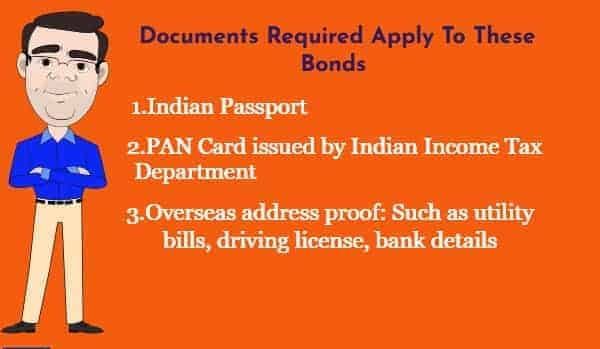
NRIs, including Persons of Indian Origin (PIOs) and OCIs, are eligible to buy tax-free bonds in the secondary market. The account requirements:

  • To buy on repatriable basis: Use an NRE demat account linked to an NRE bank account. Interest received can be freely repatriated.
  • To buy on non-repatriable basis: Use an NRO demat account linked to an NRO bank account. Repatriation of principal and interest from NRO accounts is subject to the $1 million annual limit with CA certification.

For most NRIs looking to park funds in India temporarily or generate tax-free income to support family expenses, the NRE route on repatriable basis is the more practical choice.

Tax treatment for NRIs on tax-free bonds

Interest income: Tax-free in India.

The interest earned on notified tax-free bonds is exempt from income tax in India under Section 10(15)(iv)(h) of the Income Tax Act – for both residents and NRIs. No TDS is deducted on the interest. This remains one of the few instruments where NRIs receive income in India without any tax deduction at source.

Important caveat: Tax-free in India does not mean tax-free globally. In the US, interest on NRE-held tax-free bonds may still be taxable as ordinary income. In the UK, it depends on residency and domicile status. Always check your home country’s tax treatment before investing.

Capital gains: Taxable, with TDS.

If you sell tax-free bonds in the secondary market before maturity, capital gains are taxable. TDS applies before the proceeds are credited.

  • Short-term capital gains (held under 12 months): Taxed at your income slab rate. TDS at 30%.
  • Long-term capital gains (held over 12 months): Taxed at 12.5% without indexation. TDS at 12.5%.

NRIs can claim DTAA (Double Tax Avoidance Agreement) benefit to reduce TDS if India has a treaty with their country of residence – this requires submitting a Tax Residency Certificate (TRC) and Form 10F to the selling broker or platform.

Tax free bonds NRI information

How to buy tax-free bonds as an NRI in 2026

The process is simpler than it used to be when primary issues required physical application at specific collection centres. Today:

  • Open an NRE or NRO demat account with a SEBI-registered broker (ICICI Direct, HDFC Securities, Zerodha, and others all support NRI accounts).
  • Search for NHAI, PFC, REC, HUDCO, or IRFC bonds on NSE/BSE by their ISIN codes, or browse on bond platforms like IndiaBonds, GoldenPi, or Wint Wealth.
  • Place a buy order for the quantity you want – minimum lot sizes vary but are typically Rs.1,000 face value per bond.
  • Check the YTM before buying, not just the coupon rate. The platform or your broker will show this.

Also read: Tax Planning for NRIs in India – Complete Guide FY 2025-26

Is it worth it for NRIs in 2026?

Tax-free bonds at current secondary market YTMs of 4.5 to 5.5% make sense for NRIs in specific situations. The interest is tax-free in India. For NRIs from UAE (no personal income tax), this is simply 4.5 to 5.5% risk-free income from a government-backed instrument. For NRIs from the US or UK where the income may be taxable in their home country, the net yield after home-country tax may narrow considerably.

The better question for most NRIs is: compared to what? NRE fixed deposits at 6.25 to 7.25% (also tax-free in India, also repatriable) are more liquid and currently offer better YTM than most tax-free bonds in the secondary market. For longer-duration exposure where YTM advantage over NRE FDs exists, tax-free bonds make sense. For shorter-duration parking, NRE FDs are usually better.

Thinking through your India investment allocation as an NRI?

Where to park funds in India – NRE FDs, tax-free bonds, debt funds, equity – depends on your time horizon, home country tax treatment, and repatriation plans. WiseNRI.com is built specifically for NRIs managing their India finances.

Visit WiseNRI.com

Frequently asked questions

Can NRIs invest in tax-free bonds in India in 2026?

Yes. NRIs can buy existing tax-free bonds through the secondary market on NSE/BSE or via online bond platforms. No new primary issues are available since the government stopped issuing fresh tax-free bonds in 2016. NRIs need an NRE or NRO demat account to buy.

Is interest on tax-free bonds taxable for NRIs?

The interest is exempt from income tax in India for both residents and NRIs – no TDS is deducted. However, this does not mean it is tax-free in your country of residence. NRIs in the US, UK, or Australia may need to declare this interest income there as per their local tax laws. Check with a tax advisor in your home country.

Should NRIs use NRE or NRO accounts to buy tax-free bonds?

For most NRIs using foreign income to invest, NRE is the better choice – the investment is on a repatriable basis, meaning both interest and principal can be freely transferred back to your overseas account. NRO accounts are more appropriate if you are using income earned in India (rental income, dividends) to buy the bonds.

Are capital gains on tax-free bonds taxable for NRIs?

Yes. Capital gains from selling tax-free bonds in the secondary market are taxable in India for NRIs. Short-term gains (under 12 months) are taxed at slab rate with 30% TDS. Long-term gains (over 12 months) are taxed at 12.5% with 12.5% TDS. NRIs can apply for reduced TDS under DTAA by submitting a Tax Residency Certificate (TRC) to their broker.

Are tax-free bonds better than NRE FDs for NRIs?

At current secondary market prices, NRE FDs (6.25 to 7.25% tax-free in India) offer better YTM than most tax-free bonds (4.5 to 5.5% YTM). NRE FDs are also more liquid. Tax-free bonds make more sense for longer durations where specific bond maturities align with your goals, or where you want to lock in a rate for 5 to 10+ years without reinvestment risk from FD rollovers.

Are you an NRI trying to figure out where to invest your India funds for tax-free income? Drop your question in the comments – I read every one.

Tax Free Bonds in India: A Complete Guide for HNI Investors (2026)

I remember the queues. December 2011. NHAI and PFC were offering tax-free bonds at 8.2-8.3% for 10-15 years, and HNI investors — senior professionals earning Rs. 30-50 lakh a year — were scrambling to subscribe before the issue closed. The effective pre-tax equivalent yield for a 30% bracket investor was close to 12%. Nothing came close.

That window is closed. New tax-free bonds have not been issued by the government since FY2016-17. But the story doesn’t end there.

If you already hold tax-free bonds from those years, this guide tells you what you have. If you want to buy some now, they’re available in the secondary market — and for an investor in the 30% bracket, the yields still make a compelling case. Here’s everything you need to know in 2026.

⚡ Quick Answer

New tax-free bonds have not been issued since 2016-17. Existing bonds from NHAI, PFC, REC, HUDCO, IRFC, and other PSUs trade actively in the secondary market on BSE/NSE. Interest is fully exempt from income tax regardless of your bracket — no TDS, no filing required. Capital gains on secondary market sale are taxable. For investors in the 30% bracket, these remain one of the most tax-efficient fixed-income instruments available.

What Are Tax-Free Bonds?

Tax-free bonds are debt instruments issued by government-backed PSUs (Public Sector Undertakings) where the interest income is fully exempt from income tax under Section 10(15)(iv)(h) of the Income Tax Act. This exemption applies regardless of your tax bracket, regardless of the amount of interest earned, and with no TDS deduction.

They are not to be confused with tax-saving instruments like PPF or ELSS, where you get a deduction on the investment. With tax-free bonds, there is no deduction on the principal. The benefit is entirely on the interest side — it is simply not taxable.

The bonds that were issued between 2011 and 2017 came from marquee PSUs: NHAI (National Highways Authority of India), PFC (Power Finance Corporation), REC (Rural Electrification Corporation), HUDCO (Housing and Urban Development Corporation), IRFC (Indian Railway Finance Corporation), NTPC, and NHB (National Housing Bank). All AAA-rated. All government-backed.

Tax-Free Bonds — Key Characteristics

Interest Tax

Zero

No TDS, no IT

Issuer Credit

AAA

Govt-backed PSUs

Liquidity

Listed

BSE and/or NSE

Interest Pay

Annual

Fixed coupon

The Secondary Market — Where You Buy Them Now

Since new issues stopped after 2016-17, the only way to invest in tax-free bonds today is through the secondary market — buying from existing holders via BSE or NSE. You need a demat account.

The secondary market price of a bond is not its face value. It moves inversely with interest rates. When market interest rates rise, existing bond prices fall — and the effective yield for a secondary market buyer improves. When rates fall, prices rise and yields compress.

In a rising rate environment (like we saw in 2022-23), secondary market tax-free bond yields improved significantly. Investors who bought at those prices locked in attractive effective yields. In a softening rate environment (which 2024-25 has seen), prices have risen and current yields are more moderate.

The key bonds to look for by ISIN on BSE/NSE: NHAI tax-free bonds (multiple series), PFC tax-free bonds, REC tax-free bonds, HUDCO bonds, IRFC bonds, and NTPC tax-free bonds. Maturities range from bonds that are already matured to those with remaining tenures through 2034.

💡 The Tax Advantage — What It Actually Means in 2026

A tax-free bond paying 6.5% coupon is equivalent to a taxable instrument yielding approximately 9.3% pre-tax for an investor in the 30% bracket. For a senior executive with Rs. 50 lakh in fixed income — this difference in effective yield matters enormously over a 10-year period. No FD, no corporate bond, no debt mutual fund gives you genuinely tax-free interest at this credit quality.

Tax Treatment — Fully Understood

Interest income: Completely tax-free. No TDS. No inclusion in total income. No need to declare separately in ITR (though it’s good practice to disclose in the exempt income schedule). This applies regardless of whether you receive Rs. 10,000 or Rs. 10 lakh in interest. The exemption is absolute under Section 10(15)(iv)(h).

Capital gains on secondary market sale: Fully taxable. If you buy in the secondary market and sell before maturity, any profit is a capital gain. As per Budget 2024 changes: short-term capital gains (held under 12 months) are taxed at your income slab rate; long-term capital gains (held over 12 months) are taxed at 12.5% without indexation benefit.

Capital gains at maturity: None. If you hold to maturity, the issuer redeems at face value. Since you may have bought at a premium or discount in the secondary market, you may book a capital gain or loss at that point — but if purchased at face value originally, there is no capital gain at maturity.

⚠️ Important 2024 Tax Change

Budget 2024 changed the LTCG rate for bonds from 10% to 12.5% (without indexation). This affects secondary market buyers who sell before maturity. If you’re planning to hold to maturity, this change doesn’t affect you. Verify current tax rates with your advisor before transacting — tax rules on debt instruments have been revised multiple times in recent years.

Who Should Consider Tax-Free Bonds?

The tax advantage only matters if you pay tax. Here’s the honest calculus:

30% bracket investors: Tax-free bonds are highly attractive. A 6.5% tax-free yield translates to a pre-tax equivalent of ~9.3%. This beats most AAA-rated taxable alternatives net of tax. For this bracket, tax-free bonds should be a serious consideration for the fixed-income portion of any retirement portfolio.

20% bracket investors: Moderately attractive. A 6.5% tax-free yield has a pre-tax equivalent of ~8.2%. Still competitive, particularly compared to bank FDs at the same credit quality.

Nil/5% bracket investors: The tax advantage largely disappears. The liquidity constraints and interest rate risk of bonds make them less suitable compared to simpler bank FDs or liquid funds.

The ideal buyer: A senior executive aged 50-65 in the 30% bracket, looking for predictable, genuinely tax-free annual income to fund part of their retirement cash flow. Tax-free bonds do one thing exceptionally well — they deliver fixed, tax-free annual income with near-zero credit risk for the full tenure.

Liquidity and Interest Rate Risk

Two risks that are often underestimated:

Liquidity risk: While these bonds are listed on exchanges, not all series are actively traded. NHAI and REC bonds tend to have better secondary market depth. Some HUDCO or smaller series may have thin volumes — meaning you may not be able to sell at a fair price quickly if you need funds. Do not invest money in tax-free bonds that you may need in the next 2-3 years.

Interest rate risk: If you buy in the secondary market at a premium (above face value) and rates subsequently rise, the market price of your bonds falls. This only matters if you sell before maturity. If you hold to maturity, you receive face value regardless of market price fluctuations along the way. Buy with the intention to hold to maturity.

Want to evaluate whether tax-free bonds belong in your retirement portfolio?

The answer depends on your tax bracket, your existing fixed-income allocation, and how much predictable annual income your retirement plan requires. A structured review takes 30 minutes.

Talk to a RetireWise Advisor

Frequently Asked Questions

Are new tax-free bonds being issued in India in 2026?

No. The government has not issued new tax-free bonds since FY2016-17. Existing bonds from NHAI, PFC, REC, HUDCO, IRFC, and other PSUs continue to trade in the secondary market on BSE and NSE.

How can I buy tax-free bonds in 2026?

Through the secondary market on BSE or NSE via your demat account — the same way you’d buy a listed equity share. Search for NHAI, PFC, REC, HUDCO, or IRFC bonds by ISIN or company name. Prices fluctuate daily, so check current yields before buying. Working with an advisor helps ensure you buy at a fair price relative to the yield curve.

What is the tax treatment of tax-free bonds?

Interest income is fully exempt under Section 10(15)(iv)(h) — no TDS, no income tax, regardless of amount or bracket. Capital gains on secondary market sale are taxable: short-term (under 12 months) at slab rates, long-term (over 12 months) at 12.5% without indexation as per Budget 2024. No capital gains if held to maturity and purchased at face value.

Are tax-free bonds better than FDs for a 30% bracket investor?

For a long-term, hold-to-maturity investor in the 30% bracket, yes — the effective post-tax yield of tax-free bonds is typically significantly higher than bank FDs at the same credit quality. A 6.5% tax-free coupon equals ~9.3% pre-tax equivalent. Most bank FDs don’t come close on a post-tax basis in the 30% bracket.

Which tax-free bonds are available in the secondary market?

NHAI, PFC, REC, HUDCO, IRFC, NTPC, and NHB bonds issued between 2011-2017 are available on BSE/NSE. Maturities range from already-matured to bonds running through 2034. NHAI and REC tend to have better secondary market liquidity. Always check current prices and remaining tenure before buying.

Tax-free bonds are not exciting. They don’t compound. They don’t grow. They just deliver fixed, genuinely tax-free income year after year — from a government-backed entity that cannot default on a rupee-denominated obligation.

For a senior executive building retirement income, boring is exactly what you need.

💬 Your Turn

Do you hold tax-free bonds from the 2011-2017 era? Are you considering buying in the secondary market? Share your situation below — or ask about how they compare to your current fixed-income alternatives.

Returns cannot be your Goals

In a seminar I was running for a group of young investors, I kept repeating one thing: define your financial goals before you pick any investment.

After the third time, a young man in the front row stood up. “Hemant, my goal is 30% returns per annum. Can you help me achieve that?”

The room laughed. I did not. Because that question comes up in every seminar, every client meeting, every WhatsApp group about investing. And it reveals a fundamental confusion about what investing is for.

Quick Answer

Returns are the means, not the goal. Your goal is your daughter’s college fees in 2031, or your retirement at 58, or your parents’ medical costs next year. The return is simply the rate at which your money needs to grow to get you there. Chasing returns without a goal is the most common – and most expensive – investing mistake in India.

Returns cannot be your Goals in investing

Why 30% returns is not a goal – it is a fantasy

Let me tell that young man something I should have said in the room.

Warren Buffett, the most successful investor in recorded history, has compounded at 24.7% per annum over 50+ years. If you had invested Rs.1 lakh with him 50 years ago, you would have Rs.621 crore today. That is what 24.7% compounded looks like.

At 30%, that Rs.1 lakh would have become closer to Rs.5,000 crore.

Buffett could not do it. The entire mutual fund industry in India cannot consistently do it. No SEBI-registered advisor can promise it. Anyone offering 30% guaranteed returns is either deluded or about to disappear with your money.

But here is the deeper point: even if 30% were achievable, it is still not a goal. It is a speed. And speed without a destination is just recklessness.

Returns are a by-product, not the objective

Think about how you keep money in a savings bank account. The return is 3 to 3.5% – the lowest of any financial instrument. And yet you keep money there, often even when you could earn more elsewhere.

Why? Because that money serves a goal: your emergency fund. Immediate liquidity matters more than returns for that particular purpose. The goal determines the right instrument – not the other way around.

This is how every investment decision should work. Start with the goal. Then choose the instrument that best serves that goal at the required level of return, risk, and time horizon.

The problem most Indians have is they start with the instrument. “I heard FDs are safe.” “My colleague doubled money in crypto.” “My uncle says gold never loses value.” Each of these may be partially true. But none of them starts with your goal. And investment without a goal is saving without purpose.

What defining a goal actually means

A goal has four components – not just a number.

1. The purpose: What is this money for? Child’s education, retirement income, home purchase, medical corpus, family vacation. Be specific.

2. The present cost: What does it cost today? If your child’s college fees are Rs.15 lakh at today’s rates, that is your starting point.

3. The inflation factor: How much will it cost when you need it? Education inflation in India runs at 10 to 12%. Rs.15 lakh today becomes roughly Rs.50 lakh in 12 years. That is the number you are actually saving for.

4. The required return: Given the time horizon, how much do you need to invest periodically to reach that amount? This calculation gives you the return you need – not the return you want. Often it is 10 to 12%, which equity has historically delivered in India over any 15-year period. Not 30%.

✅ A practical example

Goal: Child’s graduation in 15 years. Current cost: Rs.20 lakh. Inflation at 10%: Rs.84 lakh needed. Required monthly SIP at 12% returns: approximately Rs.14,000. The goal tells you exactly what return you need, what you must invest, and for how long. Without the goal, you are just hoping.

The dangerous behaviour of chasing returns

A DALBAR study on US equity markets found that average equity returns from 1991 to 2010 were 9.14% per annum. But what investors actually received was just 3.27%. The gap between what markets delivered and what investors kept was almost entirely due to one behaviour: chasing returns.

Investors bought when the market was high (exciting, everyone talking about it). They sold when it fell (panicking). They moved from fund to fund looking for whoever performed best last year. Each move cost them something – taxes, exit loads, timing losses.

The investor who simply bought a diversified equity index and held it for 20 years, without checking performance rankings, without switching, without chasing the next big thing – that investor kept the full 9.14%.

Goal-based investing protects you from this behaviour. When you know your child’s college fees need this corpus in exactly 11 years, you do not sell in a panic when the market drops 20%. You know the math. You stay invested. The goal becomes an anchor.

The investor without a goal is like a driver without a destination

You need speed to travel. But speed is not the point – arriving is. You can drive at 140 km/h in the wrong direction and end up further from home than when you started.

“An investor without investment objectives is like a traveller without a destination.”

At times, the best driving strategy is a mix of speed and caution. On highways, fast. Through school zones, slow. Similarly, a well-constructed portfolio uses equity for long-term goals where volatility is acceptable, and debt for short-term needs where capital protection matters more.

Keep your asset allocation tied to your goals, and you will not only reach your destination – you will get there with significantly less anxiety along the way.

Also read: How to Align Your Investments with Life Goals: The 5-Step Framework

Do you have a list of goals or a list of investments?

Most portfolios I review are a collection of products – LIC policies, FDs, random mutual funds – with no connection to specific life goals. A goal-based financial plan changes that. We map every investment to a specific outcome and timeline.

Book a Clarity Call

Frequently asked questions

What is a financial goal in investing?

A financial goal is a specific, time-bound purpose for your money – your child’s college fees in 2031, retirement income from age 60, a home purchase in 5 years, or a medical emergency corpus. It has a cost in today’s rupees, an inflation-adjusted future value, and a required investment amount. Returns are the rate at which your money needs to grow to reach the goal – not the goal itself.

What return should I target for long-term investing in India?

For long-term goals (10 to 20 years), Indian diversified equity funds have historically delivered 12 to 14% CAGR over any 15-year rolling period. For medium-term goals (3 to 7 years), a blended portfolio of equity and debt typically targets 8 to 10%. For short-term needs (1 to 3 years), debt instruments at 6 to 7% are more appropriate. The required return should come from your goal calculation, not from a target you picked arbitrarily.

Why do Indian investors underperform the market?

The primary reason is behaviour – buying high and selling low, chasing last year’s best fund, switching frequently, and exiting during market corrections. Studies show the gap between market returns and what investors actually receive is almost entirely explained by poor timing decisions driven by emotion, not analysis. Goal-based investing reduces this gap by giving you a reason to stay invested even when markets fall.

How do I start goal-based investing?

Start by listing your 3 to 5 most important financial goals with a timeline and current cost for each. Inflate each cost to its future value using a realistic inflation rate (7 to 12% depending on the goal type). Calculate the monthly SIP needed at a conservative expected return (10 to 12% for equity goals). Match each goal to an appropriate investment instrument. Review annually – not monthly. This simple process is more powerful than any fund selection strategy.

What is the financial goal you are currently investing for – and do you know exactly how much you need and when? Share it in the comments.