
Last Updated on April 8, 2026 by teamtfl
“The stock market is filled with individuals who know the price of everything but the value of nothing.” – Philip Fisher
I was reviewing a financial plan last year with a 48-year-old VP at a large IT company in Bangalore. Smart, well-read, diligent saver. We went through his portfolio systematically – mutual funds, PPF, NPS, FDs.
Then he mentioned, almost casually, that he had ESOPs.
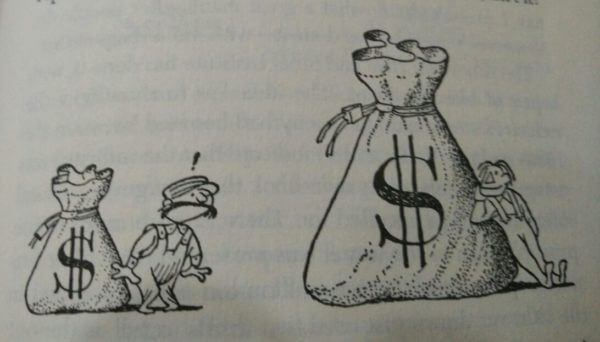
When we ran the numbers, the ESOPs were worth Rs 2.2 crore at current market price. His entire rest-of-portfolio was Rs 1.8 crore. He had unknowingly put 55% of his net worth in a single stock – his employer’s. The same company that paid his salary, determined his career, and controlled his professional future.
Nobody had ever helped him see this clearly. That is what this article is for.
⚡ Quick Answer
ESOPs (Employee Stock Option Plans) give you the right to buy company shares at a predetermined price after a vesting period. They can create significant wealth – but also dangerous concentration risk. When exercised, the gain is taxed as a perquisite (30%+ slab rate). On sale, capital gains tax applies. Most senior executives underestimate both the opportunity and the risk. A planned exercise-and-diversify strategy is almost always better than holding indefinitely.
What Are ESOPs – The Clear Definition
ESOP stands for Employee Stock Option Plan. When your company grants you ESOPs, you get the right – not the obligation – to buy a specified number of company shares at a predetermined price (the exercise price or strike price), after a certain period (the vesting period).
The structure typically looks like this: you are granted 3,000 shares today, vesting 1,000 per year over 3 years. After Year 1, you can buy 1,000 shares at the exercise price – say Rs 100. If the market price is Rs 250, you buy at Rs 100 and immediately hold shares worth Rs 250. The Rs 150 difference is your gain.
You do not have to exercise. If the market price falls below the exercise price, the options are “underwater” and you simply do not exercise. Your risk is zero on the option itself – though there is an opportunity cost if you held other assets instead.
✅ ESOP vs ESPS vs RSU – Key Differences
ESOP: Right to buy at a fixed price. You pay the exercise price when you buy.
ESPS (Employee Stock Purchase Scheme): Buy shares at a discount to market price via salary deductions.
RSU (Restricted Stock Unit): Company gives you shares free – no payment needed – when vesting conditions are met. Increasingly common in MNCs and startups.
ESOP Taxation in India – Step by Step
Tax on ESOPs has two stages. Most employees understand neither stage fully.
Stage 1: At Exercise (Perquisite Tax)
When you exercise your options and buy shares at the exercise price, the difference between the market value on the exercise date and the exercise price is treated as a perquisite – i.e., part of your salary income. It is taxed at your slab rate. For most senior executives, this means 30% + surcharge + cess. Effectively 35-42% depending on your income level.
Your employer deducts this as TDS. No choice there.
Stage 2: At Sale (Capital Gains Tax)
When you eventually sell the shares, capital gains tax applies on the profit from the exercise date market value (your cost basis) to the sale price.
| Scenario | Tax Treatment |
|---|---|
| Listed Indian shares sold within 12 months | STCG at 20% |
| Listed Indian shares sold after 12 months | LTCG at 12.5% above Rs 1.25 lakh |
| Unlisted shares (startups) sold within 24 months | STCG at slab rate |
| Unlisted shares sold after 24 months | LTCG at 12.5% without indexation |
| Foreign listed shares (MNC employees) | STCG at slab / LTCG at 12.5% (24 month threshold) |
Note: Tax rates updated for FY 2024-25 Budget changes. Always verify with your CA before exercising.
ESOPs are a significant part of your net worth. Are they in your retirement plan?
At RetireWise, we integrate ESOP exercise strategy into your retirement blueprint – timing, tax efficiency, and diversification. SEBI Registered. Fee-only.
The ESOP Concentration Trap – The Problem Nobody Tells You About
Here is the insight that most ESOP articles skip entirely.
Senior executives who receive ESOPs over many years tend to accumulate a large position in their employer’s stock. This happens gradually – 1,000 shares this year, 1,500 next year, a special grant after a promotion. Each grant feels like a bonus. Nobody steps back to look at the total picture.
The result, for many senior executives I have worked with, is that 40-60% of their investable net worth sits in a single stock – the one company they work for.
Ask yourself three questions about this company:
-
▶
Is this the single best stock in the Indian or global market right now? -
▶
If the company goes through a bad patch, what happens to both your job and your portfolio simultaneously? -
▶
Would you voluntarily invest 50% of your savings in this one stock if you did not work there?
The answer to all three is almost certainly no. Yet that is exactly the position many ESOP recipients find themselves in – not by design, but by drift.
THE RULE OF THUMB I USE WITH CLIENTS
No single stock should exceed 10% of your total investable net worth.
For employer stock specifically: 5% maximum, given the dual risk (income + wealth).
If your employer stock exceeds this: exercise, sell, diversify. Do it systematically to manage the tax impact. But do it.
Satyam employees learned this the hard way. Enron employees lost both their jobs and their retirement savings in the same week. These are extreme cases – but the principle is real. Double exposure (income + equity) to one entity is concentrated risk of the highest order.
“ESOPs are one of the most powerful wealth-creation tools available to senior executives. They are also one of the most dangerous – not because the options are risky, but because of what people do with them after vesting.”
– Hemant Beniwal, CFP, CTEP | Founder, RetireWise
A Practical ESOP Exercise Strategy
The zero-risk strategy: exercise as soon as the market price exceeds the exercise price significantly, sell immediately, and reinvest in a diversified portfolio. You lose potential upside but eliminate the double risk.
A more nuanced approach, which I use with clients:
Exercise and sell enough to bring employer stock below 10% of total net worth. Keep the rest vested – benefit from any further appreciation. Review after each new grant vests. This gives you participation in the upside while managing the concentration risk systematically.
On tax timing: if you have flexibility, spread exercises across financial years to avoid pushing your perquisite income into higher surcharge brackets. A CA familiar with ESOP taxation is worth their fee here.
Read next: 15 Types of Risk in Investment – Including Concentration Risk
Your ESOPs need a strategy, not just a tax calculator.
At RetireWise, we build ESOP exercise plans into your retirement blueprint – timed for tax efficiency and integrated with your full financial picture. SEBI Registered. Fee-only.
For every Infosys millionaire there are ten executives who held their employer stock too long, diversified too late, and watched concentrated wealth evaporate in a bad quarter. The ESOP itself is not the risk. The strategy – or the absence of one – is.
Exercise with a plan. Diversify with intent. Never let a tax bill stop you from doing the right thing.
💬 Your Turn
What percentage of your net worth sits in your employer’s stock right now? Have you run the concentration number? Share your experience with ESOPs below – I read every comment.
Hi,
Can anyone elaborate disadvantages of ESOP to companies towards raising funds?
Please elaborate on the taxability of perquisite value of ESOPs of an indian company and subsequent capital gains in the hands of a non resident.
Hi. I would like to know the taxability of perquisite value of ESOPs of an indian company exercised by a non resident and also the taxability of the subsequent capital gain arising from the sale of such shares.
How would it be different if the company is a foreign company?
One clarification required:
Taking an example: 1000 Esops granted @100 each on 01.01.2016
1000 Esops granted @ 200 on 01.01.2017
Exercised 1ts 1000 when the rate was 150. Rs 50 notional gain and perqs taxed accordingly
Exercised 2nd 1000 when the rate was 250. Rs 50 notional gain and perqs taxed accordingly
Now the rate is 225. and i am selling the 2000 shares @225, Total value Rs 4.5L. How the capital gains be calculated. Whether it will be on average rate or the transaction based.
1. Average rate exercised Rs 200.00 * 2000 = 400000. Rs 50,000 as capital gains will be taxed?
2. a. 1000 shares exercised @150 = 150000 is selling at 225000.00. Rs 75000 as capital gains will be taxed?
b. 1000 shares exercised @250 = 250000 is selling at 225000.00. NO capital gain rather LOSS is there.
Please guide
Hemant,
Could you please elaborate on the capital gains on sale of ESOPs of a company that is listed abroad. Are there any exemptions or investment avenues to avoid the LTCG
regards
Interesting point you make there Hemant. However, when ESOPs are granted at a discount to the market price, employees are being taxed for the ‘perquisite’ value (Market value – grant price). Why is this so?
1. Can an employee be asked to pay a tax on a notional earning? And;
2. If later, by some business dynamic the market value trades below the Grant value then isn’t the employee at a loss?
Hi Jayant,
Employees are being taxed for the perquisite value because it’s a kind of additional earning.
1.It’s the right to convert the ESOP to share & no one is stopping you to sell it immediately.
2. Yes employee at a loss if the market value trades below the grant price.But it would be considered notional loss until he sell his shares below grant price. But once you have the shares & it’s your risk.
If I purchased ESOP shares
1000 @ ₹1000 on Oct.16
500 @ ₹1200 on Nov .16
500 @₹1500 on Dec.16
Out of it I sale 1700 on Feb.17
Then how the tax calculate. Plz tell