

Last Updated on April 24, 2026 by teamtfl
“Which is the best ELSS fund right now?”
I get this question every January and February when the tax-saving rush begins. And my answer has not changed in 25 years: “Best is a word that belongs in an obituary, not in fund selection.”
Best comes after postmortem. Today’s best fund is tomorrow’s average fund. Chasing it is one of the most reliably wealth-destroying habits in Indian investing.
But the question behind the question – should I use ELSS for tax saving, how much should I invest, and how do I choose – those deserve a proper answer.
Quick Answer
ELSS (Equity Linked Saving Scheme) is the best tax-saving instrument under Section 80C if you are on the old tax regime – shorter 3-year lock-in than PPF or NPS, equity returns potential, and LTCG treatment on maturity. Under the new tax regime (now the default), Section 80C deductions do not apply. Choose ELSS for tax saving only if you are filing under the old regime.
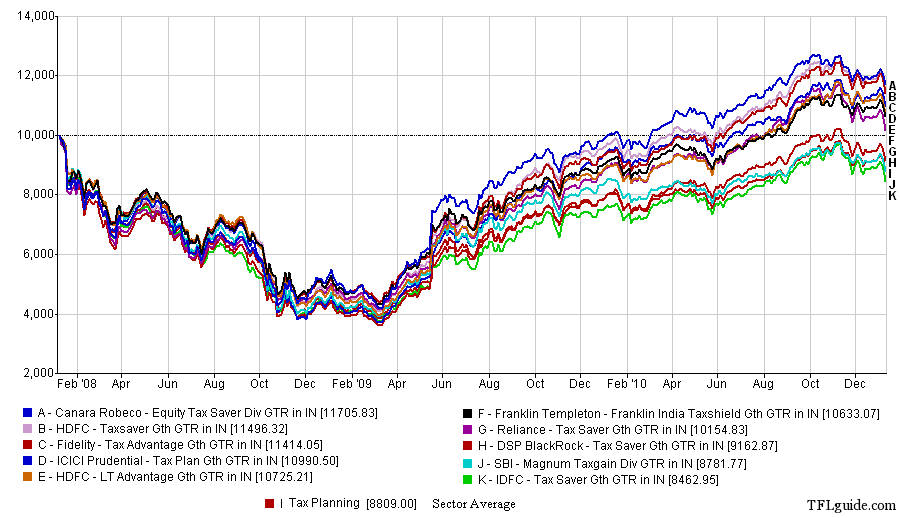
What ELSS is – and why the 3-year lock-in is actually useful
ELSS funds are equity mutual funds with a mandatory 3-year lock-in. Investments up to Rs.1.5 lakh per year qualify for deduction under Section 80C of the Income Tax Act – but only under the old tax regime.
The 3-year lock-in is often presented as a disadvantage. I think of it as a feature. Most investors who lose money in equity do so because they panic and exit after 12 to 18 months. The lock-in forces patience. And in equity, patience is almost always rewarded.
Look at the 3-year rolling return chart above. The negative periods are those where investments were made at the peak of a bull market – notably around the time of the Harshad Mehta scam in 1992-93. In normal circumstances, 3 years in equity has delivered positive returns in the overwhelming majority of rolling periods.
5-year rolling returns – and what they show
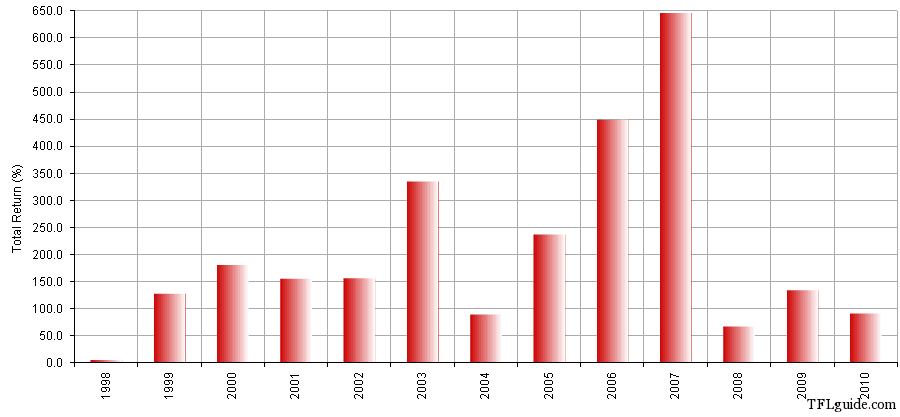
Over any 5-year period, ELSS funds have delivered positive returns without exception – with the worst 5-year period (around 1998, attributed to the aftermath of the Harshad Mehta years) still close to breakeven. The average 5-year return has historically been well above 100% absolute gain – meaning money roughly doubled over 5 years.
Two lessons from the rolling return data:
First, extending your holding period from 3 to 5 years significantly reduces volatility. The range of outcomes narrows dramatically.
Second, the best 5-year returns came right after the worst single-year returns. The investors who stayed or added more during bad years captured the subsequent recovery. The ones who stopped their SIPs in fear missed it.
Why “which is the best ELSS?” is the wrong question
Here is what happens when investors chase the best ELSS: they buy whoever performed best last year. That fund typically had a concentrated or aggressive portfolio that paid off in the previous cycle. The following year, that portfolio often underperforms as market leadership rotates.
The DALBAR study on US markets showed average equity returns of 9.14% per year from 1991 to 2010 – but what investors actually received was 3.27%. The gap was entirely created by switching in and out, chasing performance.
A consistent, average ELSS fund held for 8 to 10 years will almost always beat the investor who rotates between “best” funds every 3 years. Switching creates new lock-in periods, capital gains events, and emotional anchoring to recent performance rather than long-term fundamentals.
What actually matters in ELSS selection
If performance ranking is not the right filter, what is?
Fund house track record: Choose a fund managed by an AMC with a long history and consistent investment philosophy. DSP, Mirae, Axis, HDFC, SBI, Nippon – these are established names. Avoid smaller AMCs with short track records for your primary tax-saving investment.
Consistent process, not peak performance: Look for funds that have stayed within 10 to 15% of their benchmark over 5-year rolling periods – not ones that shot the lights out one year and lagged by 20% the next. Consistency beats brilliance over 10-year horizons.
Expense ratio: A difference of 0.5% per year in expense ratio compounds to roughly 5 to 6% lower corpus over 10 years. All else equal, lower-cost funds win over time.
Tax regime check: As of FY 2025-26, the new tax regime is the default and does not allow Section 80C deductions. If you are on the new regime, ELSS has no tax-saving advantage – though it remains a perfectly good equity fund with a 3-year lock-in.
ELSS and the new tax regime – important update
The new income tax regime (default from FY 2023-24) does not allow Section 80C deductions. If you are filing under the new regime, investing in ELSS does not reduce your taxable income. The only remaining advantage is equity exposure with a 3-year lock-in – which you can get from any equity fund. Review which regime you are filing under before making ELSS investments for tax saving.
ELSS vs PPF for tax saving under old regime
The comparison most people get wrong:
PPF gives 7.1% tax-free returns with a 15-year lock-in. ELSS has given 12 to 14% CAGR over 15-year periods historically, also with LTCG treatment (12.5% on gains above Rs.1.25 lakh) after the 3-year mandatory lock-in.
For investors with a 10 to 15 year horizon who can tolerate equity volatility, ELSS has historically delivered a significantly better outcome than PPF. For risk-averse investors or those within 3 to 5 years of needing the money, PPF is the safer choice.
The right answer for most investors: use both. PPF for the conservative, guaranteed portion. ELSS for the growth portion. Together they cover the Rs.1.5 lakh 80C limit with a sensible risk allocation.
Also read: Tax Saving Guide for FY 2025-26: Honest Answers to Common Questions
Not sure which tax regime works better for you?
The choice between old and new tax regime depends on your deductions, HRA, home loan, and total income. We help clients make this calculation as part of annual tax planning – it often saves Rs.50,000 to 1,50,000 per year once done properly.
Frequently asked questions
Is ELSS still useful under the new tax regime in FY 2025-26?
Not for tax saving. The new tax regime does not allow Section 80C deductions, so ELSS investments do not reduce your taxable income under it. ELSS is still a valid equity mutual fund with a 3-year lock-in, but the tax advantage only applies if you opt for the old tax regime when filing your ITR.
What is the minimum lock-in period for ELSS?
3 years from the date of investment. Each SIP instalment has its own 3-year lock-in from that instalment’s date. So if you start a monthly SIP, units purchased in April 2025 become available in April 2028, units from May 2025 become available in May 2028, and so on. You cannot redeem all units at once after 3 years unless all instalments are at least 3 years old.
How are ELSS returns taxed?
ELSS gains are taxed as Long-Term Capital Gains (LTCG) since the mandatory lock-in ensures all redemptions are held for over 12 months. LTCG on equity funds is taxed at 12.5% on gains exceeding Rs.1.25 lakh in a financial year. Gains up to Rs.1.25 lakh are exempt. No indexation benefit is available.
How much should I invest in ELSS?
The maximum Section 80C deduction is Rs.1.5 lakh per financial year across all eligible instruments (ELSS, PPF, LIC premium, EPF, home loan principal, etc.). ELSS should form the equity portion of this allocation. If you are already contributing to EPF, calculate the balance available for ELSS. A monthly SIP of Rs.5,000 to 12,500 covers Rs.60,000 to 1.5 lakh annually.
Should I choose ELSS or PPF for Section 80C?
Both serve different purposes. PPF at 7.1% is guaranteed, tax-free, and appropriate for conservative investors or money you need with certainty. ELSS carries equity risk but has historically delivered 12 to 14% CAGR over 10 to 15 year periods. For most working professionals with a long horizon, a combination of both makes sense – PPF for stability, ELSS for growth. The ratio depends on your risk tolerance and how many years you have until you need the money.
Are you investing in ELSS under the old regime or the new one? Have you compared both regimes this year? Drop your question in the comments.
Hi, Hemanth!
Is it okay to invest in a scheme that has not rated been rated by CRISIL, if it is from a reputed fund house?
Hi Hemant,
This article was very useful. I am very new to mutual funds. I want to invest Rs. 2000 pm in ELSS SIP. Can you please suggest which fund should I opt for?
Please suggest.
Thanks and regards,
Abhishek
Hi Hemanth,
I had invested in HDFC Tax Saver and SBI Magnum Tax Saving mutual funds in SIP mode in the FY Year 2008-09. Could you please let me know as per your opinion when is the best time to redeem it as it has already passed the 3 year lock-in period.
Hi Abhi,
When you achieve your objective that’s the best time to redeem any mutual fund.
Dear Sir
I have invested 40 thousand in LIC, AND 60 thousand in PPF, I want t0 invest in mutual funds also. Should i shift the money from PPF to ELLS mutual fund or should i take separate mutual funds. What is the advantage of pure equity mutual fund vs ELSS
Dear Vishwanath,
PPF and ELSS are both different instruments having their risk return characteristics. PPF is a recommended tool for long term planning and so not advisable to discontinue. ELSS is good wrt the returns it generate from equity markets. However, you should be very clear before investing as unlike PPF the product has its higher risk return characteristics.
ELSS is a very specific category created for 80C investments and so it has a locking for three years while in any open ended mutual fund sale/repurchase option is available throughout the year.
Hi Hemanth,
My age is 30 years, I would like to invest 5k per month through SIP in ELSS for long term at least for 10 years. Could you please specify the best funds to invest which gives good returns in long term.
Thanks in Advance
Hello sir,
I m start my SIP in Tarus tax shild growth plain 500/m, HDFC tax sever 500/m,ICICIprudential tax plan 1000/m & reliance gold seveing fund 1000/m from april 2012. please guide me about my portfolio is it right or my change in this
Thanks
sir i have the following mutual fund investment:
all sips-
birla mnc -1000,hdfc midcap-2000,sbi emerging bussiness-2000
icici fmcg -1000,sbi fmcg-1000,reliance banking -2000
can robecoinfrastructure-3000
icici focc bluchip-2000, uti opp -2000
icici tax saver-3000, hdfc tax saver-3000
please analyse my portfolio and give your valuble comments… i am expecting 15% returns in 15 years.
hello hemant
could you please suggest me some elss funds for tax saving advantage.
Dear Sir
I want to invest in ELSS via SIP from April2012. I don’t have any investments yet in ELSS. Should I start with it now? whether SIP is better or lumpsum, in ELSS?
Please guide.
Thank You
phew
budget is out …waiting for ur insights and outputs
what i get it is that ELSS will continue its benefits and 20000 infrabonds additional will be out.
please clarify two doubts:
Will infrabonds shut down now…with no takers and what to do if already i have taken for 2011-12..will i be affected
ELSS v/s regular MF…apart from tax saving aspect, is there any differnce in performance, returns…
.if we have good MF by SIP , should I go for ELSS or seek other options
thanks
Hi Seenu,
There is no change in ELSS & infrabonds.
Thanks Hemant
As per TOI(17 mar) infrabonds 20000 under 80 ccf removed. Please give ur expert opinion.
As regards the other question, since ELSS would continue, and I have regular SIP in mutual funds, should I take ELSS or not
Thank you
sir
pls suggest me for a SIP for 10-15 yrs,as of now i have no SIP.
Hi Hemanth,
I have taken Idfc Tax Adv (elss) Fund – Gr with Amount of Rs 30K in Jan 11. How is this perfromimg? How much returns I may expect after 3 years & 5 years on this as I am planning to inevets around 30K MF this year also?
Regards,
Kamati
Please respond to questions asked above like, will i get Taxbenifit if i start investing in ELSS from this month for 3 yrs though DTC comes into effect from April
Hi Phani,
Will suggest you to read this article
https://www.retirewise.in/2011/11/elss-after-new-direct-tax-code-dtc.html
Hi Hemant
I have invested in Fidelity Advantage Tax Fund. As per current news, fidelity AMC is selling its India business, so what should be our move?
Either to continue with investments in Fidelity Advantage Tax Fund or to stop the future investments in fidelty funds?
Hi Vikrant,
There is no need to panic & sell this fund. Its not like stocks that company is selling down 🙂
Lets see are they really selling it, are there any fund management changes & who is the buyer. We will see all these things happening over a period of time & if required you can take any action.
I am very new to MF . Thinking to invest in SBI emerging business (Rs 3000) and SBI Magnum Income fund ( Rs 3000) per month on a SIP basis .Please advice .
Dear friend,
your Blog very useful..first of all..I started my ELSS from this month in two ELSS plans namely HDFC tax gainer and Fidelty Tax advantage..each rs.2000 per month ..But I have doubt,what happens If government stops ELSS in the following financial Year wef 01.04.2012because of DTC?how to proceed with these plans..?thank you.
with regards…
Dr.ramesh..
Hi friend,
I would like to invest 3000 per month in Elss.Please suggest me best option for this.I have to save my tax as well as buy house after 3 years.
Pls reply soon…. Thanks sanjeev
Hi friend,
I Planned to invest in fidelity Tax advantage through SIP(monthly 5000rs) but I have doubt,after march 31,how to proceed with this ELSS since it wont be useful for next year Tax saving because of DTC..can You explain me…?Thank you,Dr.ramesh.
Hi Hemanth,
As suggested by you i have opened a PPF account and invested 20% in PPF.Remaining 80% i would like to invest in ELSS mutual fund.I would also like to start SIP mutual fund from coming month 5000 per month.I am starting both of these for long term investment(min 5 years).Please have a look at my portfolios.
For ELSS mutual funds(50000)
1.Fidelity Tax advantage(20000)
2.Franklin Templeton franklin india taxshield(20000)
3.HDFC tax saver(10000)
Portfolio for SIP(5000 per month)
1. DSP BlackRock Top 100 Equity(2000)
2. HDFC Top 200(2000)
3. Quantum Long Term Equity(1000)
My Demat will be ready by tomorrow.So before starting i would like to take your suggestion as this is the first time i am trading mutual funds.Please suggest, if there should be any additions/deletions for the above portfolios.
Thanks in advance.
dear sir if i shift my div. eq mf units to elss of same amc can i claim ded u/s 80 c? regards amish
Hi Amish,
Definitely you can do this 🙂
I have a question regarding ELSS, Suppose I have a folio of ELSS mutual fund on my spouse name and I pay to buy the units. Can I claim this on my 80c ? or it will be my spouse 80c.
Hi Ankur,
You can’t claim this for your 80 C.
Hi Hemanth,
I came to know about TFL only recently just one week back while googling.I almost went through all of your blogs.Its all very informative and quite intresting.Only thorugh TFL i learnt about ELSS and SIP mutual funds.Keep up the good work.
I have a question.I haven’t done any investment plans this year(2011-2012).So under 80c my taxable income is 70000(after deducing PF contribution). So, i am planning to invest in ELSS. Could you please suggest me whether it is fine to invest whole of this amount in ELSS or do i need to split the amount for some other investment.If ELSS which one do i need to opt for 70000.Please suggest.
Hi Sunitha,
You can split your investment between PPF & ELSS.
Hi Prasanth
I am not aware of any bank which gives annual interest of 15%. Please read the post-Best Mutual Fund For SIP.
Hi Hemant,
I have some 2 L Rupees, I am planning to invest this on bank (Local Source) I will get 15% interest on every year. so after 7 years it will be double.
Another I want to save rs 10000 every month in PPF or RD or after read this website i would like to know more on mutual Funds and how to invest this in MF or PPF
for the above 2 L as well I need to know do I have any other option to invest.
Thanks
You could as well as look at Muthoot NCD which would also give the same return with the added benefit of Liquidty through its Listing
HI, Hemant,
Surprised that there is no Religare Tax Plan here.
How come you missed that???
I hope not just because that is from a small AMC, you have skipped it….
Hi Srikanth,
You are right. My list was not of best performing funds – its just a random list.
Hi Srikant
No doubt Religare Tax Plan is a highly rated fund. It is not possible for anyone to cover all the fund houses. Some criteria has to be used while selecting fund houses.
Hi Hemant
It is good that you have provided links to your post- Secret Of Achieving High Returns as well as Manshu’s post-Which is the best place to invest?
Although I had gone through these posts earlier, I read these posts again and found them very useful.
You have rightly mentioned that there is no best investment or plan. Having correct asset allocation is the key.
Investing is a dynamic process and it is not one time activity. Monitoring all asset classes in your portfolio regularly and rebalancing is important.
Dear Anil,
“You have rightly mentioned that there is no best investment or plan. Having correct asset allocation is the key.
Investing is a dynamic process and it is not one time activity. Monitoring all asset classes in your portfolio regularly and rebalancing is important.”
I don’t know why people don’t understand this – even you have contributed an article which speaks about a process to select funds “Best MF for SIP” – but I think this has not solved any purpose. Still people need spoon feeding or instant gratification. 🙁