
Last Updated on April 22, 2026 by Hemant Beniwal
“Be fearful when others are greedy, and greedy when others are fearful.” – Warren Buffett
In March 2020, the Sensex fell 38% in 40 days. I had clients calling me in a panic. One wanted to redeem everything. Another wanted to stop all SIPs. A third was convinced the market would go to zero.
None of them did any of those things. By December 2020, their portfolios had fully recovered. By December 2021, they had significant gains above pre-crash levels.
Economic crises feel catastrophic while they are happening. For the long-term investor who stays rational, they are something else entirely.
⚡ Quick Answer
Economic crises offer three genuine benefits to long-term investors: they create buying opportunities at discounted prices, they force better personal finance habits (budgeting, emergency funds, reduced discretionary spending), and they teach the single most important investing skill – staying in the market through volatility. The investors who benefit most from crises are those who prepare before one arrives, not those who react after.
What an Economic Crisis Actually Does
An economic crisis reduces business activity, employment, and consumer spending simultaneously. Asset prices fall – sometimes sharply. Sentiment turns negative. News coverage amplifies the fear. Most people respond by doing the worst possible thing: selling.
The 2008 global financial crisis, the 2013 taper tantrum, the 2016 demonetisation shock, the 2020 COVID crash, the 2022 rate-hike correction – every one of these felt like permanent damage at the time. Every one of them recovered. The investors who benefited from the recovery were those who either stayed invested or added at lower prices.
This is not hindsight optimism. It is the documented pattern of every market downturn in history. Markets have always recovered – the only variable is how long the recovery takes.
Benefit 1: A Genuine Buying Opportunity
When markets fall 30-40%, you are buying the same companies – the same earnings power, the same management, the same products – at a 30-40% discount to last month’s price. For a long-term investor with a 10-15 year horizon, this is not a risk. It is an opportunity.
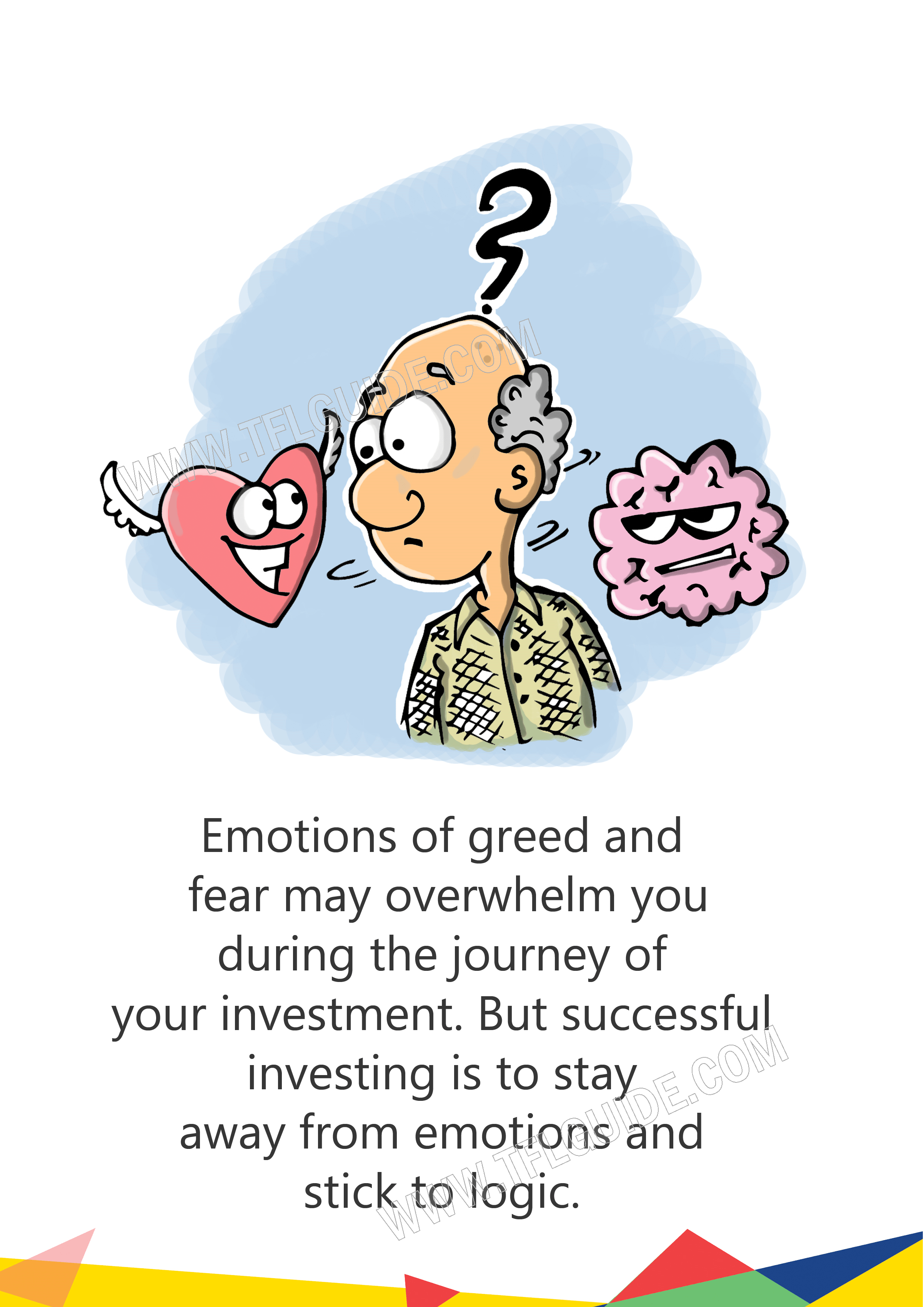
The challenge is emotional. Everything in the environment during a crisis says “sell.” The news is negative. Your portfolio is down. Your colleagues are anxious. The brain’s loss aversion mechanism – which makes losses feel twice as painful as equivalent gains feel pleasant – screams that you should exit.
The investors who continue their SIPs through a crash are not being reckless. They are systematically buying more units at lower prices. When the market recovers, those cheaper units produce outsized returns. This is rupee cost averaging working exactly as designed.
The next crisis will arrive. Is your plan built to survive it?
RetireWise builds retirement plans with stress tests that show exactly what happens to your corpus under a 30%, 40%, or 50% market fall – so you know in advance whether your plan holds.
Benefit 2: Better Personal Finance Habits
A crisis forces clarity about what is essential. Discretionary spending that felt non-negotiable suddenly becomes obviously cuttable. Lifestyle inflation that had crept in quietly gets reversed. The difference between needs and wants – blurred in good times – becomes very sharp very fast.
This enforced discipline has a lasting effect. Many investors who built strong financial habits did so because a crisis forced them to. The 2008 crash converted a generation of leveraged investors into cautious accumulators. The 2020 crash showed a generation of young professionals what a genuine market fall looked like – and many of them doubled their SIPs in the recovery because they had seen that crashes are not permanent.
The emergency fund, often dismissed as unnecessary during good times, becomes urgently real during a crisis. The investor who had 9 months of expenses in a liquid account during the 2020 lockdown had choices. The investor with 2 months had fear.
Benefit 3: The Most Important Investing Lesson You Can Learn
Nobody becomes a great long-term investor without surviving a crisis with their money still in the market. Reading about market volatility is abstract. Experiencing it – watching a portfolio you have built over years drop 30% in a month – teaches the skill in a way no book can.
The investors who stay through a crisis learn that the newspaper’s description of financial Armageddon and the eventual outcome of their portfolio are two very different things. They develop the emotional memory that says “I have been here before. It recovered. This will too.”
That memory – earned through experience, not theory – is arguably the most valuable asset a long-term investor can have.
The critical caveat: these benefits apply only to investors with the right structure in place before the crisis hits. Adequate emergency fund. Term insurance. Appropriate asset allocation. Debt levels low enough that they do not need to liquidate investments to meet expenses. Without that structure, a crisis is genuinely destructive – not an opportunity.
Read: Does Loss Aversion Affect My Finances? Two Nobel Laureates Say Yes
The investors who benefit from crises are not the ones who predicted them. They are the ones who were prepared for them – and stayed rational when everyone else did not.
Focus on your long-term plan. Not on the crisis du jour.
Good investors do not predict crises. They prepare for them.
A 30-minute conversation can show you whether your retirement plan has the resilience to survive – and benefit from – the next one.
Your Turn
Which crisis hit your portfolio hardest – and what did you do? Stay, sell, or add? And looking back, was that the right call? Share in the comments.
Hello, sir, I want to open a SIP between Rs. 1000 to 2000. which is the best SIP in 2017?. Also I will be investing 2-3 more SIP’s within 6-8 months for long term investment (at least 5-10 year). So please suggest me 2 lists of 4 top performing SIP’s, one for tax saving SIP and other non tax saving. Please suggest 2 different list. My risk appetite is moderate to high. Can stay invested for 15- 20 yrs.(Age-27 yrs).
Thanking you.