
Last Updated on April 5, 2026 by teamtfl
Suresh (name changed) sat across from me in 2019 with a spreadsheet that would make any CA proud. Every cell filled. Every formula linked. His retirement plan at 60 was, on paper, flawless.
He was forced out at 56. A “restructuring,” they called it.
His wife needed a knee replacement that same year. Their son’s wedding was pushed up. And suddenly, that perfect spreadsheet had a ₹38 lakh hole in it.
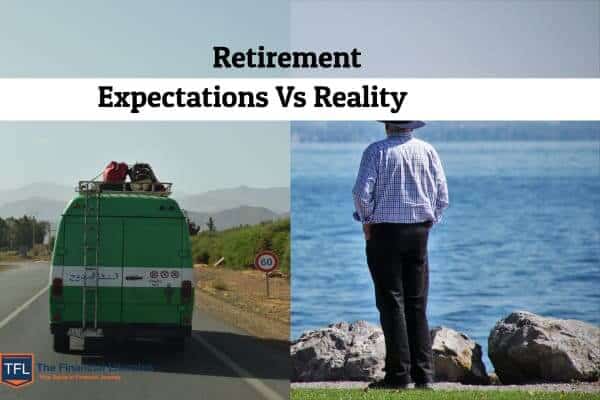
I’ve been a financial planner for over 18 years now. And if there’s one pattern I see again and again — it’s this: retirement expectations and retirement reality are almost never the same thing.

What follows isn’t a list of tips. It’s a reality check — eight expectations most Indians carry about retirement, each tested against what actually happens. Some will surprise you. Some might sting.
“The biggest risk in retirement isn’t bad markets. It’s the gap between the life you imagined and the life that shows up.”
— Hemant Beniwal
Let’s test your expectations against reality.
EXPECTATION #1
“I’ll retire at 60, on my terms.”
❌ VERDICT: FALSE
Most people don’t choose when they retire. Life chooses for them.
Research consistently shows that 35-40% of employees are pushed into early retirement — through layoffs, health issues, or the need to care for a family member. The “expected” retirement age is 60-64, but the actual average is 56-60. In India, where job security after 50 is a polite fiction in the private sector, this gap is even wider. Suresh’s story isn’t unusual. It’s the norm.
EXPECTATION #2
“My retirement savings will be enough.”
❌ VERDICT: FALSE
People underestimate their corpus needs by 23% to 40% — and that’s the optimistic group.
A 2025 survey found that 63% of Indians expect their retirement savings to last less than 10 years. Let that sink in. India’s total retirement savings gap is growing at 10% annually and could hit $96 trillion by 2050. And in the 2024 Mercer Global Pension Index, India ranked dead last — 48th out of 48 countries. Only 40% of working people can even calculate how much they’ll need. Among those who can, more than half haven’t saved enough to reach that number. The math is against you — unless you act early.
EXPECTATION #3
“I’ll work part-time after retiring. Easy.”
❌ VERDICT: FALSE
75% plan to work after retiring. Only 12% actually do.
This is perhaps the cruelest expectation. Three out of four working professionals assume they’ll earn something after retirement — consulting, freelancing, a small business. But surveys show only 12% of retirees actually work — 5% full-time, 7% part-time. The rest couldn’t find work, or their health didn’t allow it. I’ve had clients tell me, “Hemant, main toh consulting karunga.” When I ask them to find even one paying client today, the silence is telling. If your retirement plan depends on post-retirement income, you don’t have a retirement plan. You have a hope.
Not sure if your retirement plan can survive reality?
A proper retirement plan accounts for what goes wrong — not just what goes right.
EXPECTATION #4
“My pension will replace most of my salary.”
❌ VERDICT: FALSE
Even where pensions exist, the replacement rate is only 50-55% — and most Indians have no pension at all.
Global data shows salaried retirees receive about 50-55% of their last drawn salary as pension — a gap of at least 13% from what they expected. But here’s what makes India different: over 90% of the Indian workforce is in the unorganized or gig sector with zero pension coverage. No EPF. No gratuity. No employer contribution. If you’re in the private sector, your “pension” is whatever you’ve saved in NPS, mutual funds, and FDs. That’s it. You are your own pension fund.
EXPECTATION #5
“My lifestyle won’t change. I’ll enjoy the same — maybe even better.”
⚠️ VERDICT: PARTIALLY TRUE
Your lifestyle will change — but not in the way you’re imagining.
Some expenses drop — children’s education, EMIs, commuting costs. But others rise sharply. Medical expenses climb every year after 60. The things you’ll spend most on — healthcare, domestic help, property maintenance — inflate faster than the things you spend less on. One of my clients, Meera (name changed), told me in her first year of retirement: “I’m spending less on clothes and restaurants, but more on medicines and physiotherapy. The net is exactly the same.” The smart retirees plan for expense rebalancing, not expense reduction. Your spending changes shape. It doesn’t disappear.
EXPECTATION #6
“My health insurance has me covered.”
❌ VERDICT: FALSE
Health insurance covers the hospital bill. It doesn’t cover being old.
Your mediclaim will pay for a surgery or hospitalization. It will NOT pay for the auto-rickshaw to the doctor every week. It won’t cover the ayurvedic treatment your spouse swears by. It won’t pay for the full-time help you need after a hip replacement. Most policies bought in your 30s have co-pay clauses and deductibles that feel small then but hurt at 65. And here’s the kicker — many retirees chose lower premiums over better features when they were younger. That decision comes back to haunt them. Get your health cover reviewed while you’re still healthy enough to upgrade.
EXPECTATION #7
“I know roughly how long I’ll live. My plan accounts for it.”
❌ VERDICT: FALSE
Half of retirees underestimate their lifespan by 2+ years. A quarter get it wrong by 6+ years.
India’s life expectancy is now 70.82 years (2025) and climbing — projected to reach 72 for men and 75.7 for women by 2030. But that’s an average. If you’re a healthy 60-year-old urban professional reading this, your individual life expectancy is likely 80-85. Plan for 30 years of retirement? Your corpus has to last through three decades of inflation, medical escalation, and changing needs. Most people plan for 20 years. Life gives them 28. That’s 8 years of running on empty. Think ₹1 crore is enough? It often isn’t.
“Planning for retirement is not about predicting the future. It’s about building a life that works even when the future doesn’t cooperate.”
— Hemant Beniwal
EXPECTATION #8
“I’ll manage somehow. Downsize if needed.”
⚠️ VERDICT: PARTIALLY TRUE
You can downsize your house. You can’t downsize your dignity.
Yes, you can sell the big house, move to a smaller city, cut discretionary spending. Retirees who run out of buffer do exactly this — reduce their lives to rent, utilities, medicines, food, and basic transport. But here’s what nobody tells you: the emotional cost of downsizing is brutal. Leaving a home where your children grew up. Depending on them financially after a lifetime of independence. I’ve sat with retirees who cry — not because they’re poor, but because they feel they’ve become a burden. A retirement plan isn’t about avoiding poverty. It’s about preserving choice. The freedom to say yes to a grandchild’s birthday trip. The ability to say “I’ll handle it” when the medical bill arrives. That’s what a proper savings plan protects.
So What Do You Actually Do?
Here’s what I tell every client who’s just had their expectations reality-checked:
Start now — not at 55. The biggest advantage in retirement planning isn’t a higher return. It’s time. Even 5 extra years of compounding changes everything. If you’re reading this in your 30s or 40s, you have the one resource retirees would trade everything for.
Build for the worst case. Plan for 30 years of retirement, not 20. Assume inflation at 7%, not 5%. Assume healthcare costs doubling every 8 years, not 12. If the worst case doesn’t happen, you’ll be pleasantly surprised. If it does, you’ll be prepared.
Get your health insurance reviewed. Not next year. Now. Every year you delay, the premiums go up and the options shrink. The right health cover bought at 45 costs half of what it costs at 55.
Don’t plan alone. A retirement plan built in isolation misses what you can’t see — longevity risk, inflation drag, sequence-of-return risk, the emotional cost of outliving your corpus. Work with someone who’s seen hundreds of retirements — the messy ones, not just the textbook ones.
Review the tax benefits available to you. Senior citizens now get up to ₹1 lakh deduction on interest income under Section 80TTB (increased in Budget 2025). NPS offers additional tax advantages. These small edges compound over decades.
Every expectation in this post was held by someone who thought they had a plan.
Let’s build one that accounts for what actually happens — not just what you hope will happen.
Suresh’s spreadsheet was beautiful. Life didn’t care. What saved him wasn’t the spreadsheet — it was the buffer we’d built for the scenarios he didn’t want to imagine.
The gap between expectation and reality? That’s exactly where planning lives.
💬 Your Turn
Which of these 8 expectations hit closest to home for you? And what’s the one thing about retirement that surprised you most — either from your own experience or from watching your parents? Share in the comments.