
Last Updated on July 13, 2026 by Hemant Beniwal
A few days ago, a friend called me. He did not want to chat. He wanted the phone number of the caretaker who had helped us during the last days of my grandmother, when she was bedridden. His mother has been fighting cancer for over a year. Despite the best treatment money could buy, the doctors have quietly told the family that the chances of her surviving the next twelve months are very low. For a year, the whole family has organised itself around her care. Now she can no longer move, and everything, all of it, will have to happen in bed.
I gave him the number. And then I sat with the phone in my hand for a while, because I knew exactly what was coming for him. Not the grief. That is its own thing. I mean the bills. The ones no one warns you about, and no policy will pay.
⚡ Quick Answer
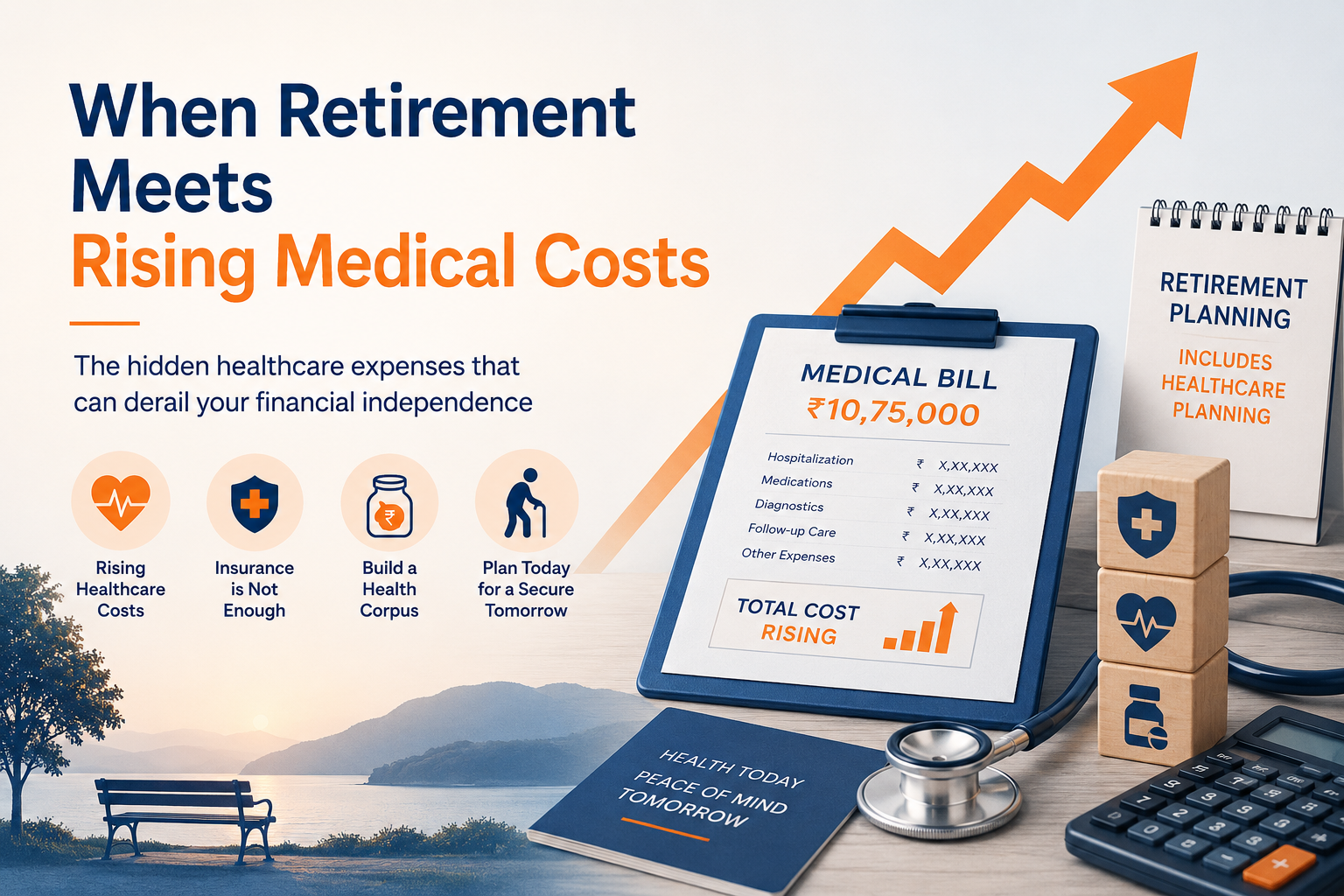
When we plan for retirement, we plan for the hospital bill.. the surgery, the admission, the procedure. But the costs that quietly break families are the ones that come after, or alongside, the ones insurance was never designed to cover. Caregivers, home nursing, consumables, the slow grinding months of dependency. These are real, they are large, and almost nobody plans for them. This is about the medical bill you cannot see yet, and what meeting it in retirement actually looks like.
The Reason I Knew the Numbers
My grandmother lived to 95. She was bedridden only for her last couple of months, which by any measure is a gentle ending after a long and healthy life. And yet even those few short months taught me something I have never forgotten. The bed alone becomes a small economy.
A 24-hour helper from a caretaker agency cost us somewhere between twenty and twenty-five thousand rupees a month, and in the metros today it runs considerably higher. Then there was the medical bed on rent, a couple of thousand a month. The injections, each one carrying its own charge. Diapers, changed several times a day, month after month. The consumables that no one lists when they imagine illness, the underpads, the gloves, the dressings. And of course the medicines, always the medicines. None of this touched the actual treatment. This was simply the cost of keeping a bedridden person cared for, clean and comfortable.
I knew the numbers to give my friend because we had paid every one of them.
What a single month of home care can look like
24-hour caretaker: ₹20,000 to ₹25,000, often much higher in metros
Medical bed on rent: a three thousand a month
Diapers and consumables: another few thousand, every month
Injections, nursing, follow-ups, medicines: ongoing, and unpredictable
A single month of this can run past a lakh. Now imagine it stretching across a year, or several.
The Bill Insurance Was Never Built For
Here is the part that catches families completely off guard. Your health insurance is built around one thing, hospitalisation. It pays for the admission, the surgery, the days in the ward. And for that, thank goodness it exists. But the moment care shifts from the hospital to the home, most of it stops.
Standard health insurance in India generally does not cover the caretaker’s salary, treating it as personal rather than medical care. It does not cover the diapers, the underpads, the gloves, categorised as non-payable consumables. It does not cover long-term nursing at home, or the endless daily support a bedridden patient needs for months on end. The surgery is insured. The eighteen months that can follow it are not. This is not a loophole or a bad policy. It is simply how the entire system is designed, and it is exactly why the fear of medical costs draining everything is one of the most rational fears a person approaching retirement can have.
The numbers bear it out. Even after years of government schemes bringing it down, close to 40 percent of all health spending in India is still paid straight out of the family’s own pocket. That is among the highest in the world. When someone tells you they are financially secure because they have good health insurance, they are usually picturing the surgery. They have not yet met the bill they cannot see.
Why This Collides So Hard With Retirement
Everything I have described is difficult at any age. But it becomes especially dangerous in retirement, for a simple reason. Your income has stopped, and these costs have not. They have, in fact, only just begun.
Consider what medical costs are doing over time. General inflation in India has run at roughly five to seven percent in recent years. Medical inflation has run at something closer to 12 to 14 percent, often two to three times faster. The single category of expense most likely to explode in your later years is also the one rising fastest. A level of care that seems manageable today can cost dramatically more by the time you actually need it, fifteen or twenty years from now.
And then there is the quiet irony of living well. Better healthcare means we are living longer, which is a genuine blessing. But a longer life is also a longer stretch to fund, and the final years are frequently the most care-intensive and the most expensive. The retirement people picture and the one they actually live often differ most sharply here. We plan for the decades of freedom and travel. We rarely plan for the season that can come after, when the body needs more than the corpus was ever asked to give.
What You Can Actually Do With This
I did not write this to frighten you, and I want to be careful here, because fear is a poor planner. So let me offer you something to do with the emotion, rather than leaving you only with the weight of it.
First, secure good health cover while you are still healthy, because the door narrows with every passing year and every diagnosis. That much insurance does well, and it matters. But understand clearly what it will and will not do, so the gap does not surprise you at the worst possible moment.
Second, and this is the part almost everyone misses, treat healthcare as its own line in your retirement plan, not a footnote inside it. A dedicated cushion, separate from the money meant for living, for exactly the kind of long, uninsured care that hospital policies leave on your shoulders. A corpus is not only there to fund your holidays and your monthly expenses. Part of it is quietly standing guard over a season you hope never comes but must still prepare for.
Third, have the conversation. With your spouse, with your children, honestly and early, while it is still an abstract discussion and not an emergency phone call. Because the deepest truth in all of this is the one my friend expressed without saying a word. No one wants their family to struggle. No one wants to become the reason their children drain their own savings. Planning for this is not morbid. It is one of the most loving things you can quietly do for the people you will one day leave behind.
We prepare so carefully for the retirement we hope to have. We must also prepare, quietly and without fear, for the one we hope we never do.
The most expensive medical bill is almost always the one nobody planned for.
Does Your Retirement Plan Account for This?
Most plans budget for living expenses and forget the cost of care. If you want to think through how healthcare fits into your own retirement, honestly and without alarm, I am happy to talk it through with you.
💬 Your Turn
Have you or your family faced the long, uninsured costs of caring for someone you love? Share your experience in the comments below, gently and only if you wish to. I read every one.