
Last Updated on April 23, 2026 by teamtfl
“An investment in knowledge pays the best interest.” – Benjamin Franklin
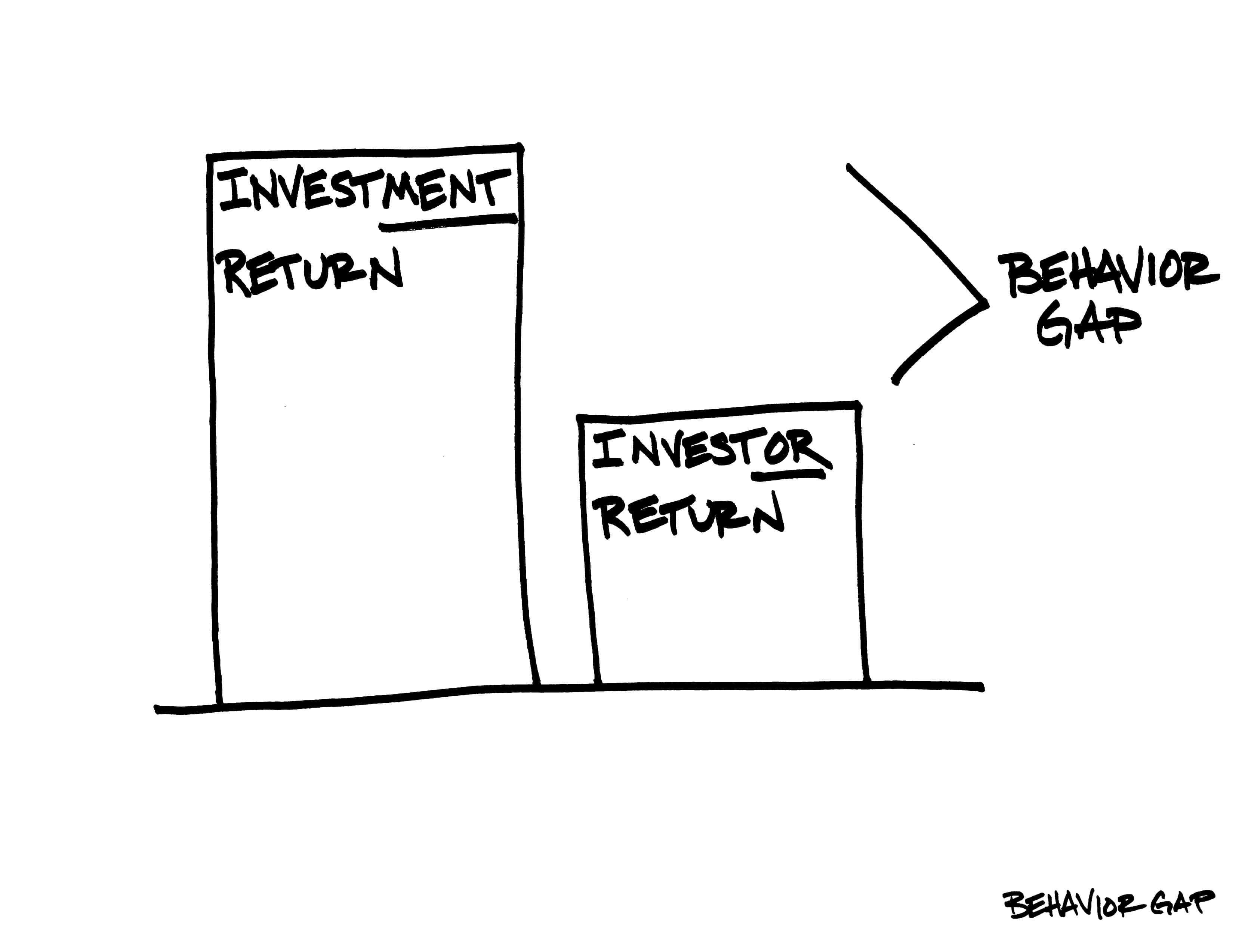
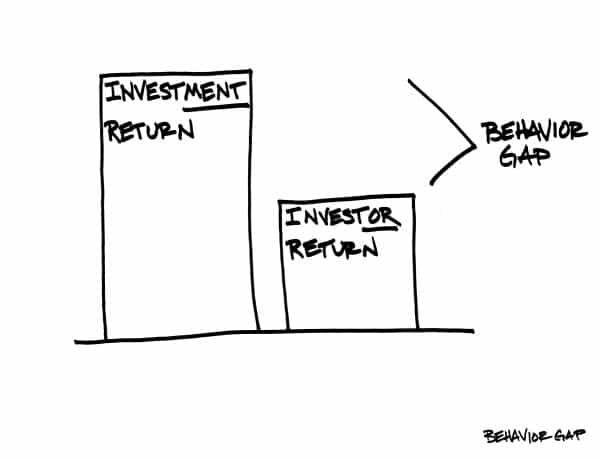
Investing is not complicated. The principles are few, well-established, and accessible to anyone willing to read for an afternoon. Yet most investors underperform. They know what to do. They do not do it.
The gap between knowing and doing is almost entirely behavioural. After 25 years of advising investors through multiple market cycles, I have identified the specific behaviours that separate investors who consistently build wealth from those who consistently underperform – despite similar knowledge, similar products, and similar market access.
⚡ Quick Answer
Well-behaved investors share seven traits: they are comfortable doing nothing when markets are volatile, they recognise and accept losses quickly rather than holding hoping for recovery, they accurately assess their own capabilities instead of overestimating them, they distinguish between skill and luck in their returns, they keep emotions out of individual investment decisions, they follow a written investment policy rather than reacting to market movements, and they persistently update their knowledge. The common thread is emotional discipline, not investment intelligence.
Trait 1: They Are Comfortable Doing Nothing
There is constant noise in financial markets. SEBI data, RBI policy, GDP numbers, global events, election outcomes. Financial media packages this noise as actionable information 24 hours a day. Most investors feel compelled to respond to it.
Well-behaved investors have learned to distinguish between information and signal. Most market news is noise – it is relevant to traders who hold positions for hours or days. It is largely irrelevant to investors who hold positions for years. The discipline to sit still when the instinct is to act is one of the most valuable financial skills there is.
Ask yourself: how many of your investment decisions in the last 5 years were triggered by news, and how many of those decisions improved your outcome? For most investors, the honest answer reveals that inaction would have been better.
Trait 2: They Recognise and Accept Losses Quickly
Loss aversion is one of the most well-documented biases in behavioural finance. The pain of a loss feels approximately twice as intense as the pleasure of an equivalent gain. This asymmetry causes investors to hold losing positions far longer than rational analysis would justify.
The question well-behaved investors ask is simple: “If I were not already invested in this, how much would I invest in it today at the current price?” If the honest answer is “nothing” or “much less,” then the position should be reviewed regardless of what it originally cost.
The original cost – the sunk cost – is irrelevant to future returns. What matters is whether the current investment is the best use of that capital going forward. Well-behaved investors make this assessment clearly, without being anchored to purchase price.
Behavioural discipline is what separates investors who build wealth from those who don’t.
RetireWise builds plans with behavioural guardrails built in – including annual reviews, asset allocation policy statements, and pre-agreed protocols for market volatility.
Trait 3: They Assess Their Own Capabilities Accurately
Overconfidence is endemic among investors. The Dunning-Kruger effect – where people with limited knowledge overestimate their competence – is particularly visible in investing, because early wins often happen in bull markets that reward all participants regardless of skill.
Well-behaved investors know what they are good at and what they are not. They understand that researching companies requires skills, time, and information access that most individuals genuinely do not have. They are comfortable delegating to fund managers or advisors in areas where professional expertise adds real value. They are not threatened by admitting the limits of their knowledge.
The investor who has survived one or two market cycles without proper diversification and attributes it to skill rather than timing is setting up for a more painful lesson. Well-behaved investors actively seek disconfirming evidence for their investment theses.
Trait 4: They Distinguish Between Skill and Luck
This is one of the hardest distinctions to make, and one of the most important. In a rising market, most equity investments generate positive returns. The investor who made 25% in FY22 may have been in a bull market that delivered 30% across the index. Their skill – if any – was negative relative to the benchmark.
Well-behaved investors benchmark their returns honestly. Not against a fixed deposit rate. Not against gold. Against the relevant index for the category of investment held. An actively managed large-cap fund that underperforms Nifty 50 for five consecutive years is destroying value regardless of its absolute return number.
This honest benchmarking prevents both overconfidence in good periods and excessive self-criticism in bad ones. It creates the right feedback loop for improving investment decisions over time.
Trait 5: They Separate Emotion from Investment Decisions
Emotions are appropriate in most of life. They are expensive in investing. Fear causes selling at the bottom. Greed causes buying at the top. Pride prevents accepting that a thesis was wrong. These are not character flaws – they are normal human responses to uncertain situations with real financial consequences. Well-behaved investors acknowledge these impulses without acting on them.
The practical mechanism is a written investment policy statement: a document prepared when calm that specifies how to respond to specific market situations. When the Sensex falls 20%, the policy says: “do nothing, review asset allocation annually.” This pre-commitment removes the emotional decision in the moment when emotion is highest.
Trait 6: They Follow a Written Strategy
Well-behaved investors have a strategy and they follow it. Not because the strategy is perfect, but because consistent execution of a good strategy outperforms irregular execution of a perfect one. They have defined their asset allocation, their rebalancing trigger, their investment horizon, and their exit conditions in advance.
When a stock hits their target price, they sell – even if it keeps going up afterward. When the asset allocation drifts beyond their threshold, they rebalance – even if the outperforming asset seems likely to continue outperforming. Strategy beats discretion for most investors over most time periods, because discretion is contaminated by emotion.
Trait 7: They Are Persistently Curious
Financial markets, tax laws, investment products, and economic conditions change. The strategy that was optimal five years ago may be suboptimal today. Well-behaved investors maintain intellectual curiosity about their own financial environment. They read annual reports, they review tax changes every year, they stay aware of new product categories and regulatory shifts.
This is not the same as information overload – they are selective about what they consume. But they do not assume their knowledge base from 2015 is adequate for 2026 decisions.
Read: Behavioural Finance: How Your Mind Sabotages Your Money Decisions
The investors who build wealth over 20-30 years are not always the smartest or the most knowledgeable. They are the ones who behave well when it is most difficult to do so.
Investing is not a numbers game. It is a mind game.
Which of these seven traits is your weakest right now?
Honest self-assessment is the starting point. A RetireWise review helps you identify the specific behavioural patterns in your portfolio and build the structure to address them.
Your Turn
Of the seven traits above, which one do you find hardest to practise consistently – and is there a specific market situation or emotional trigger that tends to break your discipline? Share in the comments.
You may come across news related to the economy, prices and market on a regular basis. Buying and selling on a frequent basis many people make. Well behaved investors take more time to understand the situation. It would be wiser for you not to react to market movements both in terms of money and time till the market becomes ready.
Thank you for your valuable articles. I wanted to know if you have heard about the company called SmartOwner and how is the company for investment into real estate.
Thanks
What are your views on Birla MNC fund ?
Hi Hemant
Presently I am following- Sometimes it is okay to not make any investment decisions.You have mentioned persistent twice obviously due to its importance.